
|     |
|
| |

 Nāṭya Śāstra in a Nutshell- Sreya SrinathJuly 18, 2025 Nāṭya Śāstra in a Nutshell: A Hand Book on Nāṭya Śāstra Author: Dr. P. Rama Devi Pages: 230 / Edition: 2025 Price: Rs.1000 Nāṭya Śāstra in a Nutshell by Dr. P. Rama Devi is a concise guide to Bharata Muni's foundational treatise on Indian performing arts. In this volume, Dr. Rama Devi simplifies complex classical theories such as Rasa, Bhāva, the Chaturvidha Abhinayas, and many other intricate concepts into a lucid, easy-to-understand format that is especially useful and valuable for young music and dance students. The author has further enhanced clarity by providing illustrations for hastas, padas, dr̥ṣṭibhedas, sthānakas, etc., making it easier for exam going students to grasp these advanced topics with greater accuracy through well-presented visuals and explanations. Additionally, the inclusion of ślokas along with their translations makes the text more accessible and easier to comprehend. 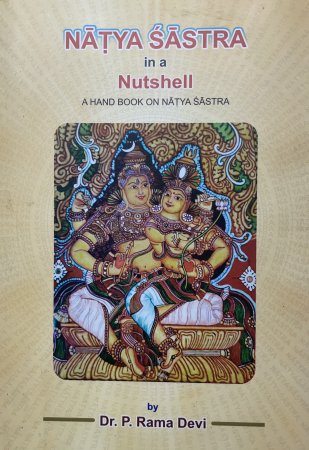 This book covers major ideas of the Nāṭya Śāstra in a neat yet elaborate manner. The very first chapter, Nāṭyotpathi talks about the origin of dance and drama through the Nāṭya Veda, the purpose it served, and how it was initially confined to the celestial realm (Devaloka) before Bharata Muni's sons were cursed by the sages, prompting them to propagate this divine knowledge among humans - a theme which is reiterated in detail in the final chapter. Chapters II and III discuss the construction of playhouses and worship of the stage deities, respectively. The text delves deeper into the role of the Nāṭyācārya (director of the performance), his qualities and duties such as the installing and worshipping deities in their respective positions in the mystic diagram, the consecration of the Mathāvaraṇi (side room), the adoration of Lord Indra's Jarjara and the procedure of the Homa. This is followed by the ritualistic cleansing called Parimarjana, aimed at ensuring the well-being of the king and the dancing girls. The Nāṭyācārya then performs the rite of Kuṁbhabhedana (breaking of the pot) and Raṅga Pradīpana. This comprehensive chapter also informs us about the benefits of a properly consecrated hall, along with the consequences of neglecting these prescribed practices. Chapter IV explores Śiva's own nṛtta, the Tāṇḍava which is enhanced by the different Aṅgahāras and the 108 Karaṇas, for which detailed verbal and visual descriptions are provided. The fifth chapter describes the Pūrvaraṅga rites, performed as precautionary rituals before the drama begins. They are carried out in two stages - Aṅtaryavanikāṅgas and Bahiryavanikāṅgās - meaning before and after the raising of the curtain, respectively. Chapters VI and VII talk about the nine Rasas: Śṛṅgāra, Hāsya, Karuṇa, Raudra, Vīra, Bhayānaka, Bhībhatsa, Adbhuta and Śānta, and the Vibhāvas (cause), Anubhāvas (effect) and the Vyabhicārī Bhāvas (transitory emotions) associated with each. They explain how Rasa arises from Bhāva, which itself has three forms, the stable Sthāyi Bhāvas, supported by fleeting Sañcāri Bhāvas, and deepened by involuntary Sāttvika Bhāvas. Chapters VIII continues with the four types of Abhinaya, the Āṅgika (gestural), Vācika (vocal), Āhārya (costume and ornaments) and the Sāttvika (manifestation of the inner emotions). Up until Chapter XIII, the book discusses various concepts such as of Uthamāṅgābhinaya (head gestures), Dṛṣṭi Bhedas (eye movements), Hastābhinaya (hand gestures), Nṛtta Hastas (decorative gestures used in pure nṛtta), Śarīrābhinaya (gestures of the chest, hips, thighs, feet, etc.). It further explains the different Cārī Bhedas (movement of the different limbs in harmony) and how combinations of Cārīs form Maṇḍala Bhedas. The Sthānakas (stances adopted in combat) and Gati Prakaraṇa (the gaits associated with different Rasas and types of women) are also touched upon. Chapter XIV introduces technical terms such as Kakṣya, Pravṛtti, Dākṣiṇātya, Āvanti, Oḍramāgadhi, and Pāṅcāla while also classifying types of plays like Āviddhā and Sukumāra. The two kinds of performance conventions - Lokadharmī (based on worldly practices) and Nāṭyadharmī (according to the rules of the Nāṭya) - are also covered in this section. The next few chapters emphasize the Vācikābhinaya (vocal aspect), explaining parts of speech, Saṁskṛta and Prākṛta (languages used), and few more jargon in detail. It also includes the topic of Cchandass (metre), and its three classes - Samavṛtta, Ardhasamavṛttam and Viṣamavṛttam, along with their characteristics. The book proceeds to address the Bhāṣāvidhānaṁ and Vākya Vidhānaṁ, which elaborate on the use of languages like Atibhāṣa, Āryabhāṣa, Jātibhāṣa, and Yonyantarībhāṣa, and the use of sentences - how different characters in a play are addressed respectively. Chapter XX deals with the rules for the ten types of dramas. The next segment explores the various junctures within a Dṛśya Kāvya, which are Mukha (original cause), Pratimukha (progression), Garbha (development), Vimarśa (pause) and Nirvahaṇa (conclusion). The following chapter explains the origin of Vṛttis, describing how Sri Hari, through flawless gestures and Aṅgahāras, defeated the asuras - Madhu and Kaiṭabha - who had first attacked him while hurling harsh words that stirred the cosmic ocean. As the Lord stepped onto the earth, the burden (Bhāra) created led to the emergence of the Bhārathi Vṛtti. This chapter further expands upon the Sāttvatī, Kaiśikī, and Ārabhaṭī Vṛttis as well. Chapter XXIII covers Nēpathya, or Āhārya Abhinaya which is of four kinds - Pusta (masks and models), Alaṅkāra (ornamentation), Aṅgaracana (body and face painting) and Sajjīva (living characters). The following two chapters present a detailed account on Nāyikālaṅkāras and Nāyakālaṅkāras - the graceful traits of heroines and heroes. This segment also delves upon the six folds of gestural representations, the general principles of representation, ten stages of love (Daśa Kāmāvasthas), the eight types of heroines (Aṣṭavidha Nāyika Avastha) and a concise explanation on Vaiśikaṁ - the art courtesans. Subsequent chapters introduce topics such as Citrābhinaya (special representation), Siddhivyanjakaṁ (indication of success) and the two kinds of Siddhis (successes). Chapters XXVIII to XXXIII analyze the classification of instruments, the rules governing stringed, hollow, solid, and covered types, as well as the Dhruvā songs along with their five categories. A brief account on the types of characters and distribution of roles is given in the next two chapters. The final chapter, Nāṭyāvatāraḥ, reaffirms the divine origin of Nāṭya and its descent to earth. Bharata declares that performing Nāṭya is equivalent to performing a Yajña and is more beneficial than any other charitable acts or rituals. Nāṭya Śāstra in a Nutshell is more than just a condensed reference manual; it is a gateway to the soul of Indian art traditions. Dr. P. Rama Devi offers a balance of scholarly insight, modern performance training, and visual clarity, while preserving Bharata's vision for the future of his Prayōga Śāstra. For any serious student or teacher of Indian performing arts, this book is essential.  Sreya Srinath from Aatmalaya academy is a 19-year-old Bharatanatyam dancer, also doing her engineering. She has been learning Bharatanatyam under Dr.Padmaja Suresh for over 8 years and completed her Arangetram, besides accompanying her Guru's team widely. Post your comment Please provide your name / email id when you use the Anonymous / blog profile to post a comment. All appropriate comments posted in the blog will also be featured in the site. |
