
|     |
|
| |

 e-mail: khokar1960@gmail.com Australian adventure with Vietnamese Mokshapath!November 27, 2026 A for, no, not just an apple or Australia but add Ayurveda and Arts. Heather and Kelvin Brown have been coming to India for three plus decades and more - in various incarnations: seeker, musician, manager of libraries, a patient of Ayurveda for treatment for a bad leg caused by diabetes and now as a poet to whose poems senior Kathak dancer Saswati Sen and Birju Maharaj’s daughter Mamta Maharaj have set dance to. IGNCA hosted it thanks to long association of its chief conservationist Achal Pandya, who roams the world better than a cellular network! 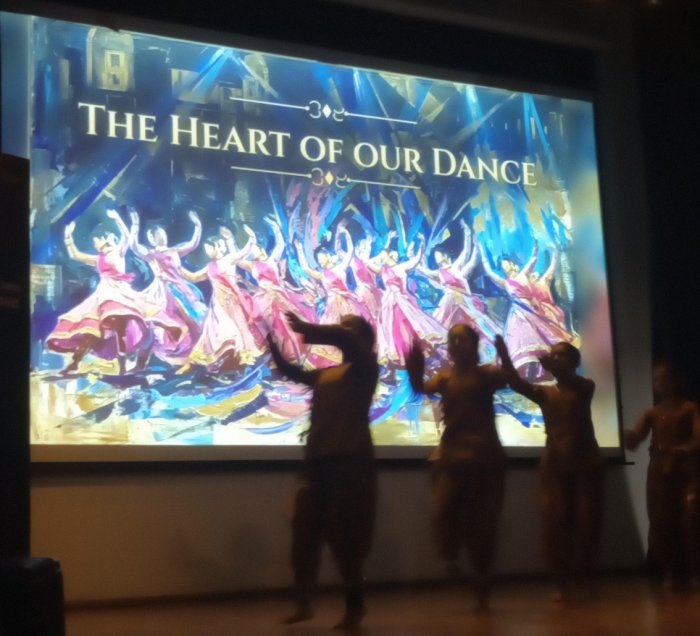 Their link started through Louise (not Lightfoot) but Herft, a Dutch linked, Sri Lankan born, living in Adelaide. Her severe asthma as a child brought her allopathic doctor mother to try Ayurvedic medicine. Her father being a jazz musician played tunes to alleviate her asthma attacks. In the end of was an ayurvedic treatment by a veteran specialist of Pune - the Prabhakar Sardeshmukh family - that gave her relief and through her, to Kelvin Brown. Today, Sushrut Sardeshmukh continues the mission impossible through Bharatiya Sanskriti Darshan Trust which his grandfather founded, of which Louise is the chair and Sushrut a trustee. Wagholi in Pune is where their Integrated Cancer Treatment and Research Centre is. Plus plus plus. Patents from USA, support from many European countries. Ellora attracted Kelvin Brown and his first poem Standing at Eternity... is a deep and dignified music and movement to experience poetry. Several such short poems were performed for a select gathering recently and, "I felt like Beethoven when I had to face the audience," he said privately. He felt humbled by the affection and attention of Indian audiences. Emotion in India is never in short supply and for foreigners the quality of heart attracts. Heart and kidney are connected, says Kelvin Brown and most western medicine compartmentalises human body but ayurveda treats humans as a whole. The inspiration behind the production was Kalashram and Saswati Sen, guru Birju Maharaj's ace disciple. It was a kindergarten of Kathak, with so many young talents, some totally green at the Browns event. The birthday of Heather made the occasion more pink than the salwar suit she wore. Kelvin in blue represented the sky and Louise in pista green, earth. The little Krishna shone with flute. 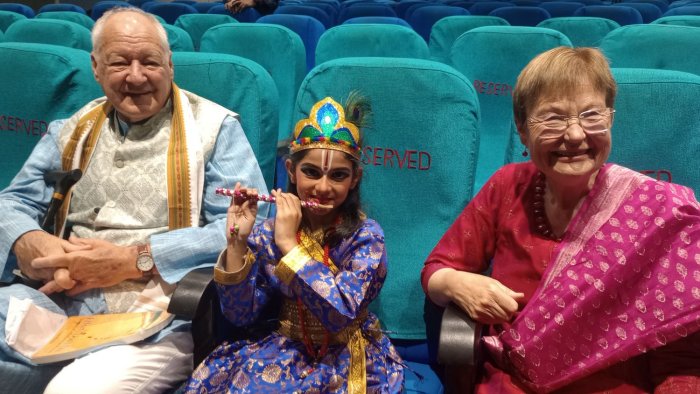 Saswati Sen's voice over splendid visuals - some AI generated like the white dove - was dulcet. She brought a complex form like Kathak's mathematical footwork and pirouettes to merge seamlessly with poetry and music of Kelvin Brown. In WHAT IS TIME?, modern music, full of beats and saxophone and all blended with a beautiful Norah Jones type voice and in DIVINE GIFT, it was indeed a time to rejoice for all. Beautiful landscapes and a child found on shore, was a divine gift too. The mother liked like a first time on stage. Next, an experimental school in rural Bengal became the inspiration for Titten Titten Nara school, joyous and fulsome. 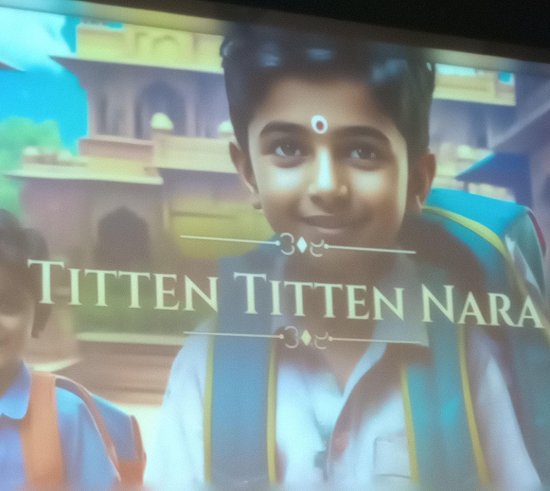 In THE HEART OF DANCE, the youngest talents were on stage and the fawn brown ones with grey costumes shone for their newness. That so many managed on a small stage without mishap was an achievement. Saswati Sen is a good trainer. She shows that dance teaches discipline, team work and coordination. It didn't seem LONG AGO that Kelvin's diabetes deteriorated but he took to poetry as an outlet which made it a SWEET SWEET NIGHT OF DREAMS, in which the singer's voice was to die for. Kathak Tatkars merged well. In WINDOW, the visuals of fire, hands, sea waves and beaches took one to 'Stralya! This sequence was perhaps also needed for costume change. That over 50 young dance students of Kalashram managed on the small stage and smaller green room of Samvet Hall, shows how Indian dancers can adapt themselves to any situation. Ultimate artistes! A WALKING PRINCESS dressed as a shepherd girl was serene. The democratically healthy girl in red looked like a sheep ready to be slaughtered but mercifully we were in India and not on an Australian ranch! The compere was first rate, even if barely audible in the beginning. IGNCA Conservation Team headed, handled the proceedings well, Satinder, Jawahar, Megha and Faiz. Dr. Sachchidanand Joshi , the head of IGNCA, set the tone in his radio voice to emphasize how art connects. All in all, great fun was had by all; there was genuine goodness of heart in art. 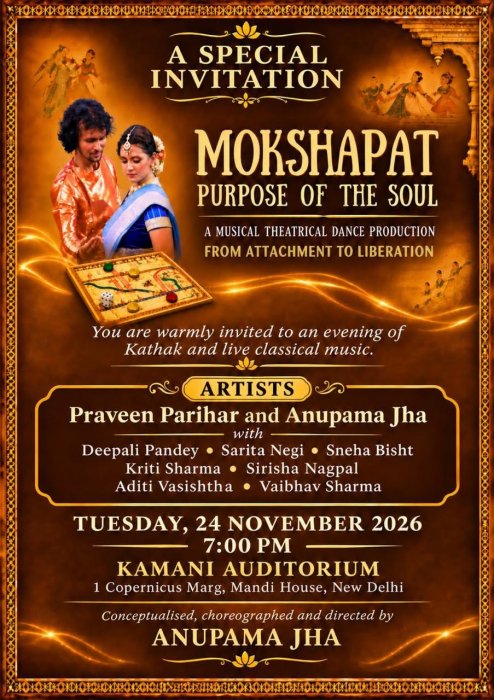 Mokshapat from Vietnam is the snake and ladder game of dice in life which blends well in the language of Kathak. At Kamani in Delhi, this offering of Anupama Jha was unusual. Coming from far to find musicians, freelance dancers and do rehearsals and get costumes made then book a hall and get outreach plus audience is not easy. Delhi is the capital of India even if Pune is the new capital of Kathak. Delhi is the most spoilt-silly city of the country with low level artistry but high returns from govt. shows plus visibility and access to babus and babas of culture! To come and spend lakhs to do a show in Delhi means a certain high feeling of fulfilment. Anupama Jha is trying hard to make a mark and with this production succeeded in making an impact. How? The scenes move quickly, even if dancing is routine and the sutradhar was limited in his expression and hand movements. The girl accompanying him was podgy and the voice over, shrieky. The main character Ishan was trying to show off his tayari but without stage presence. Anupama ought to select a better talent that complements her refined personality. Praveen Parihar didn't, even if in nritta portions he showed off and well. Rest of the group did whatever was needed of them. These supporting artistes were Deepali Pandey, Sarita Negi, Sneha Bisht, Kriti Sharma, Sirisha Nagpal, Aditi Vasishtha and Vaibhav Sharma. Music composition and vocals: Samiullah Khan. Sitar by Kishan Kathak, flute by Atul Shankar. Lights, technical coordination and sound: Milind Srivastava. Fine compering by Sadhana Srivastava. Props and decoration by Mohan. Concept note stated that Mokshapat - Purpose of the Soul, is a Kathak dance-theatre production inspired by the spiritual symbolism of Moksha Patam, the traditional game associated with what we now know as Snakes and Ladders. The game becomes a metaphor for human life: our attachments, choices and actions shape a journey marked by both ascent and fall. Through the intertwined lives of Meera and Ishan, the production explores love, ambition, ego, suffering and the gradual awakening of self-awareness. Its six movements trace the soul’s descent into worldly experience, the blossoming of love, inner conflict, self-realisation, spiritual ascent and liberation. The snakes represent tendencies such as anger, greed, jealousy and pride, while the ladders symbolise faith, knowledge, discipline and surrender. The possibility of falling even near the summit reminds us that spiritual growth calls for continued awareness. All this could've been easily depicted on LED screens but not.. Kathak, abhinaya, live music and theatrical storytelling tried to bring inner struggles into a human relationship. At its heart is the idea of prasāda buddhi: acting sincerely while receiving life’s outcomes with acceptance. Liberation emerges as an inner transformation - a release from the ego and attachments that bind us. 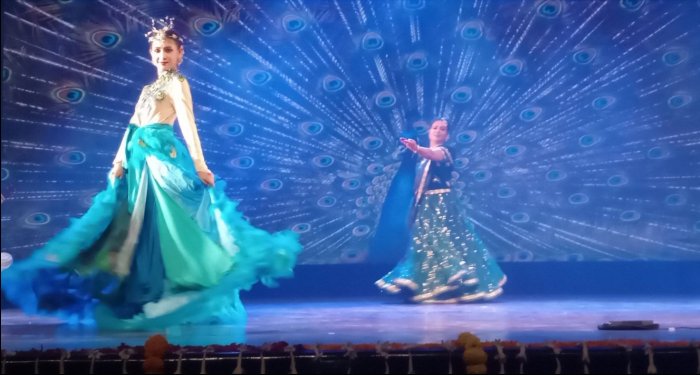 Following its premiere in Ho Chi Minh City, Vietnam, in October 2025, the production was presented in New Delhi now on Kartik Poornima, when also guru Nanak was born. Anupama holds, "For me, Kathak is a spiritual practice and a way of understanding life. I wanted to create a work that could bring philosophical ideas into the everyday experiences of love, relationships, ambition and disappointment. The image of Snakes and Ladders stayed with me because it reflects how life unfolds. We move forward, encounter setbacks and begin again. I was particularly drawn to the snakes near the top of the board: even after considerable progress, ego can still lead us into a fall." "The emotional world of Maa Annapurna Devi- the first wife of Ravi Shankar, also influenced my thinking, particularly the way love and artistic ambition can become entangled with pride. Through Meera and Ishan, I wanted to explore how those struggles might lead towards self-awareness and transformation. Mokshapat expresses a belief close to my heart: that life happens for us, not against us. Difficult experiences can become opportunities to look within, understand our choices and grow. The question I wanted to leave with the audience was: what are the snakes and ladders within each of us?" "I owe so much of my life and artistic journey to my Guru, Dr. Shovana Narayan, and my parents. Their blessings, guidance and values are at the heart of this work," said Anupama on stage by way of thanks. The most sabhya Kathak senior of Delhi - Shovana Narayan - was the chief guru and guest. First rate overall stage impact was created by this well mounted show. Music composed by Samiullah Khan, whose melodious voice was the highlight, was the spine of the production. Others who delighted were the flute player, two pakhawaj players in tandem and sarangi. Recorded music will help her take it to more cities in the future. Heavily researched , layered with vedic and upanashadic knowledge and quotes on an LED screen, this production deserved a better audience than Delhi, lost in Gurupurab celebrations and a case of over full stomach. It is to Anupama Jha’s credit she danced on and delivered to the best of her ability.  Critic, connoisseur, historian, author, artivist, archivist, administrator and more - editor, columnist and mentor Ashish Khokar remains true to his muse. Post your comments Please provide your name along with your post. All appropriate comments posted with name in the blog will also be featured in the site. |
