
|
    |
|
|
|


Navtej Singh Johar: I plod my own path - Lalitha Venkat December 6, 2008 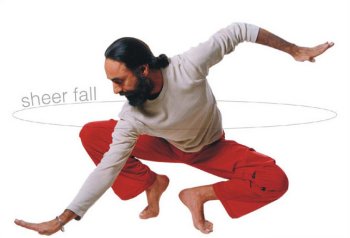 Navtej Johar is a Bharatanatyam exponent and a choreographer, whose work is unique in that it freely traverses between the traditional and the avant-garde. Trained in Bharatanatyam at Rukmini Devi Arundale's Kalakshetra, at Chennai, and with Leela Samson at the Shriram Bharatiya Kala Kendra, New Delhi, he later studied at the Department of Performance Studies, New York University. He has collaborated with composers Stephen Rush, Shubha Mudgal, installation artist Sheeba Chachi, and has also acted in films by Deepa Mehta and Sabiha Sumar. A long time student and practitioner of yoga, Johar trained in Patanjali yoga at the Krishnamacharya Yoga Mandiram, Chennai, under the guidance of T K V Desikachar. A yoga teacher since 1985, Johar's approach is fluid and adaptable as he freely merges asana, pranayama, visualization, meditation and Vedic chanting. Navtej founded Studio Abhyas in New Delhi in 2001. In 2004, he started the Abhyas Trust: a non profit organization dedicated to yoga, dance, urban design and the care of stray animals. Kushwant Singh called you "the dancing sardar." What motivated you to learn Bharatanatyam, that too not at Delhi, but at Kalakshetra, Chennai? You know labels like these are extremely complex and loaded; it is something akin to becoming the "black-President." The ostensible mutual exclusivity of the two categories is socially imposed, and it has little to do with the person who happens to get into that odd pair of mismatching shoes. All I know is that I am a bearded Sikh, and I am a dancer, and I am very OK at being that! I think it was in 1978 that I saw a performance by Padma Subrahmanyam, it would have been Krishnaya Tubhyam Namaha, I think. I was mesmerized, I'd never seen anything like that in my life. I loved it and was instantly hooked. I wanted to become "that," learn "that," and I also had a distinct sense that I would be able to do "that" well. So, the decision to become a Bharatanatyam dancer was almost instantaneous and actually very simple. I knew that I would have a lot of explaining to do to my family and even friends, but that did not seem like a deterrent. I first went to Delhi in search of a guru. I had no clue about where or how to go about it. The first person I was directed to was Guru Nana Kasar at Triveni. He was a lovely man and invited me to watch his dance classes but he remained non-committal, perhaps he was unsure of me. In the meanwhile, my friend Ira Pande told me about Kalakshetra, so I hopped on to the next Tamil Nadu Express to come to Madras to see the place for myself. It was June and very hot. I remember arriving at Madras Central with very little money in my pocket, it was raining! I was later told that that marked an auspicious beginning. I sat and had a very leisurely breakfast at the station wondering where to go and what to do because I had no contacts at all in the city. I was directed to a youth hostel at Egmore, and then guided to a bus stop from where I could take the bus to a place called Thi-ru-van-mi-yur. I had to perforce break the name of this place down to its syllables in order to be able to ask for the correct bus. My ride in bus number 23-A was full of hope, joy and expectation. I was already falling in love with this city, and I had heard and by now even read so much about Kalakshetra. I arrived, the school was closed for the summer; I met with Mr. Sethurama Iyer in the front office and was permitted to see the premises. That was the turning point in my life. I knew that I would have to search no more; this was where I wanted to be. It was love at first sight and the romance was complete: the thatched roofs, the lily ponds, the sonorous sound of the waves, the banyan tree, and most of all, the veena cottage. I spent the entire afternoon there, it felt like a dreamy mix of a dream-come-true, fantasy and even some kind of nostalgia. I felt I had come home to a place where I belonged and had imagined to be at all my life. That is how I decided to study Bharatanatyam at Kalakshetra. You are a name to be reckoned with in the dance world today. As a sardar, and as a male, did you have to struggle to find a place in a woman dominated field? I accept that this dance is predominantly a female domain; it would be unrealistic to deny that. But I must say that my female friends in the field had to struggle as much as I did, so I never felt that I was being short-changed because I was a man or a Sikh. In fact, being a man might have helped in some ways because I did not have to face the general family pressures that women have to face, so I was able to stick to it a little longer than some of the women did or could. Another thing that might have helped me is that I consciously kept out of the race, a) it did not interest me and b) I was the odd-ball out and stuck to my own thing and kept plodding my own path. That helped me to retain autonomy over what I do and conversely helped me stay on and make my place in the field. In an earlier Natya Kala Conference, you said you love Bharatanatyam so much that even lying on the floor and screaming is Bharatanatyam to you...that shocked the puritans. Your comments. Yes, I did say something to that effect though I wish I had qualified it. I am deeply influenced by theater and I see Bharatanatyam first and foremost as a performance art. I use a lot of theater-games for dance preparation and these games very often are exaggerated and at times even grotesque. As performers we need to unshackle our selves, and primarily our bodies. I strongly believe that the performer's body must have embedded within it a repertoire of rehearsed experiences that are varied and much wider in range than what is actually required on stage. It is this bank of rehearsed experiences that may afford a quicksilverness and precision of expression on stage. I may be playing a proper little, demure mugdha nayika in the most conventional manner, but as a dancer if I allow myself the license to feel and express in exaggerated ways within a contained rehearsal situation, and then draw from the bank of such rehearsed and viscerally embedded experiences and which I fully know to be valid and OK, then this widens the scope of my expression and may help to further layer and nuance it, sometimes make it even subtler. If restrain be the criteria in classical expression, and I love restraint, then there has to be something raging within me that I have to restrain. Am I restraining a stagnant little pond or a raging ocean? Therein lies the difference and that makes the performance vital, real and authentic, not the purity of the form alone. What I am trying to say is that as a performer, I cannot discriminate between what is "proper" and "improper," propriety is and will always remain the preoccupation of society, but an artist's job is not to conform but to turn things around, invert them or even subvert them if necessary. Thus propriety cannot be a performer's preoccupation. For me there is absolutely no moral hierarchy that pertains between a subtle, conventional expression and an exaggerated, over-the-top expression, as long as the experience is convincing and authentic. Do you strike a balance between your pure Bharatanatyam presentations and contemporary choreography / dance theatre now? At this point in your career, which do you prefer more? I keep the two quite separate; in fact I could say that I run on two parallel tracks. I love to perform Bharatanatyam as it is, and I also like to move beyond it. I do not mix or fuse Bharatanatyam with anything else; I may throw in a theatrical element or two to enhance the dramatic impact, but for the most part I keep it pure to its technique. And I would like to add, that my non-traditional work too is completely inspired and influenced by the dynamics of Bharatanatyam - of course the way I understand and envision it. The capacity of its dynamics is endless, even when it does no longer resemble its conventional form or format. I would say that I devote myself equally to both. 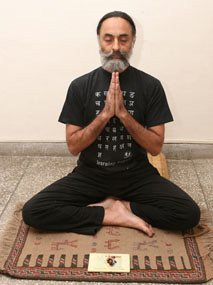 Have you stopped teaching dance to concentrate on teaching yoga? If so, why? I don't teach large Bharatanatyam classes as I used to, mainly because I did not know how to deal with eager mothers and I did not know how to inspire or embolden young girls to imagine dance differently. But I still have a handful of students, all adults, whom I teach and work with regularly. It would be correct to say that now I teach only those dancers with whom I can hope to make work. But yes, I do teach yoga for more hours a week than I teach dance. You conduct annual yoga workshops in the Himalayas and also have outreach programs. Can you tell us about them? Over the last few years we have been doing yoga retreats in the mountains. They began as a way to offer intensive courses to select serious students who wanted to further refine their practice and deepen their understanding of yoga philosophy and its application to daily life. But now these have become an annual event, we do several workshops during the year with participants from all over the world. Whereas outreach is concerned: I am dismayed as to how little young people are exposed to yoga especially when it can be so incredibly helpful in their growth and development. I meet many anxious parents and see many children struggling with physical, emotional and psychological challenges that could be easily taken care of through yoga, thus we try and offer workshops in schools to give a taste of yoga to the young. Apart from yoga being good for everyone, how is it particularly beneficial to dancers? I ask all my dance students to study yoga, and I do that for a variety of reasons. First of all, it is a great physical discipline and gives you heightened body awareness. Two, it is a great tool to tone, warm up and cool down plus work on isolated muscles needed for dance, plus it helps to effectively counter the negative impact of dance upon the body. But apart from the physical aspect, yoga (particularly pranayama) offers a sense of inner-space that is centering and helps imagination immensely. What is the contribution of Abhyas Trust in 'the care of stray animals'? Our motto at Abhyas is to be responsibly and proactively connected to our immediate environment, quite literally to our streets and neighbourhoods. And this includes taking care of the animals that live on our street. We run a sensitization program where we try to inspire the young to be kind to and not afraid of street animals. We also encourage people to adopt street animals, take them inside their homes or just take on the responsibility of looking after them even if they live on the street outside their house, i.e. make sure that the animal is well fed, is healthy, not suffering, is sterilized, is comfortable, safe and happy. This is our way to be connected to the environment; most of us cannot do much about the environment, our mountains, and forests, rivers or the wildlife. But we each can look after the tree, the drain, and the stray animal that's on our street. Another thing I would like to say is that dog is perhaps the only animal that actively seeks out human contact, it reaches out with pure love and trust and we need to register that and respond to it. Today, we need to recognize and appreciate that animal-spirit more than ever before. Me, my dog, my tree, my river, my street, my garbage, we are all connected, and the sooner we recognize it the better! Your comment about the Chennai December season. December is the best time to be in Chennai, I always look forward to the balmy sea breeze, some good music and dance and the opportunity to meet up with friends who are flocking there for the season. Contact: e-mail: nsjohar@gmail.com |
