
|
    |
|
|
|

 Suba Parmar: Dance class should be a celebration. not a punishment- Vijay Shankare-mail: vijaydance@gmail.com November 23, 2025 Bharatanatyam exponent and mentor, Guru Suba Parmar is the artistic director of Shubhanjali School of Performing Arts (founded in 1992) in New Jersey and has been associated with Bharatanatyam for the last five decades. With over three decades as a dance teacher, she is particularly credited for teaching students with memory disorder and Activity Disorder and Hyper Activity Disorder (ADHD), hence feels that learning should be an enjoyable process and not a punishment that could be rigorous and painstaking. She is the recipient of the "Most Influential Teacher Award" (2015) by the Obama Administration, Lifetime Achievement Award (2017) by Spandana, New Jersey for her 25 years of outstanding contribution to Fine Arts and several others. Suba believes that the dance repertoire should be a fine balance of tradition and innovation with the transformative power of dance. She specializes in the vintage Pandanallur style, known for its elegance and rich tradition. As a direct and one of the oldest disciples of Guru Indra Rajan and Pandanallur Srinivasa Pillai since 1977, she has been acclaimed as a pioneer in the arts community. Suba is shortly planning a 20 city tour with a strong theme that showcases India's rich cultural heritage. In an exclusive interview. Suba reveals her varied experiences as an exponent, mentor and the changing attitude of both students, parents and society, over the decades and much more. 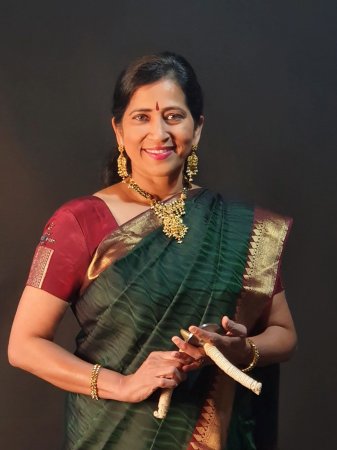 Suba Parmar What difference do you see between the Vazhuvoor and Pandanallur tradition of Bharatanatyam? As a Bharatanatyam dancer and teacher, I have a deep connection with the Pandanallur style which I've had the privilege of learning from my gurus Indra Rajan and Pandanallur Srinivasa Pillai. This style's emphasis on precise technique, crisp footwork, breathtaking crisp jathis, nuanced expression, has been my foundation. (Some Pandanallur stalwarts include Meenakshi Sundaram Pillai, Alarmel Valli, Sai Subbulakshmi, Rukmini Devi Arundale, Pandanallur Jayalakshmi, Rajeswari Sainath, Meenakshi Chitharanjan to name a few). I've also had the opportunity to work with Vazhuvoor teachers, and I'm struck by the unique beauty of their approach - the slow, graceful movements, lots of poses, the fluidity, and the realism in their abhinaya (Gurus Padma Subrahmanyam, Rajarathnam Pillai, Chitra Visweswaran, Shobana). What's interesting is how both styles have evolved, and the distinctions between them have become subtle. As a teacher, I've learned that adaptability is key. When I'm teaching my students, I don't just focus on one style; I adapt and blend different approaches to bring out the best in them. Whether it's the intricate footwork of Pandanallur or the graceful movements of Vazhuvoor, I want my students to experience the richness of this art form. For me, Bharatanatyam is not just about technique; it's about expression, storytelling, and connection. My audience in the US love a lot of storytelling. As a dancer, I've learned to appreciate the nuances of different styles, and as a teacher, I'm passionate about passing on this knowledge to my students. My goal is to help them find their own unique voice in this beautiful art form. What are the salient features that you have been able to incorporate in the Ananda repertoire? 'Ananda' is more than just a performance - the 3-city tour in India (Mumbai, Chennai and Tirunelveli) was a dream come true - a celebration of 50 years of my journey in Bharatanatyam, sharing the stage with 12 of my talented students to a live orchestra. The title 'Ananda' is perfect, as it captures the bliss and love I feel for this art form. Our journey thus far has been incredible - from inspiring over 135 students in the US soil to perform their arangetrams, to receiving the "Most Influential Teacher Award" from the Obama Administration, performing at prestigious venues worldwide has been an honor. And when we performed in India, it felt like a heartfelt homecoming - a wedded daughter returning to her parents' home with their grand-children, filled with love, nostalgia, and a deep sense of belonging. Everywhere they received us with open arms, lots of appreciation and hospitality and so proud of what we have accomplished in a foreign land. The repertoire we presented was a labor of love, combining some of my original choreographies with the best of Pandanallur and Vazhuvoor traditions. Guru Swamimalai Suresh and I worked together to create a unique margam-style presentation that blended traditional pieces like Mallari, Varnam and creative story telling pieces which included swarams inspired from Tillana Mohanambal in Saint Tyagaraja's famous composition "Nagumomu Kanaleni" to poignant abhinaya pieces like "Kandaen Sithayai" and incorporating a scintillating jugalbandhi in tillana. Seeing the audience appreciate our work and feeling the emotions we conveyed through dance was truly priceless. It was a beautiful blend of tradition meeting the west. 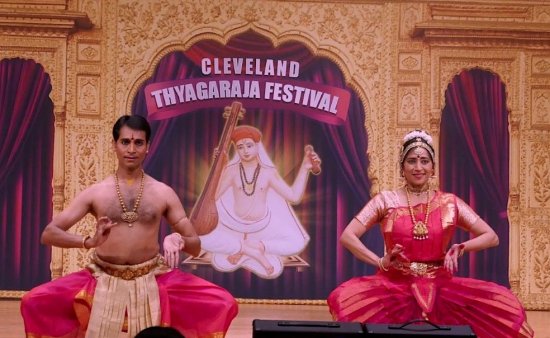 Swamimalai Suresh and Suba Parmar When did you migrate to New Jersey, and what were the initial difficulties you faced in establishing your academy? I migrated to New Jersey after my marriage in 1992, at the age of 23. By then I was an upcoming performer in India and had more than 100 performances to my credit and had performed for premier organizations with my Guru Indra Rajan including Sangeet Natak Akademi, Major Sabhas in Chennai and Tamil Nadu, Lalit Kala Akademi, Tamil Nadu Tourism, South Zone Cultural Center to name a few. I had also won the Tamil Nadu Iyal Isai Nataka Manram Scholarship for best dancer and performed in 4 cities including Pollachi Sabha and Nellai Sangeetha Sabha. It was nostalgic to be invited there to perform again during our Ananda trip after almost 30 years. It was a fresh reset for me when I came to US. Not many knew Indian dance. The Indian diaspora was small and limited to few organizations and everything was so spaced out. The performing opportunities were limited. However, I persevered, leveraging every chance to perform primarily in temples, yoga centers and ashrams that promoted Indian Art. My family, - my husband, my mother and daughter were my pillars of support throughout my journey of ups and downs. At the same time, the Indian migrant community was growing, so I began to teach children and perform simultaneously, which eventually helped me build a thriving community of students and dance enthusiasts and establishing my academy, Shubanjali School of Performing Arts. Today Shubanjali is one of the oldest and one of the most respected nonprofit dance organizations in the tri state area, a school to numerous students passionately pursuing this artform. We proudly completed the 135th arangetram in 2024 and many of our students are well recognized on the international stage. 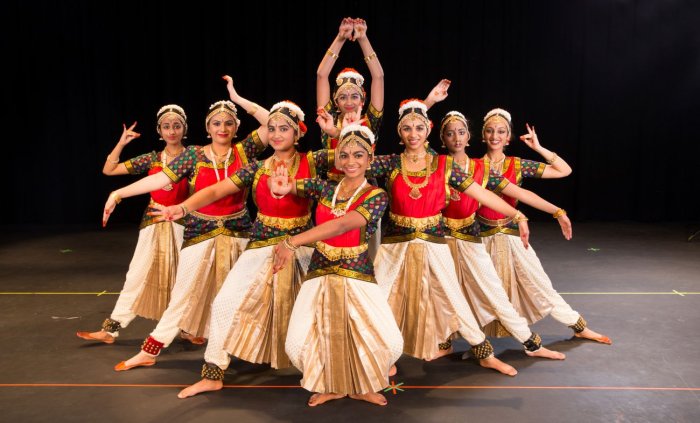 With students and audience from other countries, how do you explain the significance of Indian classical dance? For me, Indian classical dance is more than just a beautiful art form - it's a spiritual journey that transcends boundaries and speaks to the universal human experience. I love how it can convey complex stories and emotions through subtle gestures and facial expressions, creating a language that's both nuanced and powerful. The art form is rooted in ancient traditions, but its themes of love, nature, and mythology are timeless and universal. When performed with conviction and feeling, dance has the power to touch hearts and minds. I always take time to describe my thought process with the audience before each number so they can better enjoy what I am trying to convey. It makes it very enjoyable. They are truly amazed at how much this artform can deliver through so many layers and dimensions. It's a way to experience existence itself in all its grandeur. A little bit of hand holding can create this magic. What is your process of teaching? I can definitely tell you that my teaching has evolved a lot from how I was trained back in India with absolute reverence and implicit obedience for the Guru. Here, the children have a very different learning environment that respects their individuality and creativity, where the teacher is their mentor and friend, and the old methods of yelling or screaming don't generally work well. Their curiosity has to be challenged, and teachers here have to work extra hard to tap into what inspires them. I experiment a lot with my students and am always keen to see them happy and motivated, even while they're learning complex choreographies and practicing for long hours to perfect the technique. I find ways to distract them from thinking that effort is cumbersome. To me, effort must be effortless. Coming to class has to be a celebration, not a punishment. Seeing the body evolve to achieve its highest potential is the gift of the divine, and as teachers, we have to help them experience that spectacle. I set the bar and expectations very high and join in and enjoy the process with them. I've understood in all my years of teaching that children love to be disciplined. You can accomplish more by understanding their deficiencies and helping them solve their dilemmas rather than resorting to getting angry or belittling them. Over the years, I've developed a methodology that sets a solid foundation and also trains them in parallel to become good performers. Preparing them for their 3-hour solo recital after completing 8-10 years of training is, in itself, a remarkable achievement requiring commitment, passion, and dedication. I prioritize creating a supportive learning environment where students feel encouraged to explore their creativity while mastering the art form. I honor effort, practice, and dance with them, and I'm an inspiration every step of the way. I like to feel their joy and pain along with them, and the joy of performing on stage keeps us all connected and motivated. I am very proud to say that many of the Shubanjali alumni take leadership position in their college dance teams, a testament to our comprehensive and in-depth training. 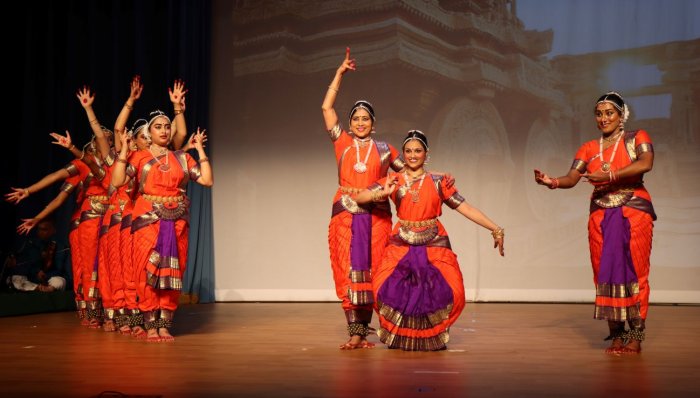 Do you teach boys as well? I'm passionate about creating an inclusive dance environment where students of all backgrounds and ages can thrive. Although I've only had the privilege of teaching three boys in my career, I'm eager to inspire more young males to discover the beauty of classical dance. My co-artistic director, Guru Swamimalai Suresh, is a fantastic role model - his talent and dedication are inspiring. I notice that in the US, many guys tend to gravitate towards Bollywood and Bhangra styles, likely due to the instant gratification they offer. However, I'm committed to sharing the richness and depth of classical dance with more male students in the future. How do you feel a dancer can contribute to the growth and welfare of society? I think a Bharatanatyam dancer can make a real difference to society by sharing this beautiful art form with people from all walks of life. For me, dance is about connection - connecting with the divine, with the audience, and with each other. When I perform or teach, I feel like I'm not just sharing a dance, but a part of myself and my culture. It's a powerful medium to convey profound thoughts and ideas and I use it to teach children moral values through right selection of repertoire that can inspire them to become more self-aware. It's all about spreading love, joy, values and positivity through movement and music. What is your experience in teaching students who have learning disabilities or are slow learners? I believe learning an art form like Bharatanatyam can be especially transformative for students with disabilities and slow learners. The practice requires concentration, memory, and attention to detail, which can be super beneficial for kids with learning disabilities. I've had the privilege of teaching students with various learning needs, including those with memory disorders and ADHD. With patience and adaptability, I've seen significant progress and growth in their confidence and skills. One of my students with memory and recall issues successfully completed her arangetram and performed with great promise on the Ananda Tour Fifty years is a long span. What are your comments when you started off, until today? Any changes in the attitude of students or parents or on the professional platform? Reflecting on my journey of 50 years of dedication to Bharatanatyam fills me with gratitude and awe. My gratitude goes to my mother, who had the vision to travel to Chennai to find a Guru who would come to our hometown of Trichy to teach. It was very rare during those times, and even considered taboo, to learn this art. But now, it's prevalent, with New Jersey boasting more than 400 teachers and the art form spreading all around the globe. I've witnessed profound changes in the art form, from the traditional Guru-Sishya parampara to the modern, institutionalized approach. In olden days, the teachers demanded implicit obedience and reverence. In contrast, today's students have a more relaxed approach, with technology providing both opportunities and distractions, and the teacher takes the role of mentor and friend. The shift from a rigid, traditional system to a more flexible, student-centric learning has its pros and cons. Students now have access to a wealth of information online and can learn at their own pace. However, I've noticed a decline in the depth and rigor that once defined our training. The teachers were ruthless in their expectations and were more vetted and experienced. My master was a Vaggeyakara; he used to write lyrics and composed most of the repertoire we performed. That level of excellence is waning. The art form has evolved, and technology has made it more accessible, but I worry that the nuances of true classicism are being lost - that vettedness. Despite these changes, the essence of Bharatanatyam remains unchanged - the power of abhinaya to evoke emotions, the sacred connection between the dancer and the divine, and the discipline of practice. As a teacher, I've learned to adapt and find a balance between tradition and innovation, nurturing a love for the art in my students while preserving its timeless essence. When a student texts me, excited to show off a difficult korvai they've mastered over Zoom, it brings back memories of my own journey and reassures me that the spirit of Bharatanatyam lives on. 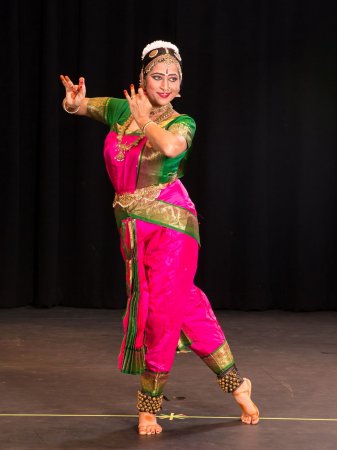 Suba Parmar Your happiest moment in your life? I'm a total ball of energy when it comes to dance, and I've been blessed to have had so many incredible moments that still give me goosebumps! But if I had to pick a few that really stand out, it would be conducting my daughter's arangetram - the pride and joy I felt in that moment was truly indescribable. And then there were the 135 such moments when my students, on their arangetram day, after successfully completing the last item, seeing the sparkle in their eyes and hearing them say they're going to miss the rigorous practices, is truly heartwarming. I tease them, saying, "Nobody's tying your feet down... you can practice as much as you want," and when they tell me it's not the same without me, it makes me feel ecstatic! I also get a huge kick out of seeing my students perform with confidence and passion, winning competitions, knowing I've played a role in their artistic journey. These moments remind me of the transformative power of dance, and I feel so grateful to be a part of it all. One moment that still melts my heart is when a five-year-old came to me with awe and told me, "Aunty, your dance is so beautiful." The innocence with which she said it made me feel like I had won the highest award. Future plan or aspirations? My future plans are all about spreading the love for Bharatanatyam and inspiring the next generation. I'm passionate about teaching and performing, and being around children fills me with energy and joy. I especially enjoy mentoring young teachers who are looking for guidance as they try to establish their own schools. My dream is to share the beauty of this traditional art form with diverse audiences across the US, making it relevant and engaging for young minds. I'd love to organize an all-American dance tour with a live orchestra, featuring talented kids born and trained in the US. Imagine a 20-city tour with a stunning theme that showcases India's rich cultural heritage. My goal is to give these young dancers an experience of a lifetime - traveling, meeting new people, and sharing their roots with the world. I envision them beaming with pride, knowing they're part of a legacy that's worth sharing. It's going to be a journey of discovery, growth, and joy - and I couldn't be more excited! 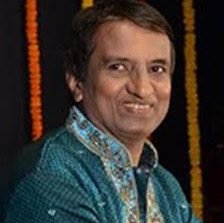 Vijay Shankar is a Kuchipudi and Kathakali exponent, teacher, bilingual journalist, arts critic and actor. Post your comments Please provide your name and email id when you use the Anonymous / blog profiles to post a comment. All appropriate comments posted with name and email id in the blog will be featured in the site. |
