
|
    |
|
|
|


PETER CHIN - Lalitha Venkat e-mail: lalvenkat@yahoo.com Dec 2000 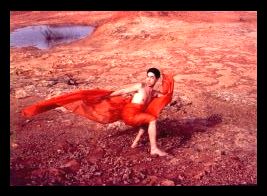 Peter Chin, a multi-disciplinary dance-artiste was born in Jamaica of Chinese, Irish and African descent and later immigrated to Toronto. He is a respected and much sought after choreographer / dancer, composer / musician, designer and director. He has presented his work across Canada at major dance and music festivals, in Japan, Singapore, Holland, Jamaica, United States and at festivals in Indonesia where he was based between 1990 and 1997. With no intensive dance training, but an innate sense of movement, he has performed in works by many of Canada's greatest companies, choreographers and directors. Peter Chin has taught performance art, music and dance at various institutions internationally as well as served on many advisory committees. He was the featured performer / choreographer in the film "Tari Rickshaw" by Nick DePencier, which won the Cinedance Award at the 1998 Moving Pictures Festival in Toronto. Peter Chin has twice been the recipient of the prestigious Dora Mavor Moore Award for best choreography in 1997 and 2000. Peter Chin's ensemble for his work 'Bite' was also a recipient of the DMM Award for the best dance performance of 2000. Is this your first visit to India? No, this is my second visit. I came earlier in 1998 during the music and dance season for research combined with relaxation. I visited Trichy, Tiruvarur and Thanjavur, saw many beautiful temples, went to dance programs. I also went to see guru Kittappa Pillai conducting classes with Hari Krishnan. With Krishnan and Devesh Soneji, I met Thilakkamma, a descendent of the hereditary temple dancers from Tiruvarur. You are here in Chennai to perform in THE OTHER FESTIVAL. Will this be your first performance in India? Yes, it will be. You use multi-media in your dance performances. What will you perform in THE OTHER FESTIVAL? In Canada, I recently used video and slide projections by a past participant of The Other Festival, Cylla von Tiedemann. But here, it will be just my dance, no complicated technical support. I will use my own music and my own voice since I will be performing a solo. How do you feel about performing at THE OTHER FESTIVAL, which is fast gaining popularity as not only a national, but international forum for artistes to showcase their new works? I have been to Chennai in 1998. I also know Anita and Ranvir well, so I'm aware of the significance of THE OTHER FESTIVAL. People in Chennai are used to seeing dance performances, as dance is part of their culture. It interests me to perform in a city where dance and music is so much a part of the identity of the place. However, because I'm presenting something new, contemporary, I wonder about what kind of reaction there will be, what kind of support. I think The Other Festival is wonderful, given the overwhelmingly traditional arts climate of the region. It is always nice to be in an international festival like this because of the sharing of ideas, meeting other artistes, seeing what they do, having a dialogue...I always enjoy that. At what age did you start dancing? My dancing career has been gradual. Though I was always moving and dancing, I did not call myself a dancer because I was not formally trained. From around 1987, I started my own productions. I have always been an independent artiste, never belonged to any company. But I have been a guest choreographer for other dance companies. My dance background is unusual since it has not followed a typical path. I come from a music and visual arts background. I'm a self-taught dancer. When I started to work as a choreographer and with other dancers, I was able to learn something from my experiences with those artistes in studios and in performances and it developed from there. 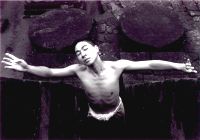 What have been your influences? My grandmother has Irish and black blood, rest is Chinese!! I have relatives, who are Jewish, Portuguese, black, white, Chinese, everything!! Born in Jamaica and coming from a mixed heritage shows in my dance. What I am going to perform in The Other Festival is partly influenced by this Afro-Caribbean heritage. In October this year, I was teaching black dancers at the National Art School in Jamaica. So, in my performance there might be some Afro-Caribbean musical element. I used to live on and off in Indonesia between 1990 and 1997. I learned Indonesian dance and music independently in Java. That has influenced my work too. I live now in Toronto. So my background is very multi-cultural, my way of being is very multi-disciplinary. There was a certain amount of freedom to explore many things and many cultural sources of self-expression. What sort of research are you involved in? How does that reflect in your performance? Here in India, I'm beginning to learn about Hinduism, Indian classical dance and hereditary ritual dances. I used to live in Indonesia and did research on court dances and aboriginal ritual performing arts. Ritual and ceremonial dance is very important and influential to what I'm trying to do with my performance. So the world traditions of ritual dance are very important for me to learn about. In North America, there's very little ritual dance except with the First Nations People and even there, it's a dying art. So, as a contemporary artiste in North America, there's something I want to bring to my performance that has to do with creating a work with dancers that is connected directly to personal issues that we extract from the dancers through the creative process in the studio and then use on stage, so that the potential for transformation through ritual dance is present in the work.... so that it goes beyond just a representation of rituals on stage, goes beyond merely trying to look ritualistic as the dancers are personally involved as to who they are and not merely as interpreters. So I try to bring out issues that are as fundamental and profound as possible. For this, there has to be commitment from my dancers. 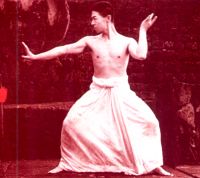 What sort of rehearsal schedule do you follow? When I'm rehearsing for a solo performance, I can't dance for more than an hour because the thinking process takes more time. I work the structure, the dynamics of the movement. I don't memorize but improvise within the rigorous structure, sort of extempore sometimes. For group performances involving only musicians or dancers, maybe up to 4 hours. When all are involved, maybe even 6 hours. You have received many awards. This year, I have received the Dora Mavor Moore award for best choreography and my ensemble won for best performance for BITE. I won the same award in 1997 for best original choreography for NORTHEASTSOUTHWEST and in 1998, I was also nominated for the same award. Have you worked with Indian classical dancers? I have choreographed "Prakaram" for Toronto based Indian dancer Hari Krishnan. I am currently choreographing a piece for Anita Ratnam here in Chennai. Do you have any advice for today's young dance enthusiasts? I have noticed that in Asia, especially India and Indonesia, dancers never warm-up before starting to dance. They start right away. Since a lot of choreographers are trying to produce new work, warming up before dancing is very important as it helps to prepare the body to work in different ways. Dancing gets better as the body can then do more, movements get more flexible, one is more open to try new movements or a combination of movements. In trying to do that, the dancer may get injured, so warm-up is important to prevent injury. If a dancer is interested in widening his/her repertoire, to move in new, experimental ways, it helps in assimilating new moves. It also opens up the mind. What goals have you set for yourself? I am trying to do something personal and transformational with my life through a creative process. Being a multi-disciplinary artiste seems to be the right course to take. It happens naturally since what I need to say and what approach I need to take, finds its most essential expression in a combination of disciplines. What is your birth date? August 1, 1962. Has this been a busy year for you? Yes, lots of traveling this year. I was in Japan for 6 weeks. I went twice to Jamaica to perform and to teach. Also to Vancouver which is quite far from Toronto where I live!! Now I'm in India for a couple of months. Then I'm off to Indonesia since I haven't been there since 1997. I miss it. |
