
|
    |
|
|
|

 Book Review of Shiva's Fire: A 2000 Parents' Choice® Gold Award winner An Interview with the Author - Suzanne Fisher Staples by Padma Chebrolu Sep 2001 Suzanne Fisher Staples is the author of Dangerous Skies, Shabanu, and Haveli. She recently released a new novel, "Shiva's Fire." This is a story of a young woman, Parvati, who was born into a poor family and becomes the most famous Bharata Natyam dancer in India. Parvati's story will inspire readers to follow their passion and set high goals and settle for nothing less. Even though this novel is set in contemporary India, it includes a bit of ancient mysticism. Suzanne Staples crafts Parvati's story with magnificent imagination and great understanding about India's culture and traditions of Bharata Natyam. She was an UPI correspondent in India, Pakistan, and Hong Kong for many years. She won awards for Shabanu and Dangerous Skies. Book Description 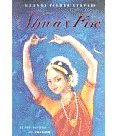 Born during the worst storm ever seen by her small village Nandapuram near Mysore in India, Parvati is both blessed and cursed with mysterious powers. Wild animals flock to her; she is able to charm fish, birds, even deadly cobras. But Parvati's truly exceptional talent is her ability to dance like the Hindu god, Shiva Nataraja himself. Interview with the Author Padma: What inspired you to write a book based on Southern India and classical dancing? Suzanne: I lived for four years in New Delhi, where I worked as a newspaper reporter. I was young and single when I arrived in India, and one of the first things I did was to go to an Odissi dance performance at the Indian International Center. The next night was a Bharata Natyam performance -- I went to that and was hooked on Indian dance. For the rest of my time in India I went to every classical dance performance I found. Also, I began to travel to the South of India because I had to work quite a bit in Sri Lanka. I'd fly into Madras and spend a few days there before flying to Colombo. I fell in love with the South of India, with the people, the food, and the climate -- everything about it. Padma: How did you develop such knowledge on gurukulam, teaching methods and the dance style itself? Suzanne: Once I visited Bangalore to write newspaper articles on the computer and space industries. I had heard about the late Protima Bedi and Nrityagram, which she was just beginning to build out of the dust and wilderness. I visited every gurukulam I came to know about from that time on, from small, traditional ones in the home of the guru to Kalakshetra in Madras. Padma: Of the entire dance styles exists in India, why Bharata Natyam becomes the focus of this book and Parvati? Suzanne: I was fascinated by the Shiva Nataraja statues I saw everywhere, particularly the sandalwood statues carved in Tamil Nadu. I met a sandalwood carver in Mysore who began to tell me stories about Shiva. Then I went to Chidambaram and studied the Shiva temple there. Padma: You have a very keen sense of observation into individual behavior and understanding to what promotes it. This is obvious all through the book. How do you develop such deeper understanding? Suzanne: Thank you, Padma! I don't know how one develops a capacity for understanding other human beings. I do know that I was a very shy child and that I lived a lot in my imagination, where I made up stories about people that I saw. I created friends in my mind. I think this was the beginning of writing fiction for me. Padma: Why do you think the concept of dharma still exists and practiced in India? Suzanne: I think it is at the very core of the Hindu belief system, and it has become a part of my own belief. We learn to love stories I believe because they help us to make sense of the chaos we encounter in our lives. Dharma is a very ancient and credible way to create order of chaos. Padma: It was amazing how you combined contemporary Indian lives with ancient myths and gods. Suzanne: Thank you! One thing that I have learned from living in many cultures and another hobby, which is reading historical fiction, is that human beings are more alike than dissimilar, regardless of cultural traditions, geography or the passage of centuries. Padma: You use many Indian terms in your writing. To an Indian like me, that was just like reading poetry and had no difficulty understanding it. Wasn't that bold on your part when most of your readers are non-Indians? Suzanne: I don't know whether it was bold -- but it made sense to me, and I wanted to give a flavor of what the South of India sounds like and smells like and tastes like. To me that's the purpose that description serves in a story! Padma: You talk about Parvati's commitment to a rigorous and solitary program of study of dance and devotion. What can we do to bring these qualities into dance students who are raised in US? Suzanne: I wish I knew. One of the things I loved about all of India is that people live very modern lives, but they hold fast to their traditions and cultural beliefs. In the Hindu belief system religion is so much more intertwined with every thread of human life than it is in the Western belief systems. So most Americans' lives are ONLY modern and materialistic with an overlay of religion that often is at odds with the rest. That attracts me very strongly to Hinduism. But I don't know how to change the way things are -- perhaps to start only with oneself is the way to do it. Padma: When most non-Indians know about the poverty side of India, you describe the lifestyle of middle class, wealthy and maharajas. It was refreshing and educational to read about Indians of different classes. Suzanne: For all of us these strata of our culture and society are increasingly mixed. It's difficult to separate them out and talk about them separately. Padma: What are your favorite things in India? Suzanne: Oh! Where do I start? I love the spirit of the people of India, from all over the subcontinent. People believe in individualism as strongly as they believe in the Unity of the human and divine spirits. I love that. I love the food, the colors, the art, the music, the animals and the way they are so important in human life -- I feel as if India is my other home. This book is available at Amazon.com and other stores. It is available in hardcover, large print and audio tapes. Suzanne Fisher Staples currently lives in Chattanooga, Tennessee. e-mail: waysu@aol.com Padma Chebrolu is the artistic director of Cultural Centre of India, Cincinnati. Ohio. e-mail: padma@culturalcentreofindia.com |
