
|
    |
|
|
|


R Visweswaran, the Musician / Composer - Lalitha Venkat e-mail: lalvenkat@yahoo.com Aug 2000 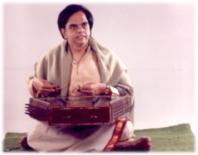 A multi faceted artiste, R Visweswaran is the only South Indian who plays the Kashmiri santoor apart from saraswathy veena, western classicalguitar (LTCL), Bass, 12-string guitar, glock and spiel and harmonica. He's well-versed in Carnatic, Hindustani and western classical music and isa self taught flamenco guitarist. He's a Carnatic music vocalist as well as singer and composer for dance. Tell us about how your family's music background and how it influenced you. My maternal uncle was the great GNB. From a tender age, I was exposed to the music of great stalwarts like GNB, Madurai Mani Iyer, Ariyakudi,MSS 'maami', MLV, Ramanuja Iyengar, Alathur Brothers, Semmangudi Srinivasa Iyer, Bismillah Khan, Bade Gulam Ali Khan and others. Accompanying my uncle to concerts plus having a father who was the then secretary of Music Academy made me a regular concertgoer sinceage 5. My mother Rajeswari Ranganathan is a musician in her own right who trained under Tanjore S Kalyanaraman, a disciple of GNB. Herformal training became my informal training in music as I used to listen to her and learn. Being born in a family with musical heritage and comingin close contact with all the classical greats of the time, I regret to this day that I did not make use of the golden opportunity to enhance myknowledge of music, in particular from GNB. When you started learning music, did you learn Carnatic music first or western? Or both simultaneously? All I did was hear the Carnatic and Hindustani music and assimilate it. Since my uncle's days, my loyalty is divided between Carnatic and Hindustani music. From 1962-1964, I trained to play the veena under R Pichumani Iyer. But around '67, my predominant interest during my college days when I was doing CA, was to experiment with flamenco music and practice on western classical guitar music just by hearing Segovia's records. Instead of chasing girls at that age, I used to sleep with my guitar!!! During my CA exams, I even managed to go to Bangalore for a concert by the great jazz guitarist Charlie Byrd. In short, I struggled and taught myself many types of music, just by hearing and practicing the techniques. In fact, I finished the 11-year L T C L course from Trinity College of London in just 3 steps. My formal training in Carnatic music under my mother started only when I turned 35. Tell us about your experiments with flamenco music. During college days, I slogged from 6 to 22 hours on flamenco music, to strive to get the notes right just by listening to the music of flamenco greats like Carlos Montoya, Sabicas and Paco Penea. I kept my eyes and ears open. Nothing escaped me. In the late 70's, the visiting flamenco groups commented on my playing that my music sounded very much flamenco but the technique was different. Though self-taught, I knew then that I was on the right track. You were an executive in a company. At what point did you decide to quit business and devote full time to music? I wasn't a great academic student. But I was crazy for music. That has paid rich dividends now. After my CA exams, I joined a company, but I felt like a fish out of water in the commercial setting. Having grown up in a musical atmosphere, my inclination was for music only. I got married to Chitra on July 12,1972. A couple of years later, I got into full time music with her encouragement which included film music. 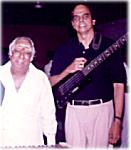 How did you get involved with R D Burman, M S Viswanathan and film music? In '74, I came into contact with R D Burman who took me to Bombay and gave me entry into Bombay film music, an experience I cherish greatly. I have played guitar for R D Burman, C Ramachandra, Rajesh Roshan, Lakshmikant-Pyarelal etc. I have had the good fortune to play accompaniment to Lata Mangeshkar, Kishore Kumar and Asha Bhonsle. Unfortunately, though I have heard Rafi sing in a recording, I never got to play for him. It was during the Bombay film recordings that I met the santoor maestro "avatara purusha" Pandit Shiv Kumar Sharma, my great guru and revered influence in my life. Thus started my training in santoor. He urged me to leave everything else and concentrate on santoor alone, which put me in a great dilemma. I was shunting between Madras and Bombay at that time. In '76, M S Viswanathan spotted my talent and to this day, I play for him. And I love to play even today for A R Rehman who is absolutely wonderful and takes the best out of an artiste. Classical musicians tend to discount film music as not respectable. Do you think film music is a valuable experience for a Carnatic musician? In my opinion, it is better to be jack of all trades, master of some! Film music helps you determine how close to sing to the mike at different voice levels, feeling, how to adapt the music, especially quick composing which I learnt from M S Viswanathan, quick decisions on where to modulate the voice...The wonderful kalapramanams of MSV, R D Burman and Naushad have inspired me greatly. What are your favorite ragas? Why? I love hundreds of ragas, especially apoorva ragas. My favorites are Ragesri, Batiyar, Lalith and Puryadhanasri in Hindustani. Panthuvarali and Rasikapriya in Carnatic. Contrary to popular belief that vivadhi ragas have negative effects, I enjoy vivadhimela ragas, otherwise Venkatamahiwould not have evolved 72 melakartha. . Name some of your favorite western composers who have inspired you. The incomparable Mozart, the religious appeal of Bach, Beethoven, folk approach of Wagner, Ravel, Vivaldi, the liberal notes of Rachmaninovand Dvorak. And I adore Tchaikovsky, Isaac Albaniz and F Sor on classical guitar. Most people feel santoor has limitations and is a light, folk instrument from the mountains and does not compare favorably with the solid weight of Carnatic music. Your comments. The santoor does have its limitations, especially when it comes to playing Carnatic music. I am at present trying to overcome this limitation bytrying out a few ragas. I got the idea when I played Anandabhairavi and Hamsadhwani in a jugalbandhi concert. It is wrong to decry any instrument as non-classical. We have to adapt the instrument to our music, like Pandit Shiv Kumar Sharma has adapted the santoor to classical Hindustani music. Are you in favor of fusion music? Yes. Fusion is a very thrilling experience. A little of all disciplines is needed for the effervescence, like film music, dance music and fusion music. Exposure to various types of music promotes better output and better communication, especially if there is a comfortable jelling of music styles. A memorable experience is when I played before a crowd of 5000 near the Rouen cathedral in France with a French keyboard player. What are your memorable fusion music experiences? All music is important to us. There's beauty in all music & I'm a culture buff. I have participated in a CD album called 'River Rhythms' with Japanese Sakuhachi flautist John Kaizan Neptune and Terry Allen amongst others. I have played jugalbandhi on santoor to Balamuralikrishna's viola, Ravi Kiran's chitra veena, G J R Krishnan's violin and Kala Ramnath's North Indian violin. 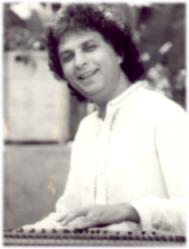 Which is your proudest moment as a classical musician? Actually there are quite a few. *When I was a college student, I used to play flamenco solo guitar music. Veenai Balachander gave me the title 'Flamenco Mylaporean' on 25th March 1968. *When R D Burman introduced me to Asha Bhonsle as 'the best guitarist in India'. *My Annamacharya learning session with M S S maami. *In the late 80's, my mother and I sang before the Paramacharya of Kanchi. He went into a trance but we mistook it for his going to sleep though we sang on. When we were told that our music had moved him into deep dhyana, we were engulfed in happiness that our music had pleased such a great soul. *In '91, I was greatly honored when tabla maestro Zakir Hussain played with us when I took a troupe of 18 to Malaysia. *There is yet another incident not directly connected to music. Pandit Shiv Kumar Sharma saw a photograph I took of him in a photo session and he called me from Mumbai to say, " I have had so many professional photo sittings, but none to equal this photo you took of me". Are you satisfied with what you have achieved today? I have tied my physical age and put in deep freezer. When occasion demands, it warms up. I'm my own worst critic. I think, look back and analyze, especially when I have played or sung out of tune or wrongly. The day I want to hear my own music is the day I will regard myself as a true and honest musician. That day is yet to come. Many people say they do not go to sleep without hearing my santoor. This does not go to my head, but a few words of praise does help to egg me on. Visweswaran R 2, Sri Labdi Colony Off C V Raman Road Alwarpet, Chennai 600018 Ph: (044) - 4990036 e-mail: vichechu@vsnl.com Visweswaran's experience as a dance accompanist |
