
|
    |
|
|
|


THE DHANANJAYANS - In step with tradition...ahead of their times - Lalitha Venkat, Chennai e-mail: lalvenkat@yahoo.com Photos: Courtesy: Bharata Kalanjali Sep 2002 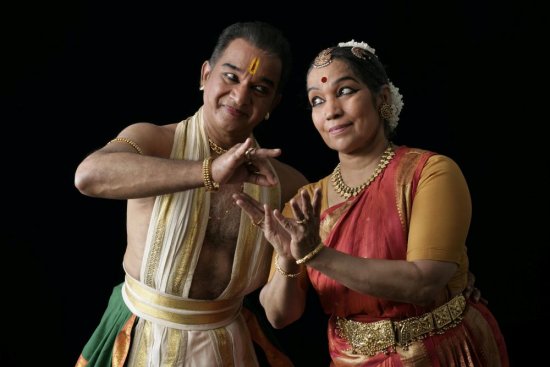 Vannadil Pudiyaveettil Dhananjayan and his wife Shanta, popularly known as the Dhananjayans are among the most accomplished dancers and teachers of Bharatanatyam, as well as one of the legendary dancing couples of India. From a modest start to establishing their own dance academy, it has been a story of deep commitment, fervor and dedication to their art. Bharata Kalanjali has emerged as a full-fledged academy of dance and music with a repertory fashioned out of its own students and graduates. The Dhananjayans created a trend for others to follow in the realm of dance items and bringing in professionalism in dance. In music as well as dance, they took the bold step of working with contemporary composers, poets and writers. Along with Mrs. Shivamoni Nathan, Mr.T S Chandra of Travel Corporation of India (TCI) promoted the Dhananjayans. It was Chandra who introduced them to the Floating University - Semester at Sea program in 1979. Their many accomplishments include choreographing and performing in "Ghanshyam" with Pandit Ravi Shankar, a multi-cultural ballet with New York City's Jacques D'Amboise and conducting an annual Indian classical dance camp in Yogaville, VA, every summer. While Bharatanatyam forms the quintessence of their recitals, the Dhananjayans have a penchant for innovation. The Ramayana production with neutral costumes, Kathakali performance without traditional costumes and the highly acclaimed Adventures of Mowgli are trail blazers. Dividing their time between Bharata Kalanjali in Chennai and Bhaaskara in Kerala, keeps them busy year round. V P Dhananjayan speaks to Lalitha Venkat about Bharatanatyam and Bharata Kalanjali 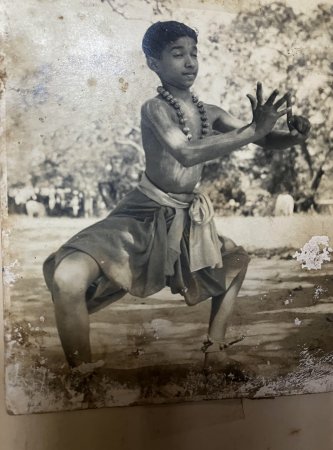 Dhananjayan in 1954 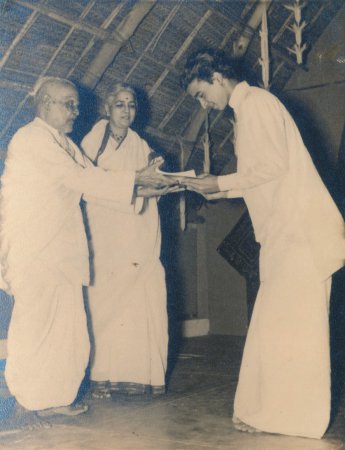 Dhananjayan receiving diploma from Mysore Vasudevachaar & Rukmini Devi (1960) It is now more than 30 years since you started Bharata Kalanjali. I left the Kalakshetra faculty in Dec 1967. In 1968, I started with one student, Chitty Lakshmi. As we were still living in the Kalakshetra premises and there was no space then to set up a class, Chitty was the only student who had the privilege of my going to her house to teach her dance. That was the only instance that I have ever taken a class outside my house. We moved out of Kalakshetra in 1968, and took up a modest cottage in Sastri Nagar. Coming from a poor family, with no base, no financial backing, Bharata Kalanjali was started with a thatched roof at #3, 5th Cross St, Sastri Nagar with Sumathi Meenakshisundaram as the first student. Sumathi still continues to be involved in the activities of Bharata Kalanjali. 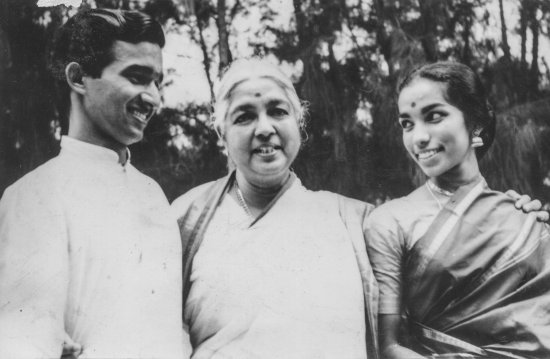 Dhananjayan, Rukmini Devi and Shanta Leaving Kalakshetra was a big step. How did you manage? The only moral support in those desperate times was Shanta's parents, but they were based in Singapore at that time. Shanta was still teaching in Kalakshetra till 1969. To support my immediate family as well my family back home in Kerala, I used to shunt between Sastri Nagar and Parrys Corner where I held a clerical post in a TTK company under TT Narasimhan. Office work during the day, teaching dance in the evening was my routine. Slowly, students from the neighborhood joined Bharata Kalanjali and as the number swelled to a remarkable 50 in 1970, we became full time gurus. My training at TTK taught me to be articulate, how to manage an office. I learnt to type, something that has come in handy now! Since I was in the export department, I even learnt how to run a business. How did you get performance opportunities? We initially gave performances at conferences, wedding receptions, at hotels, and special shows for tourists. They were financially lucrative, but we were criticized for performing at weddings. My argument was, if M S Subbalaksmi could sing at weddings, there was no harm in the Dhananjayans dancing at weddings! You were going against the trend! Yes. Shivamoni Nathan, the then Tourism Director, who knew us from Kalakshetra days, brought a lot of tourists to our thatched roof school. Bharata Kalanajali's reputation grew from this exposure. Tourism was being promoted in a big way. In fact, a special natya mandap was built at Hotel Connemara (in Chennai), where we presented a one-hour aesthetic show combining Bharatanatyam and folk dance, every day for 5 months for the visiting tourists, on condition that no food/drinks should be served during our performance. I could demand that because I had status, but younger dancers who took to performing at hotels to earn a decent remuneration were not able to command the same. We made our name through our performances for conferences and tourists, not through sabha performances, but I never felt bad about it. The local conservative sabhas could not identify themselves with the new work that we created. So, when I was awarded the Nritya Choodamani by Krishna Gana Sabha in 1984, I publicly stated, "I have not been made an artist by the sabhas" and was criticized by Subuddu in Indian Express as 'indecorous speech by the awardee'! What sort of repertoire did you develop and why? People who leave Kalakshetra are looked upon as defectors. Since Shanta was still a faculty at Kalakshetra, Rukmini Devi questioned her about presenting the Kalakshetra items outside the institution. These were the only items we knew! As they say, necessity is the mother of invention. This turned out to be a blessing in disguise as it gave us the impetus to create a completely new repertoire, quite removed from the Kalakshetra style. In1969, we presented a completely new repertoire never before seen in Bharatanatyam, at the Museum Theatre. It was a revelation to even those used to the regular Bharatanatyam items. 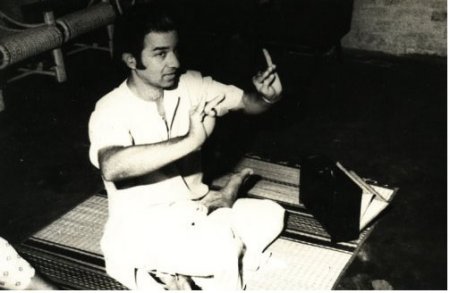 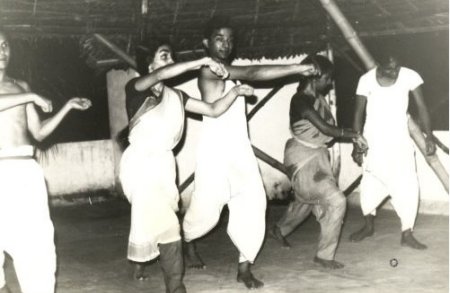 We gave a new texture to the whole thing, starting with an item called Natyanjali. The title was novel, so was the item, combining the ingredients of alarippu, jatiswaram and sabdam put together. Creative but without deviating from the traditional format, this duet proved to be very appealing to the public. The word Natyanjali that is so prevalent now, did exist in the Sanskrit language, but we popularized it as the name of an item. After Natyanjali, we presented Nrutyopaharam. What was special about this duet was that this Telugu varnam in Attana was by Turaiyur Rajagopala Sarma, a contemporary composer, which was unusual for that time. It was usual then to depict only nayaka nayaki bhavam apart from compositions from the past. After that came 2 new padams like contemporary Periasami Thooran's Ariya paruvam. We concluded with a thillana titled Nritya Angahara, choreographed to a composition by Balamuralikrishna. Balamurali was then an upcoming musician, a bit controversial because of his type of music. The thillana he had composed was different from the usual format and a bit complicated, so no dancer wanted to even attempt to dance for it when critic and scholar VAK Ranga Rao, who had realized its potential, approached some very prominent dancers at the time. I took it up as a challenge, learnt the music directly from Balamurali and composed the dance for it. It was the first time someone had ventured to do a controversial thillana of a controversial musician! When Balamurali saw the thillana, he was in tears and remarked, "Thillana looks as if I have composed the music for your dance". Despite the totally new set of items, someone from the audience asked for a Kalakshetra item! So, extempore, I performed a famous Kalakshetra item 'Neeyuraippai Hanumaney...'. Did this pave the way for more programs in conservative Madras? More than just that. That evening's program was the start of a new era in the Bharatanatyam repertoire, but came in for divided reaction from the critics and traditionalists. I consider this first program important because it broke the ice. More invitations to perform followed but I never compromised on payment. I was criticized for being 'commercial'. Only if you do something absurd to make money, I would call it commercial. We were professionals; we were sincere artists and proud of our tradition. My being adamant over emoluments paved the way for other artists also to be paid for their performances. This fostered competition because the sabhas would then hire other artistes for lesser performance fees! I created a trend for others to follow in the realm of dance items, in the remuneration and bringing in professionalism in dance! 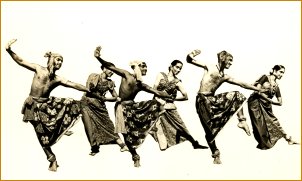 You had traveled abroad as part of Kalakshetra's troupe. When did Bharata Kalanjali get its first independent overseas program? When Malaysia Singapore Airlines invited Bharata Kalanjali in 1970 for a cultural program exchange in SE Asia, we got together with our other Kalakshetra colleagues like Adyar Lakshman, Narasimhachari and Vasanthalakshmi to form the Bharata Kalanjali Dance Troupe. I envisaged a program called Aikya Bharatam, comprising of folk and classical dance from Kashmir to Kanyakumari. I got this idea from a program I had done with the students as a faculty member of Kalakshetra, to collect funds for the jawans during the Indo Pak war of 1965 / 66. This idea did not go with Kalakshetra's strict adherence to tradition but was successful all the same and collected a lot of money. It was a very colorful show. There was no money to make costumes, so we borrowed some money and Shanta made them at home. Kalakshetra training! The beautiful thing about training in Kalakshetra is you emerge as a complete artist. Being Kalakshetra products, we were well trained in everything from making costumes to dance makeup, architecture, lighting... everything of relevance was taught at Kalakshetra. The students observed and worked with specialists coming in from Kerala, also learnt how to make crowns, jewellery items, even ankle bells, which we used to sew ourselves. It was a very well organized tour at very big venues, with a lot of publicity. The tour was a grand success and gave a big boost to the reputation of the Bharata Kalanjali troupe. Aikya Bharatam was such a big hit that it has been performed more than 3000 times over a duration of 20 years and is now being presented by my senior students. 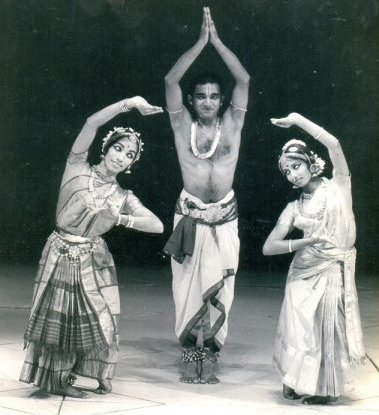 Shanta, VP Dhananjayan & Alarmel Valli at Theatre de la ville in Paris (1973) What was your next major break? A gentleman called Mahesh had seen one of our shows and on his request, we presented some of our items for him in Adyar Lakshman's house since his cottage was more spacious. Then we did not hear anything from him for the next 10 months. It was only later that we knew he was an agent scouting India for dance and music talent to be presented at the month long India Festival in Paris. In 1973, we were invited to present Bharatanatyam and every day at the Theatre De La Ville in Paris ran to packed houses. A highly satisfying tour, artistically and financially. 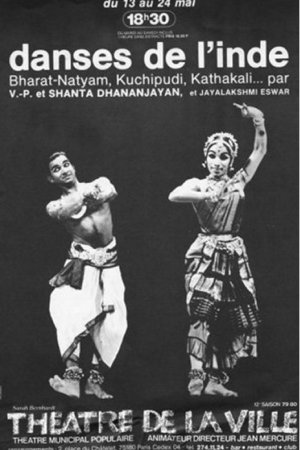 The other upcoming artists chosen were Birju Maharaj for Kathak, Shiv Kumar Sharma for santoor and Hariprasad Chaurasia for flute. Birju Maharaj complained that he was never invited to perform in the south. When I mentioned this to Krishnaswamy of Narada Gana Sabha, he promptly invited Birju Maharaj to Madras to perform. That was in 1974. Narada Gana Sabha is the pioneer sabha that promoted so many artists, so many north Indian musicians too. Did you perform to a live orchestra? Yes, Madurai T Sethuraman was the vocalist. We have never danced on stage for taped music till date, and never will. I do not appreciate it and I cannot do it. We make recordings for our students, but we ourselves perform only to a live orchestra. Have you ever faced any problems with your accompanists? Not at all. After coming out of Kalakshetra, we are the people who have trained almost 90% of the present day musicians for Bharatanatyam. Most of them trained at our school and some at Adyar Lakshman's school. Playing for dance requires special nuances. We continue to train musicians; we actually have 3 sets of musicians. If any musician gets a lucrative offer, or chance to perform abroad, we always let them go with our good wishes as it gives them good exposure and they have all done very well in their careers. We have a good rapport with musicians and even those who played with us since 1969, remain in close contact with us. I have boosted the morale of the accompanying musicians by giving them importance in a program and treating them on par with other artists. There was also complaint against me from other dancers that I am giving too much importance to these accompanying musicians and raising their demand. I am instrumental in providing them with proper professional fees and all my musicians are well placed. Complaint against me was that I was paying too much, which the other dancers were not able to pay. I started giving awards and recognition to accompanying musicians, costume tailors, stage technicians and the like. I brought some of the accompanying musicians on the centre stage in music concerts through organizing Bharatakalanjali Sangeetotsavam.  During the initial tours abroad, how well did you adapt to a different culture? Because we were interacting with foreigners in our school here, we had an idea of how best to present our art to non-Indians. It was not a cultural shock and we were able to adapt easily to Europe. Moreover, in Kalakshetra, we had foreign students and as part of the Kalakshetra troupe, we had been on tours abroad, especially a 4-month tour of Australia in 1966. That was a big exposure for us. All our trips abroad were through well established professional organizations. We were the fortunate ones because the Kalakshetra training equipped us admirably. As you can see, the most prominent dance gurus/performers of today like Adyar Lakshman and C V Chandrasekar are the cream of Kalakshetra! Our training was for the sake of art. Now things are a little different because students come there for a diploma and start earning, the purpose has changed completely. We never thought of material wealth till we left Kalakshetra and realized that we had no money! As long as we were in Kalakshetra, life just went on, we did not need anything. We had food and shelter. But when we came out, there was need to take care of the family, offer better training facilities and so on. What made foreign students come to Bharata Kalanjali to learn dance? In those days, Kalakshetra offered only short-term training courses to foreign students. It was convenient for those students to further their training with Bharata Kalanjali, which followed the same Kalakshetra training. One such student was Katherine (Kunhiraman), who stayed with us as a paying guest. Katherine's was Bharata Kalanjali's first arangetram. It was also the arangetram of our first overseas student followed by Chitty Lakshmi's. More foreign students followed Katherine and the added revenue was not only helpful, it helped us to better the facilities by taking a bigger cottage and the thatched roof now covered a bigger space. It was very convenient to hold classes and rehearsals. On completing their dance training, Katherine as well as another American student Sheila were sponsored by the USIS to perform at venues in India under their banner. As their gurus, we accompanied them and the experience of working in such professional setups helped us pattern our mode of work on professional lines. You said you composed dances totally new to the Bharatanatyam repertoire and what you did then was considered revolutionary for that time. Based on contemporary writer Periasami Thooran's work Valli Thirumanam, in 1974 we presented the first dance drama of Bharata Kalanjali to music which Turaiyur Rajagopala Sarma, an associate of Papanasam Sivan, helped to compose. In music as well as dance, it was path breaking as established artistes like Kamala and Vyjayanthimala used only old compositions of stalwarts for dance, not music of contemporary composers, a bold step that I ventured to take. This came in for criticism by the orthodox school of thought according to which only a Kshetrayya padam or an ashtapadi was pure Bharatanatyam and anything which did not include these, was a deviation from tradition. Periasami Thooran was considered a contemporary then! Now that he has passed on, it's a different matter altogether! Also, Telugu padams were more in vogue than Tamil padams. In conservative Kalakshetra, hardly any Tamil padams were done, not even Krishna Nee Beganay. I can boldly say that I was the one to present a lot of Tamil padams to the public. They found it easier to understand. We brought out a complete Tamil repertoire. After the initial criticism, that also became a trend and others were quick to follow. Bharatanatyam is so famous in the US now. What was your impression when you first visited US? Art in education is a very important factor in Bharata Kalanjali, now transferred in a larger way to Bhaaskara, our residential gurukulam in Payyanur, Kerala. Our 1976 educational tour of NY State on the invitation of the NY State Education Dept was a great breakthrough because among many institutions in India that were screened for the purpose, we were chosen for the educative quality of our presentation. It was a 4 month tour of the NY State education centers from elementary schools to university level. It was a hectic schedule of 4 sessions every day and included Bharatanatyam and Kathakali styles. 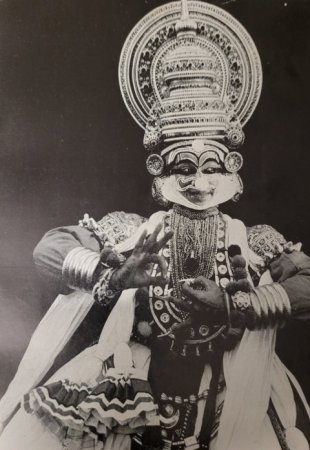 Dhananjayan in Kathakali vesham (The Kalakshetra Journal, 1964) It was a revelation for American students to learn about Indian culture and traditional values at such close quarters. I can openly say that we were trendsetters in exposing the Americans to the beauty of Bharatanatyam, about which not much was known then. Maybe the names of Ravi Shankar and Balasasarwathi were known in university circuits, but not much else. On return, we were given a lot of press coverage here, since we were fresh from the success of a foreign tour! That was also the time of the brain drain from India to US, when the young housewives who had learnt a little dance, started teaching from home. Now, of course, things have changed. Over the years, we have seen how the NRI's have progressed. In fact, some of the best traditions are kept alive there! We see Indian children dressing and behaving more traditional in America than here. After the 1976 visit, we have visited America twice or thrice every year till today. We were initially invited by universities, later by Indian organizations based there. The frequent visits created a lot of affinity towards both cultures culminating in our big collaborative work Jungle Book.  You have many students, Indian and foreign. How do they emote for something in a language they are not familiar with? Take a Telugu padam, for instance. It is learnt as a word-by-word meaning till the whole thing makes sense. That's how students who don't speak that language understand. Exposure to such words widens the vocabulary and the students are then able to identify common words in that language. Having been part of a mixed crowd in Kalakshetra, it was easy to pick up languages through conversations as well as learning through dance items. It was easier to communicate. But present day pressures of daily life do not allow children to have that same interest or facilities to converse in a language other than English. In fact people coming from abroad, take more interest in knowing the meaning of our language. If they stay longer, they try to pick up the language much better than our own children. They come here only for this purpose, but our children have academic activities in addition to dance, so we can't really blame them. Most of our dance items are based on socio-religious themes. Suppose a non-believer wants to learn dance? Our art has been nurtured by our system of life, sanathanadharma. It is not a religion. From time immemorial, even in Natya Sastra, it is never mentioned anywhere that it is a religion; it's only a way of life. I tell my students to have complete freedom in their beliefs. I strongly maintain that there is no religion higher than truth. Be truthful to yourself. Keep your belief, but when you portray Krishna as a deity, don't think of him as a Hindu God, just consider him as your God whatever your faith may be. If you look at various mythological characters, you will find many similarities in them. So, it is perfectly OK for a dancer to think like an actor? Yes, absolutely. From experience I can tell you about some older students, who when they learnt dance, it was initially only as an entertainment. But after learning dance, they gradually became believers. This is the beauty of our art. Spirituality and religion are different. Spirituality does not mean you believe in any particular God or religion, it just means uplifting yourself to a better plane of life. Think good, do good, serve well, that's what matters and you don't need any God for that. I am not a fastidiously religious person nor am I a staunch temple goer, but I believe in my culture, in my heritage and I believe in certain norms to follow. Dance gives you a spiritual education, not God spiritual or religious spiritual, but to be a good human. How could a non-Hindu or an unbeliever portray Ganesha ... What I would say is, think of Ganesha as a baby elephant and enjoy the movements. Similarly, for Krishna, enjoy the pranks of a child. Krishna's pranks are all what we see everyday. Fitness is very important, especially in dance. Fitness is given great importance in Bharata Kalanjali. Before the class, the students have to compulsorily do warm-up exercises. All the dance steps, like karanas, are very closely associated with yogic postures. Sampoorna yogam idhan natyam, the most complete yoga is natya. Only in natya, you have the physical, mental and spiritual unification. Memorizing the music and dance is a lot of mental work. Dance movements are physical exercise. Nataraja is symbolized as yoginaam yogina. Dance has everything, even meditation. Etho hastha thatho dhrishti. One needs complete concentration. That's why, even the so-called dull students will become brilliant if they practice dance for 10 years. Dance helps build stamina. No pain, no gain. The araimandi stance is quite painful initially, but serves as an endurance test. That's the beauty of dance. 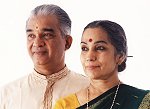 VP Dhananjayan, Shanta "Bharata Kalanjali" Chennai e-mail: bkalanjali@gmail.com |
