 |
    |
|
|


PANDIT SATYA NARAYANA CHARKA by Bhasyam G Iyengar Jun 2002 Long ago I realized the latent urge in each and every one of us to identify ourselves with the streak of culture and art that invariably makes the business of living richer and more meaningful, despite the various inevitable constraints which eventually crop up. Sooner or later culture prevails, because culture is what we are, while civilization is what we have. It is this compelling force that prompted me to launch myself passionately into the challenging mission of keeping the torch of culture lit in our hearts and minds. True to my artistic instincts, I chose the medium of dance to realize my dreams and mission, and the result is the birth of the East-West School of Dance in 1981 - "twenty years and beyond", marching confidently towards the unfinished goal. Looking back with gratitude, I remember all those who have made the journey so far a memorable one, inspiring the School to march ahead with purpose and grit. I thank my parents and friends, my students and their parents, my well-wishers, patrons, and gurus, who guided me on the path of wisdom and culture. - Pandit Satya Narayana Charka Director, East - West School of Dance KATHAK DANCE Kathak is the classical dance of North India. The word Kathak is derived from the word katha, meaning "a story", and hence the word Kathak means a storyteller who recounted mythological tales in the temples and danced them in a state of ecstasy. Having its origin in the sacred text known as the Natya Shastra, said to be divinely inspired through the Sage Bharata, it has become one of the most comprehensive and expressive languages of movement in the world. GURU THE MOTIVATOR 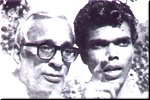
with Guru Pandit Shambhu Maharaj After the birth pangs of the passion for pursuit of cultural identity subsided, the way was paved for the quest of a spiritual guru. The search ended at the feet of late Shri Brahmananda Sarasvati, the founder of Ananda Ashram in Monroe, NY. Swamiji was a great spiritual teacher who presented a modern synthesis of the ancient Sanskrit scriptures of Yoga in the West in the Twentieth century. Although he left his body for the heavenly abode in 1993, his ever-lasting and all-pervading spiritual presence continued to guide the shape and destiny of the East-West School of Dance. IN PURSUIT OF ARTISTIC EXCELLENCE 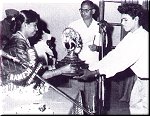 A natural and unstoppable motivation can give form to a dedicated institution. It is no exaggeration to place Pt Satya Narayana Charka in this elite bracket of the motivated with a vision. Right from day one of his excited leap on the Himalayan snow in the company of ascetics and saints absorbed in meditation, the well-spring of his creativity has been unstoppable. The talent of Pt. Charka surfaced very early in his illustrious career as a versatile dancer. At 17, he bagged the coveted Best Classical Dancer in the All India Music and Dance Competitions. His dance career started in the Government College of Music, Hyderabad, India, where he graduated in classical Kathak dance in 1962; he studied under Pt. Ramakrishna Shukla, a renowned master of classical Kathak dance. The versatile dancer in him moved on to study Kuchipudi dance under Padmashri Dr. Nataraja Ramakrishna, and Pt. Charka matured as a celebrated dancer. In his sojourn to New Delhi to pursue the art of choreography, he was soon in the company of many stalwarts at Natya Institute of Choreography and Natya Ballet Center, New Delhi. During his eventful stay in New Delhi, he achieved a postgraduate degree in chorography under Guru Smt.Maya Rao, a legend in her own right. At Natya Ballet Center, he had the august presence of yet another great master, Pt. Bhagwan Das Verma.  In the continued learning process at Kathak Kendra, New Delhi, he pursued Kathak with advanced training in the company of the great dance maestro, Natya Samrat Pt. Shambhu Maharaj. The presence and guidance of all these stalwarts and gurus enabled Pt. Charka to visualize and experience the ecstasies of reaching the inexplicable heights of classical Kathak and innovative choreography. The innovative dancer in him rejoiced in the unravelling of the mystery of Kathak as he grew more and more mature. Recognitions and awards followed. He was appointed by the Indian Ministry of Defense as a Staff Artist. He taught at the American Foundation and the American International School from 1969-72. Between 1972 and 1975 he performed and taught as a visiting professor in Japan and Hong Kong. The overseas assignment continued in a flurry. In 1971, he was on a cultural mission to Kabul designated as Indian Cultural delegate. A solo performance on invitation to Nepal had a gathering of 6,000 Nepalese cheering and waving at him. He was chosen as the leader of a prestigious seven-member cultural delegation to Japan, Hong Kong and Bangkok during 1971-72. His stature in New Delhi grew as Jawaharlal Nehru University appointed him as Demonstrator in classical dance. Another prestigious appointment as Director, Indian Cultural Activities at the Ballet and Indian Dance Institute, Tokyo, followed in 1974. During the same year, the Asia University, Japan conferred a special award of Indian Cultural Ambassador on him. In 1976 the Indian Council for Cultural Relations (ICCR) appointed him as dance director, Indian Culture Center at Suva, Fiji Islands, for about four years. During 1976, a group of his students performed at the Pacific Festival of Arts in Rotorua, New Zealand. A team of his students also had the distinction of being chosen to perform in the august presence Queen Elizabeth during her Silver Jubilee Tour of the South Pacific region. Alongside his growing international stature came the offers from down under. Pt. Charka was guest teacher at Bodenwieser Dance Center, Sydney, and a demonstrator for teachers in the department of education, NSW, between 1980-81. He gave several memorable performances at Sydney Opera House, working closely with Victor and Beth Dean Carell, Directors. When he was selected as the Premier Artist in major festivals like Shell National Folkloric Festival and Christmas At The Opera House, he had reached a personal landmark befitting his stature as a truly acknowledged dancer of international repute. He visited Willington, New Zealand, the University of Hawaii, Minnesota and cities like San Francisco, Los Angeles and New York for a series of lectures, demonstrations and performances. In 1982, he was a guest teacher at the School of Performing Arts in New York City. After participating in the national conference "Development through the Dance" at the Association of Dance Education, Sydney, he became the Director of the East-West School of Dance in Monroe, NY in 1981. Pt. Charka's perpetual creativity blossomed in the filed of choreography to dizzying heights. In 1968, he was the assistant choreographer with the Natya Ballet Center and the Childrens' Little Theater as well as the ballet Producer-in-charge at the Natya Institute of Choreography in New Delhi. He has more than thirty scintillating ballets to his credit as a brilliant choreographer. The ballets cover a wide range of historical, mythological, folkloric and contemporary themes. Evidence of this is ample in portrayals like "Ateet Vartman" in New Delhi, "Birth of Karna" in Japan, and "Girmit" with three hundred artists in Fiji Islands. The epic "Ramayana" with seventy artists has dazzled audiences in the USA. His dedication to the revival of the profound and panoramic stories of ancient India and other countries has developed in him an extraordinary creative power to "bring myth to life" for contemporary audiences. 20 YEARS AND BEYOND THE EAST-WEST SCHOOL OF DANCE The East-West School of Dance, started in 1981, is the brainchild of Pandit Charka, who committed himself to teaching classical Kathak dance exclusively. Due to Pandit Charka's indomitable spirit and energy, the seed sown two decades ago now stands as a sumptuous tree, branching out and spreading the essence of dances. The school has presented numerous dance recitals and productions, and also sponsored guest artists for performances and workshops in both the eastern and western traditions. It has become very well known for its dance drama productions that try to convey a universal spiritual message through ancient stories from Indian mythology. 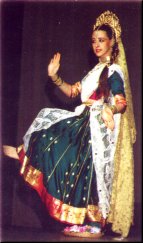 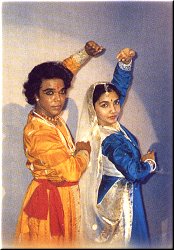  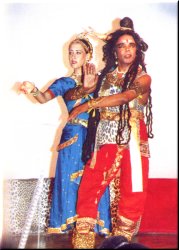 The East-West School of Dance has four major areas of focus: 1. Ongoing weekly training in Indian Classical Kathak based on a progressive curriculum akin to the dance schools in India, held at various locations in the New York and New Jersey area. 2. Full stage recitals of Kathak Dances. 3. Presentation of a wide range of dance drama productions at its home base at Ananda Ashram and in other centers in the USA and Canada, including Ramayana, Krishna Leela, Shakuntala, Gangavataran, and Who Is Who? 4. Sponsorship of performances and workshops of renowned visiting artists of international stature. With the blessings of His Holiness, Shri Brahmananda Sarasvati, the School has integrated traditional and modern values. This unique institution brings about a deeper understanding and harmony between the cast and the west. The School has adopted a formal syllabus under the guidance of Guru Smt. Maya Rao and Guru Pandit Birju Maharaj, renowned dance masters and recognized authorities of the Lucknow Gharana, who come from India regularly to conduct advanced courses at the East-West School of Dance. The East-West School of Dance has set many high goals for the future. They include exploring New York State accreditation, promoting the Shakuntala video project for educational purposes, beginning a professional video project on Ramayana Dance Drama including a new musical score for the production, and continuing the New York visits and programs of Guru Pandit Birju Maharaj and Guru Smt. Maya Rao. The East-West School of Dance remains committed to teaching at Ananda Ashram and spreading the message of spiritual healing and eternal bliss through the medium of the exquisite Kathak dance. In its journey towards truth and peace, the School reiterates its commitment to promote the essence of the art of Kathak dance, the ultimate aim being the welfare of one and all. The School held its graduation ceremonies in August 1998. Many luminaries were present at the graduation and awards assembly, and the speakers extolled the hard work of the East-West School of Dance in training a new crop of classical dancers outside of India. The September 2000 graduation saluted the magnificent accomplishments of the students in Kathak tradition, citing in particular the example of Mayura Casuba, whose brilliant display of solo performance is indicative of a star in the making. Many past School performances have been justified landmarks, including major events, workshops and concerts in various universities in the USA, at Symphony Space NYC (organized by World Music Institute), Namaskar Foundation CT, Miss India Worldwide, and the Conference of World Religion NY. Many graduates of the School have moved on to become internationally accomplished dancers, performing in India and Europe. The School's mission never loses sight of bringing about a deeper cultural understanding and harmony between the people of east and west through dance. THE PRODUCTIONS 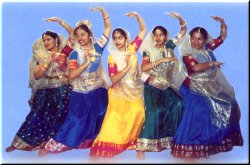 The productions under the banner of the East-West School of Dance under the direction of Pt.Charka have achieved new levels of artistry and excellence in choreography. The productions so far displayed can be broadly classified as historical, mythological, folkloric and contemporary. Two of them, Abisar and Suryodaya, fall under the historical classification, depicting moving stories from the history of India penned by renowned writers. Abisar was played in Boston, in 1995, after a successful run in New Delhi and Bombay in the 1970's. Suryodaya was staged in 1967 in New Delhi, in Kathak style, and both were highly successful, drawing acclaim from viewers and the press. During his assignment at Suva, Fiji Islands, Pt.Charka developed great affinity for the cultural heritage of that land. In the dance drama Dengei, he artfully mixed classical Kathak with movements derived from Fijian folklore. The Governor General of Fiji has paid rich tribute to this production hailing its choreography as sensitive and inspiring. Productions falling under the category of "contemporary" include a variety of themes depicting a wide range of human awareness. Kamayani, staged in New Delhi in 1968, is based on a classical poem, while Ateet Vartaman is based on an Indian novel. This ballet was presented in a creative style mixing Indian and European forms. Staged in New Delhi in 1970 and 1972, the production drew huge attention by audience and media alike. Another innovative Choreography Workshop was presented in New Delhi in 1970. 
"Dengei" Dance Drama in Fiji islands The hilarious comedy was presented in an assorted style mixing classical, modern, and mime techniques. It has been hailed as a unique experiment in dance presentation. Girmit was another landmark production presented as a folk ballet depicting a century's interchange of culture between Indian identities and the indigenous peoples of the Fiji Islands. Its style was based on the traditional dances of the indigenous and immigrant people of the Islands. Staged in Suva, Fiji in 1979, the ballet had 300 participants and received wide acclaim throughout Fiji, a landmark production by any standard. The most important productions fall under the category of mythological depictions, where immense creativity has made a terrific impact on audiences the world over. These productions have been instrumental in rejuvenating the cultural heritage of many international communities. They have effectively revealed the intrinsic hunger for culture and wisdom by dramatizing the glorious past of these resilient cultures. Ramayana The much renowned Hindu epic Ramayana has been an astounding production, bringing the essence of the great mythology down to earth, savored by audiences for its magical impact, Bright colours, enchanting and reverberating music, lyrical dances and captivating production with multimedia have held the viewers spellbound by its sheer artistry. The story of the exiled noble prince Rama, forced to wander in the forest for 14 years with his beloved wife Sita and his loyal brother Lakshmana, brings back the values held in high esteem by the people of yore, bringing out effectively the message of Dharma. The conquering of the demon kind Ravana by Rama, the epitome of human values, is the tale of good waging a war against evil and prevailing in the end. A unique feature of the Ramayana production is its predominantly American cast. The show was featured in Maha Kumbhamela in NJ, May 2000, and drew a standing ovation. There was also a historical presentation of Ramayana for the International Ramayana Conference in Houston, Texas, in 1997. Pt. Charka enraptured an audience of 30,000, appearing in sequences from Ramayana at the Fifth International Ramayana conference, Janakapur, Nepal, in 1989. It has been presented in its full glory in major Indian and American national festivals, spanning major cities of Northeast USA and Canada, and continues to be presented at regular annual intervals over the past two decades at Ananda Ashram, Monroe, NY. Other major productions, such as Krishna Leela, Gangavataran, Who Is Who? and Viswamitra, have followed suit. Krishna Leela 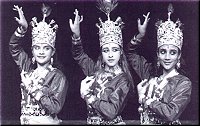 Another evergreen production in the classical Kathak style tells the story of Krishna, the mythological concept of God with universal appeal. Lord Krishna in the human form descends to the earth to destroy evil and help dharma prevail eternally. He dances with Radha and Gopikas on the night of the full moon, in the ecstatic dance of "Maha Raas". The concept of Krishna, the savior of mankind, has been depicted with a scintillating effect. "Krishna Leela...beautifully, extraordinarily well presented. The production really is worthy of high praise". - Dr. Raja Mrigendra Singh of Patiala. Shakuntala Widely acclaimed, the classical work of the great Sanskrit poet Kalidasa, Shakuntala, brilliantly interweaves love, romance, sorrow and reunion. Shakuntala dance drama in the classical Kathak style is unique and first of its kind to be displayed in the USA, with contributions from international talents making this a one-of-a kind production. Smt. Maya Rao, director of NIKC in India, who was also the consultant for the Russian Ballet of Shakuntala, is a main source in the creation of this production. Besides, Pt. Birju Maharaj has developed and guided unique choreography patterns, building final crescendos into the production. Who Is Who? A symbolic, mythological story from the sacred Kenopanishad, "Who is Who?" is presented as a multimedia production combining modern dance, ballet, Kathak and chorus with special effects. Gangavataran The dance drama that depicts the intensity of human effort is the story of a classic human struggle to bring the celestial river Ganga down to earth from her heavenly abode. The music is orchestrated by renowned composer and sitar artist from India, Shri Rash Behari Datta. Other important productions include Viswamitra, Rashmirati, Lord Buddha, Birds Elect The King, Devi Mahatyam, Kama Dahan, Mahishasuramardini, Yoga and Dance, Third Eye and The Little Mermaid, which played at Copenhagen, Denmark. The productions have become symbols of tradition and have earned praise for their professional and aesthetic standards. The choreography has been billed as one of the best in the cultural field spreading the joy of true art and culture worldwide. EXCERPTS FROM PRESS, EXPERTS AND CRITICS You remind me of the great Uday Shankar... -G.B. Dowell, eminent US critic visiting India Through you, the world knows your country... Dr. Kapila Vatsayan ...The dances of Charka are full of spirit, powerful rhythm, skill, finesse, divine artistry and dedication... delighting and inspiring us all... -Dr. Judith M. Tyberg. President, East-West Cultural Center, Los Angeles ...Workshop classes proven to be a fine success. The Performance was much appreciated by a standing ovation audience... -Lydia Joel, Chairman, School of Performing Arts, New York ...Mr. Charka's dancing was exuberant, beautiful, dazzling, and full of both grace and power... -Dr. Lee Siegel, Department of Religion, University of Hawaii ...Charka's dance was a multimedia performance ... I had the impression of being present in a graceful dream. -Whole Life Times. USA ...Satya Narayana Charka brought to his dancing power, intelligence, and a variety of acting moods, which mark him as a truly creative artist. His has been an important contribution to the world of art. -Beth Dean Carell, Sydney Opera House ...Satya Narayana Charka's dances are swirls of vivid colour... -The Japan Times, Tokyo Breathtaking ballet...superb..."Sougandika Haranam," the Sanskrit classic was lyrically woven...all credit to Charka for his deep study of Kuchipudi. -The Indian Express, Bombay Mr. Charka's choreography and dancing were sensitive and inspiring. -Prof. Willam Maxwell, University of South Pacific A buoyant ballet..."Ateet Vartman"...Charka's choreography was the main pillar of success... -The Indian Express, New Delhi The dynamic rhythm of dance was most impressive ..."The birth of Karna" ballet...well composed...really enjoyable. -The Performing Arts Journal, Japan ...Kathak Mahotsav...Charka in the title role convincingly brought out the nobility as well as the psychology of Karna... -The Hindustan Times, New Delhi ...The beautiful music and stunning choreography were the channel of communication between Shakuntala and the audience... -India Abroad, New York CONCLUSION High quality dreams and ambitions are the stepping - stones to lofty goals. A genuine learning process invariably leads to realization and tranquility. Peace is the ultimate healer. It is here that the spiritual teachings of Shri Brahmananda Sarasvati, the founder of Ananda Ashram, strike an immediate and lasting appeal. Contact: Pandit Satya Narayan Charka East - West School of Dance Ananda Ashram, 13 Sapphire Rd Monroe, NY 10950 Ph: (845) - 783 - 7514 / 782 - 5575 Fax: (845) - 782 - 4356 / 774 - 7368 e-mail: charkasn@yahoo.com |
