|     |
|
| |

REVIEW / REPORTNew Pathways, New Voices: Reflections from the Odissi / Odyssey Conference 2026- Manjari Sinhae-mail: manjari@sinha.com June 3, 2026 The Department of Dance at the University of North Carolina, Charlotte, presented the sixth edition of its annual Odissi / Odyssey Conference from May 1-3, 2026 - an intellectually stimulating and artistically enriching confluence devoted this year to diasporic Indian arts through the lens of community engaged research. Over the years, this conference has evolved into a significant forum where scholarship and performance engage in meaningful dialogue, extending the discourse on dance beyond the proscenium into the realms of history, pedagogy, identity, and evolving artistic practice. This year's theme, 'New Pathways and Voices in South Asian Dance Research,' aptly reflected the spirit of inquiry that shaped the proceedings. Conceived as a platform for emerging scholarship, the conference invited fresh perspectives on dance history, aesthetics, pedagogy, and choreographic practice, while encouraging critical engagement with South Asian movement traditions and the way they continue to transform and renew themselves as living, breathing artistic languages. The three-day event commenced with a thoughtfully curated webinar on the opening day, followed by two days of in-person performances, screenings, and scholarly presentations at the Robinson Hall for the Performing Arts, UNC Charlotte. Although attending in person was not possible for me, the webinar was accessible online, allowing me to participate from Washington, DC. I joined the inaugural webinar, evening film screenings, and select paper presentations, finding the experience both invigorating and deeply thought provoking. The opening webinar brought together an impressive constellation of artists, educators, scholars, and students, all united by a shared commitment to re-examining and reimagining the landscape of South Asian dance research. What gave the discussions their particular vitality was the freshness of perspective - dance was approached not merely as performance practice, but as cultural memory, embodied knowledge, pedagogic inheritance, and a site of social and political negotiation. While earlier editions of the conference had embraced a broader, more democratised engagement with multiple artistic traditions, this year's edition marked a more pronounced anchoring in Odissi. Yet this narrower focus did not constrict the conference's intellectual reach. Rather, Odissi - with its sculptural grace, lyrical expressiveness, and deeply layered aesthetic philosophy - served as a compelling axis from which larger questions of diaspora, transmission, identity, and artistic reinvention naturally emerged. True to its evocative title, Odissi / Odyssey suggested not merely a journey through a classical dance form, but an odyssey of ideas - where movement becomes inquiry, scholarship becomes dialogue, and tradition reveals itself not as a static inheritance, but as an ever-evolving force. 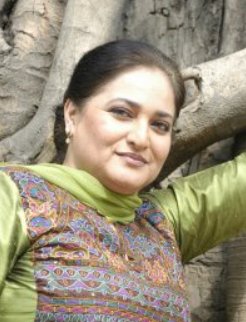 Dr Arshiya Sethi The inaugural webinar opened with what proved to be among the most compelling conversations of the conference - a dialogue between noted scholar Dr Arshiya Sethi and Pakistan's pioneering dancer, activist, and founder-director of Tehrik-e-Niswan, Sheema Kermani. Dr Sethi's opening question struck at the heart of artistic resistance: how does one pursue dance in a society where the form has often been regarded with suspicion, if not outright hostility? Sheema Kermani's response was as personal as it was political. 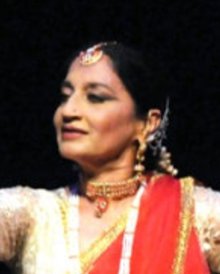 Sheema Kermani Growing up in Pakistan, she recalled, opportunities for formal dance training were severely limited. In Karachi, she had initially studied Kathak under the Bengali guru Ghanshyam at the Ghanshyam Rhythmic Art Centre. Yet Kathak, burdened in Pakistan's social imagination by associations with kothas and mujra, was frequently denied the dignity of artistic legitimacy. Disillusioned by such reductive attitudes - and following her guru's departure from Pakistan - Sheema turned toward Odissi, eventually seeking training in India under Guru Gita Mahalik. 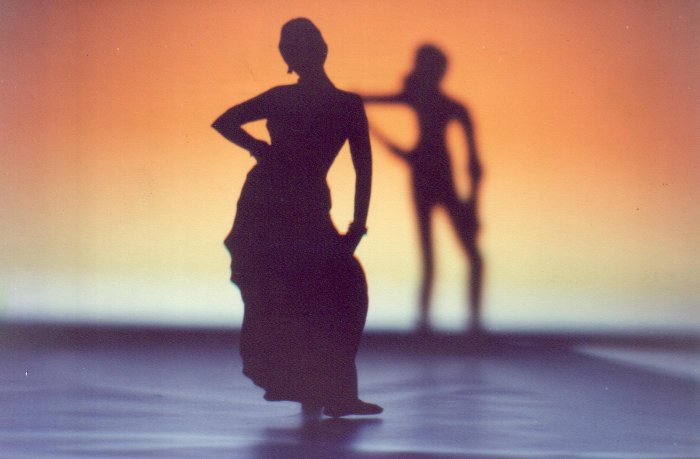 Sheema Kermani's Dancing Girl (Photo courtesy: Sheema Kermani) This artistic journey also led her toward historical inquiry. While researching Mohenjo-daro, she encountered a moment of revelation at India's National Museum. The celebrated bronze Dancing Girl of the Indus Valley Civilisation appeared to embody, in its poised stance and asymmetrical grace, an uncanny resonance with Odissi's iconic tribhanga. From that insight emerged her 1992 production Mohenjo-daro Ballet, in which the ancient bronze figure is imaginatively animated through movement. The visual kinship between archaeological memory and classical dance vocabulary remains indeed striking. As Dr Arshiya Sethi observed, Sheema Kermani's contributions extend well beyond performance into writing, activism, and socio-political thought. Particularly moving was Sheema's conviction that art cannot be imprisoned within the narrow boundaries of religious identity. "Muslim girls in India learn Bharatanatyam and Odissi. We are one. We are all South Asian," she remarked with quiet force. Her book Gender Politics in South Asian Dance remains an eloquent articulation of this expansive worldview. 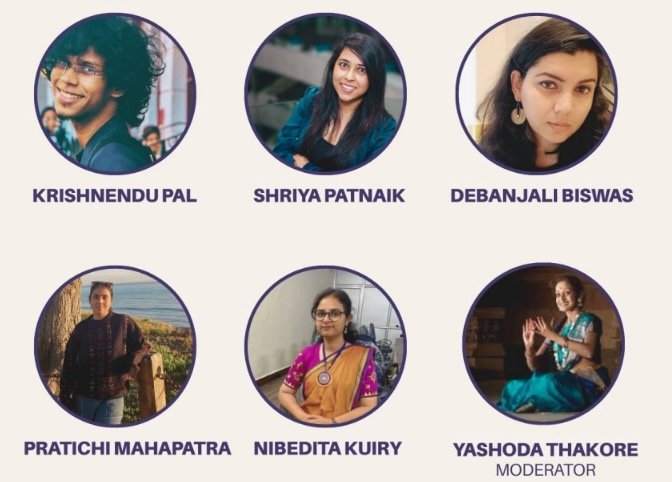 The webinar's second session, Lineages and Histories, brought together Yashoda Thakore, Shriya Patnaik, Krishnendu Pal, Pratichi Mahapatra, Nibedita Kuiry, Shinjini Chatterjee, and Debanjali Biswas in a rich and thought-provoking exploration of forgotten histories, inherited prejudices, and obscured artistic genealogies. Pratichi Mahapatra revisited the significant 19th-century petition submitted to the Bombay Government by Chinnaswami Naidu in 1871, protesting the classification of dancers as prostitutes. Her paper illuminated how notions of ritual "purity" and "pollution," deeply entangled with caste anxieties and colonial morality, contributed to the stigmatisation of hereditary performers. Nibedita Kuiry extended this thread through her examination of colonial attitudes toward Kakatiya dancers, revealing how similar narratives of moral contamination were constructed and sustained. As several speakers observed, the anti-nautch movement was not merely a colonial imposition; it also found reinforcement within indigenous patriarchal reformist frameworks. Krishnendu Pal offered a particularly evocative presentation on the baijis, drawing attention to the remarkable singer Mahuri, whose artistry reportedly so impressed Satyajit Ray that he invited her to sing for one of his films. Pal raised a compelling question: if dance is judged through the visibility of the body, how is music perceived, where the body recedes, and only the voice remains? His nuanced comparison of Gauhar Jaan's theatrical presence and Mahuri's flirtatious vocal sensibility added depth to the discourse. Shriya Patnaik turned attention toward the Maharis of the Jagannath temple - women whose songs, offered as sacred devotion, preserved an invaluable treasury of bhakti literature, yet who themselves became casualties of social marginalisation and colonial disdain.  Shinjini Chatterjee Shinjini Chatterjee deepened the conversation with probing reflections on the Mahari tradition. How do we evaluate the artistic labour of these women? Can their repertoire - rich with shringara, longing, and subtle resistance - be preserved without sanitising its emotional truth? Her questions, informed by Sharmila Biswas's production Mahari is a Law Abiding Servant of God, invited deeper reflection on interpretation and historical memory. Debanjali Biswas's evocatively titled More Than Human Encounter expanded the discourse into the ritual universe of Manipur, exploring the spiritual ingenuity and performative virtuosity of the Maibis within Lai-Haraoba traditions.  Aryama Bej The third session opened with Aryama Bej's thoughtful examination of Kathak choreographer Ashimbandhu Bhattacharya's work, exploring the ethical and universal dimensions of his choreographic language through productions such as Vishva Manav and Shikhandi. Vishnupriya's presentation on Nangiar Koothu offered one of the most provocative interventions of the day, questioning the caste exclusivity that continues to govern this ancient form. Her observations on representation, authorship, and inherited orthodoxy posed urgent and relevant questions for contemporary discourse. Shravasti Ingle of Nrityagram brought the discussion back to Odissi, reflecting on pedagogic frameworks, methods of transmission, and embodied learning within the form. The evening's film screenings offered a welcome shift in texture. Pallavi Basak's visually engaging Enter the World of Fantasy explored Bengal's Patachitra tradition, where itinerant artist-storytellers unfurl painted scrolls while singing the stories they depict. Particularly fascinating was the revelation that Guru Kelucharan Mohapatra himself hailed from the Patachitra artisan lineage of Raghurajpur - a poignant reminder of the interconnectedness of India's artistic traditions. The second screening featured Sharmila Biswas's documentary on the Maharis of the Jagannath temple, extending the day's scholarly conversations into the evocative visual language of cinema. Sharmila later explained the importance of Maharis, noting that they were called 'Nitya Mangala', the auspicious ones. During the Chandan Yatra, Maharis would take Lord Jagannath singing and dancing on boats. Presentation on Musicology by Anirvan Bhattacharya, a Fullbright Scholar at the University of North Carolina, Charlotte, focused on Sir Saurindra Mohan Tagore's contribution to musicology as an educator. Musicology was started by Khetramohan Goswami (1813-1893), with cursory information about Raga and Tala. Saurindra Mohan Tagore and Khetra Mohan Goswami were pioneers of notation as well. Anirvan presented a research paper on musicology titled 'S.M. Tagore: A New Pathway for Modern Musicology', which was followed by a question/answer session. I couldn't join the in-person sessions on the next two days of the Odissi / Odyssey Conference 2026, but the invigorating webinar on the inaugural day was worth it.  Manjari Sinha is a musicologist and an acclaimed classical music and dance critic. She has an MA in Sanskrit from Allahabad University, MA in Music from Vikram University, Ujjain; Sangeet Prabhakar in Hindustani Vocal, Tabla, Sitar and Kathak dance from Prayag Sangeet Samiti, Allahabad; and further training in Sitar under Guru Pt. Arvind Parikh in the lineage of Ustad Vilayat Khan. She has authored a book on Ustad Bade Ghulam Ali Khan, commissioned & published by Roli Books. She has contributed the chapter on Kathak for 'Indian Dance: the Ultimate Metaphor'. Her articles in English and Hindi on Music, Dance, Art & Culture are regularly showcased in a variety of leading journals and periodicals. |
