
|     |

|
| |
 e-mail: srjan.bbsr@gmail.com When the Bansuri finds its voice: Bansuri Jab Gaane Lage as a living tribute to Pandit Hariprasad ChaurasiaPhotos: R. SreenivasanJanuary 6, 2026 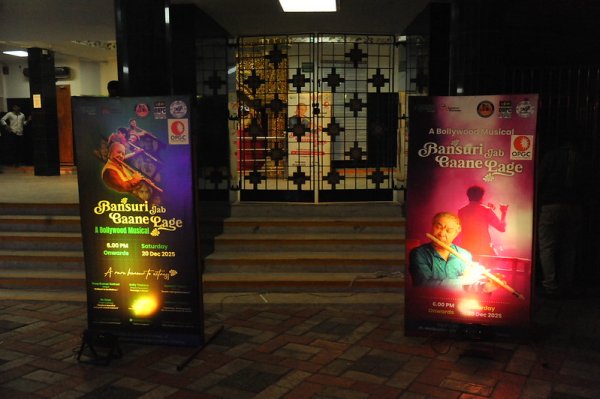 On the evening of 20 December 2025, Rabindra Mandap, Bhubaneswar, was transformed into a space of collective remembrance, reflection, and deep emotional resonance. The stage musical Bansuri Jab Gaane Lage unfolded not merely as a biographical narrative, but as a profoundly human and artistic experience that touched the audience at multiple levels. By the time the final moments arrived, the silence in the hall - heavy with emotion - stood as testimony to the power of this production. What the audience witnessed was the life of Pt Hariprasad Chaurasia rendered with sincerity, restraint, and aesthetic intelligence, allowing his journey to breathe organically through music, memory, and theatre. Pt Hariprasad Chaurasia's life is itself a narrative of quiet courage and unwavering dedication. Born in Allahabad and not into a traditional family of musicians, his early years were marked by struggle, self-doubt, and an almost ascetic commitment to learning. Initially trained in vocal music, his destiny found clarity when he encountered the bansuri under the guidance of Pandit Bholanath. His appointment as a staff artiste at All India Radio, Cuttack, in the late 1950s became a turning point - one that laid the foundation for a career that would later redefine the place of the bamboo flute in Indian classical and cinematic music. Over the decades, his bansuri found its way into more than 300 Hindi films, while his classical concerts carried the sound of India to more than fifty countries across the globe. Recipient of the Padma Bhushan and Padma Vibhushan, and revered internationally, Pandit Chaurasia stands today as a bridge between the sacred and the popular, the classical and the contemporary. 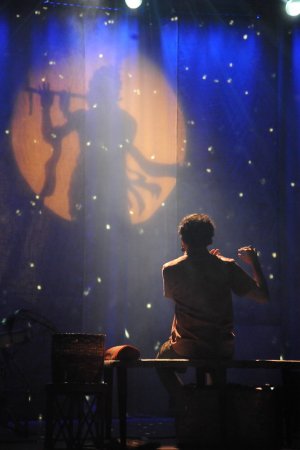 Bansuri Jab Gaane Lage approaches this towering legacy with humility and sensitivity. Conceptually positioned at the confluence of music, cinema, and storytelling, the production does not aim to overwhelm the audience with facts or accolades. Instead, it chooses to humanise the legend - revealing the man behind the maestro. The narrative flows through pivotal moments of his life: the resistance he faced from his family, the loneliness of rigorous practice, the emotional cost of artistic pursuit, and the quiet triumphs that followed years of perseverance. This layered storytelling ensures that the production resonates not only with musicians and connoisseurs, but also with a global audience that understands struggle, aspiration, and devotion in universal terms.  Pushpanjali Chaurasia At the heart of this evocative narrative lies the script, penned by Pushpanjali Chaurasia, who brings to the writing an insider's emotional understanding coupled with a disciplined artistic distance. Her writing refrains from hagiography; instead, it allows vulnerability to coexist with greatness. The decision to personify the bansuri itself as Bansi - a living, breathing presence on stage - is one of the most inspired dramaturgical choices of the production. The bansuri becomes confidant, conscience, witness, and destiny, silently observing the unfolding life of its master. This poetic concept elevates the narrative from a conventional biopic to a reflective meditation on art and destiny. The script, co-written and creatively produced by Suhail Abbasi, balances emotional gravitas with moments of gentle humour, ensuring that the journey never becomes heavy-handed but remains accessible and deeply moving. The directorial vision of Kunal Vijaykar and Bhushan Koregaonkar deserves special appreciation for its cinematic sensibility and theatrical restraint. Their direction allows the story to unfold without unnecessary spectacle, trusting the power of music, performance, and silence. Transitions between time periods are fluid, almost filmic, aided by subtle lighting shifts and musical cues. The directors demonstrate remarkable discipline in allowing moments to linger - particularly those of introspection - thereby giving the audience time to absorb the emotional weight of the narrative. The performances form the emotional spine of the production. Vikas Rawat, in the role of Bansi, delivers a performance of rare maturity and inner stillness. His portrayal is not built on dramatic excess but on a quiet, almost meditative presence. As the embodiment of the bansuri, he becomes an anchor to the entire narrative - observant, empathetic, and unwavering. His physicality, voice modulation, and restraint allow the audience to feel the bansuri's silent companionship with Pandit Chaurasia through decades of struggle and success. It is a performance that demands attentiveness rather than applause, and in doing so, leaves a lasting impact. 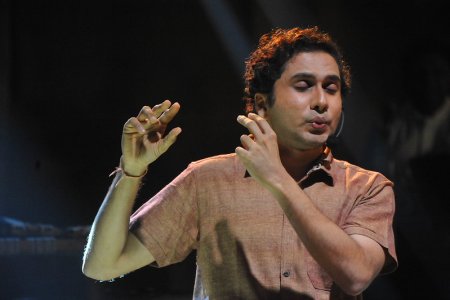 Vikas Rawat 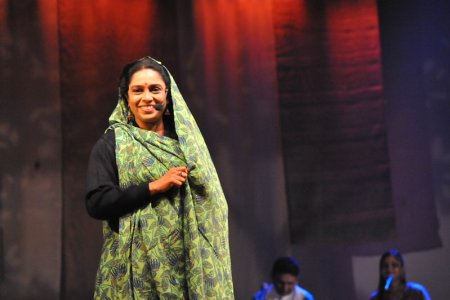 Reshma Shetty Equally compelling is Reshma Shetty, who undertakes the formidable task of portraying multiple female characters across different phases of the maestro's life. With remarkable agility, she transitions between roles - mother, wife, muse, and societal voice - each distinct in emotional texture and physical vocabulary. Her performance is marked by precision and emotional honesty, never resorting to caricature. Particularly poignant are her quieter moments on stage, where minimal movement and controlled expression convey volumes of unspoken emotion. Her contribution brings depth, warmth, and balance to the narrative, making the personal dimensions of Pandit Chaurasia's life profoundly relatable. While the emotional architecture of Bansuri Jab Gaane Lage is shaped by its narrative and performances, its soul is sustained by the carefully curated creative and technical teams who work in seamless harmony. Produced by Eastern Harmony, the production reflects a deep respect for content and craft. The production design by Sayalee Meshram is minimalistic yet symbolic, drawing inspiration from the bansuri itself. The use of organic textures and simple stage elements creates a visual language that is both rooted and poetic, allowing the audience's imagination to complete the picture. 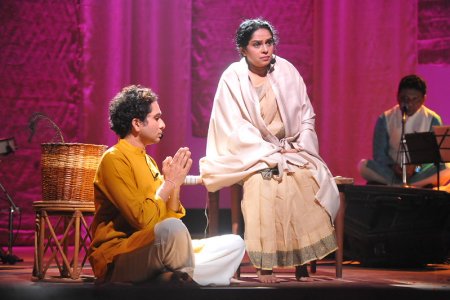
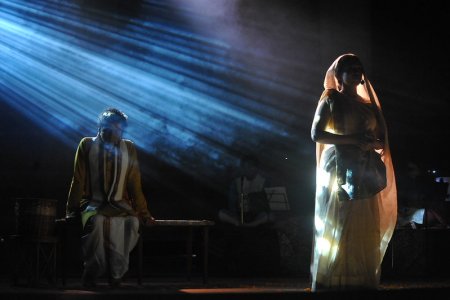
Lighting design by Dhiren Merchant plays a crucial narrative role, subtly shifting moods and time frames without drawing attention to itself. Light becomes memory - sometimes warm and nostalgic, sometimes stark and introspective. The sound design by Devashish Ray, complemented by live sound management by Ryan Albuquerque, ensures that music and dialogue coexist in perfect balance, preserving clarity while retaining emotional depth. Yogesh Prajapati's production management ensures a seamless flow, allowing the artistic elements to shine without logistical distraction. Costumes designed by Bipin Tanna, along with hair and makeup by Akshay Malvankar, are understated and period-sensitive, enhancing authenticity without theatrical excess. 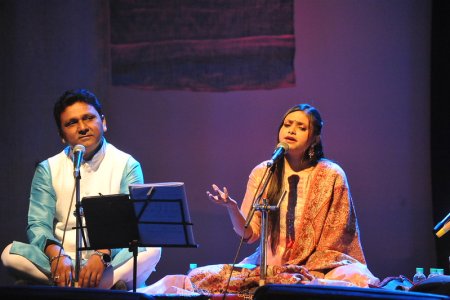 Sarvesh Mishra & Ayesha Mukherjee The music ensemble forms the beating heart of the production, anchoring the narrative in sound and memory. Vocalists Ayesha Mukherjee and Sarvesh Mishra bring extraordinary sensitivity to their performances, navigating a repertoire that spans decades of Hindi cinema. Their voices do not merely reproduce familiar melodies; they reinterpret them with emotional intelligence, evoking nostalgia while remaining rooted in the present moment. The flute, played by Suchismita Acharya, carries the unmistakable lyrical spirit associated with Pandit Chaurasia's legacy, offering moments of pure musical contemplation. Deepak Shah on keyboards adds harmonic depth, while Gautam Biswas on guitar provides tonal warmth and cinematic colour. Percussionists Viraj Bhati and Devanand Toraskar offer rhythmic grounding with restraint and clarity, ensuring that rhythm supports the narrative rather than dominating it. Each musician performs not as an individual showcase, but as part of a collective act of homage. What makes Bansuri Jab Gaane Lage particularly significant for a global audience is its ability to transcend cultural specificity while remaining deeply rooted in Indian ethos. Even for those unfamiliar with the nuances of Indian classical music, the production communicates universal themes: the cost of passion, the loneliness of artistic pursuit, the tension between duty and desire, and the redemptive power of art. 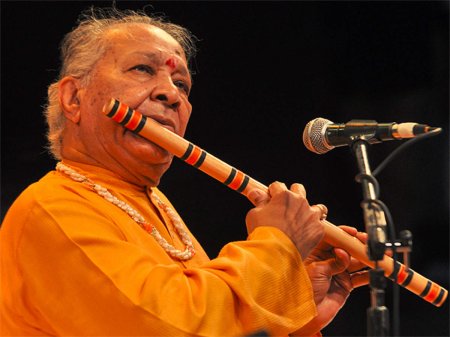 Pt Hariprasad Chaurasia As the final moments unfolded at Rabindra Mandap, the emotional response of the audience was unmistakable. There was a sense of collective gratitude - for the life of Pandit Hariprasad Chaurasia, for the artistes who brought his journey to life, and for the reminder that true art is born not out of ease, but out of perseverance, humility, and surrender. Bansuri Jab Gaane Lage stands as a rare example of how biography, when approached with integrity and artistic vision, can become an act of cultural remembrance rather than mere documentation. In essence, this production is not just about a maestro and his bansuri. It is about breath, silence, discipline, and devotion. It is about how one individual's dialogue with an instrument can shape the emotional memory of a nation. On that December evening in Bhubaneswar, as the bansuri metaphorically began to sing on stage, it reminded the world that some lives do not merely pass through time - they continue to resonate, like a sustained note, long after the music fades. 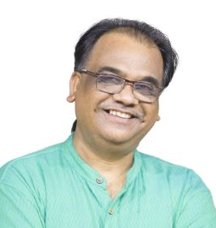 Ratikant Mohapatra, as Director of Srjan and Dean of the Faculty of Arts, Communication, and Indic Studies at Sri Sri University, stands as a distinguished figure in Indian classical dance. With a career spanning over 40 years, his artistry as a dancer, choreographer, and educator has profoundly shaped Odissi's journey. Under his guidance, Srjan has earned national and global acclaim, merging neo-classical innovation with traditional grace. Honoured with the Central and State Sangeet Natak Akademi Awards and a Guinness World Record for orchestrating 555 Odissi dancers, his legacy reflects a steadfast dedication to the evolution and timeless beauty of Odissi. Post your comments Please provide your name and email id along with your comment. All appropriate comments posted with name and email id in the blog will also be featured in the site. |
