 |
    |
|
|


| An
experience that never was!
California's Kuchipudi Convention! - Ramaa Bharadvaj, California e-mail: info@ramaadance.org July 4, 2008 |
| It was touted as the
largest Kuchipudi convention in USA. Presented by Silicon Andhra
in Cupertino, California, from June 20 to 22, 2008, it boasted of a program
"packed with shows, seminars, training sessions, lecture displays..."etc.
The list of attendees read like a Who's Who of Kuchipudi stalwarts, legends,
dancers and teachers from India and the U.S. Dance aficionados and
young students flocked to the event, eager to witness what could have been
an enlightening and memorable event. And those three little words
"Could Have Been" in essence sums up an experience that never quite materialized.
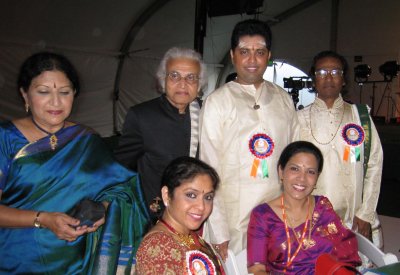
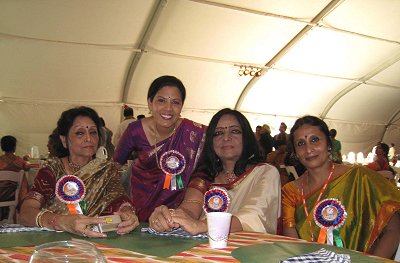
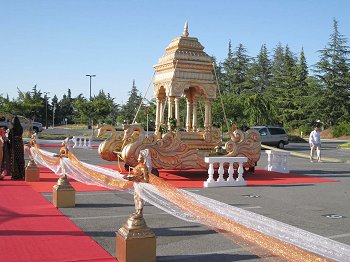
Starting with the greeting in the publicity e-blasts that began with the words "Telugu mitrulandariki namaskaram" (or some such thing), the three-day event wallowed in a communal flavor that was neither welcoming nor beneficial to anyone outside of the Telugu speaking world. Those of us who had hoped for a treasured meeting with the masters and scholarly learning (and sharing) about this not so common dance form in the Diaspora were instead left with witnessing a tiresome parade of political guests, endless felicitations, silk shawl wrappings, garlandings, plaque givings, more silk shawl wrappings and pat-in-the-back speeches all in Telugu. I had been invited by Dr. Sunil Kothari to present a paper about my use of Kuchipudi in my dance theater work "Panchatantra-Animal Fables of India" at a panel on "Recent works in Kuchipudi". Although I could attend only part of the convention due to a workshop commitment on June 22nd elsewhere, I had accepted the invitation, for the thought of being able to share my creative ideas with other artists was exhilarating. 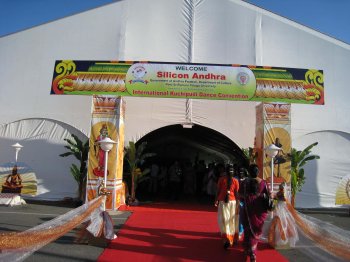 Day One: The opening night banquet in the "dome" (a massive white tent that unfortunately turned into an oven under the hot California sun) was to serve as a welcome to the guests to be followed by an honoring of gurus that culminated in a dinner in the moonlight. It was a touching moment to see my guru Dr. Vempatti Chinna Satyam wheeled into the tent led by his sons and followed by his graceful wife. Even though he had grown too feeble to walk, he had endured the arduous flight from India just for this convention and the electrifying stir caused by his majestic presence was soon enhanced as the stage filled with Kuchipudi exponents like Yamini Krishnamoorthy, Radha and Raja Reddy, Shobha Naidu, Vanashree and Jaya Rama Rao and others. 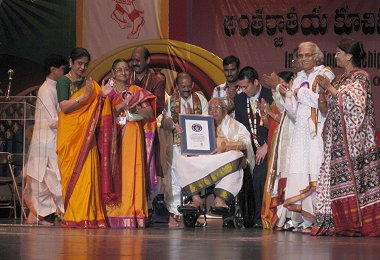 Day Two: The next day dawned with all the flash listed in the press release - Civic parade in the streets of Cupertino with mayors and councilmen, motorcade of convertibles and procession of an elaborately carved chariot with costumed dancers, complete with road closures, redirection of traffic and electronic banners announcing the event. The convention seemed to be afflicted with a fever – the fever to capture that slot for the longest, biggest, tallest, oldest, newest, first ever or last ever in the Guinness Book of World Records. In this case it was to be the record in the Kuchipudi Dance Category for the largest number of performers. The spectacle was achieved with 318 traditionally costumed student dancers performing the popular Atana Jathiswaram and the organizers proclaiming that they had made history. It must be mentioned that despite the sheer numbers, the dancers did maintain admirably neat lines without once stumbling or running into each other. By now several senior dancers (including this writer) had had enough of the pomp and panoply and were ready for some serious conference activities, seminars and performances. The first performance of the conference, "Kuchipudi Vyjayantika" choreographed by Vempatti Ravi Shankar (portraying the history of Kuchipudi from its evolution) began almost 3 hours behind schedule thanks to a tedious inaugural ceremony of (once again) an interminable line of grandiloquent Telugu speakers, politicians, shawl wrappings and plaque givings. Come to think of it, the entire convention was plagued by a consistent disregard for time or schedules as if "punctuality" and "respect for time" were alien cultural concepts that had no relevance in an Indian (or Andhra) setting, thus allowing ourselves to succumb to the stale stereotype of "Indians and their lack of time awareness." Incidentally the wisest speaker was an American politician who declined the invitation to address the audience. His laconic statement "let's keep the thing moving" drew loud cheers from the house. The dumbest was an Indian politician from Delhi who chose to illuminate the predominantly dance audience with such enlightening facts as Kuchipudi is from a village in Andhra Pradesh and Odissi is from Orissa and so on. For those of us who opted to ignore our growling stomachs (for it was already past 1pm) and stay back to watch the performance, a blessing awaited on stage in the form of a dancer named Venku from Kuchipudi village. If his female characterization of the classic role of Bhama was captivating in its physical qualities of grace and elegance, his intoxicating voice added to the charm for never once did it betray that it actually belonged to a male body. In contrast, his terrifying portrayal of the evil king Hiranyakasipu in the later part of the program made evident the versatility of Kuchipudi master-artists both as dancers and actors.
Fortunately for me, the most treasured moment of the entire convention happened by sheer accident. It was 4pm in the afternoon and as I got ready to leave for the airport, in walked an exhausted Yamini Krishnamoorthy in full makeup and dance jewels (no one had bothered to inform her that her panel had been cancelled). As she rested her tired head on the table, I brought her a plate of the last remains of the lunch. We sat in the "dome" eating and sharing stories and laughter for more than an hour along with her infectiously vivacious sister Jyothismathi and an effervescent Sunil Kothari. As Yamini-ji spoke casually of her performing experiences (such as her first appearance in Madras at a cattle fair), and her early struggles I realized that at that very moment I was face to face with true "history."
I hope the final day delivered all the seminars, training sessions, and illuminating events promised in the program. If so, I would like to read about them, at least for a vicarious experience.
Kuchipudi is no longer a village art form. The pioneers have put it on national and international platforms decades ago, and it has since been embraced by world-wide audiences and practitioners. A convention of this nature needed to reflect that growth and expansion. Since Kuchipudi is a performance art form, the emphasis should have been on the performances and towards creating an aesthetic stage space with professional technical support (lighting and stage designers). If conducting the proceedings in Telugu language was important, provision could have been made for English translations on projection screens. If the intent was to educate the younger generation then why not include English translations of the Telugu articles in the souvenir? After all the line between preserving tradition and shutting the door to "outsiders" is very fine, is it not? Here, I share with you my favorite quote from Pulitzer prize winning American poet Archibald MacLeish who wrote: "What humanity needs is not the creation of new worlds but the re-creation in terms of human comprehension of the world we have, and it is for this reason that arts go on from generation to generation." If we want our traditional art forms to continue from generation to generation, we do not need another first ever, largest ever, biggest ever, longest ever gala. What we need is the inventiveness to consciously re-create what we have already inherited from the masters and the sensitivity to structure it not just for ourselves but for our children and for the global community in which we live. We must find ways to educate, inspire and include them. Otherwise traditions will turn into mere cultural pillows for the migrated adults to snuggle into for curing their own homesickness. Responses 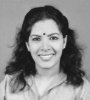 Ramaa Bharadvaj is the director of Angahara Dance Ensemble based in California, USA. She is a winner of multiple Lester Horton Dance Awards for her performances and the only performing artists to be honored by the California Arts Council with its exclusive Director's Award for exemplary contribution to the Arts in California. Her works have been seen nationally on PBS. Ramaa is a regular dance commentator for Narthaki. ramaadance.org |