|     |
|
| |

 e-mail: leelakaverivenkat@gmail.com Points to reflect on during the Chennai SeasonFebruary 17, 2026 In the cornucopia of dance and music that Chennai offers during the Season, some events went without reportage. I would like to briefly refer to certain aspects of the teacher/taught relationship in dance, as also some of the recitals which could not find mention in my writing, thanks to the crowded calendar. Dancer Malavika Sarukkai’s Kalavaahini Trust, in its annual festival Dance for Dance, organized in conjunction with Karthik Fine Arts at the Bharatiya Vidya Bhavan auditorium, is a laudable effort at educating and promoting promising youngsters, who get featured in a special festival. Amidst the indifference and chalta hai attitude that artistes often have to contend with, what one finds particularly praiseworthy in the Dance for Dance event, is the sensitivity of the organizers, with extra special treatment meted out to the performers, making them feel valued and giving them a sense of self pride as dancers. What has however, raised a few questions among practitioners is the mentoring aspect, which is gaining ground among Bharatanatyam practicing youngsters of the day. Quite against the whispering gallery of comments, one would like to discuss this aspect with rank openness. “What were we doing for years, while training youngsters? Was that not mentoring?” asked one irate, very senior dancer/teacher, who lost her student to mentoring. Another remarked, “When I heard about a senior student of mine going to some other dancer/teacher for mentoring, I told her to choose between me and her. She could not claim to be my student while also seeking mentoring from another. I said that since she felt I was not good enough, she could stay away from my class.” The student in question chose to stay back. “Why does only the Bharatanatyam dancer feel the need for this? Do you see this feature in other dance forms?” another senior teacher asked. Let me discuss this point openly. I have known of teachers permitting and even deliberately sending their students to attend certain workshops held by fellow Gurus – sometimes even those pertaining to a totally different school. In Sriram Bharatiya Kala Kendra of the forties, the open-minded conviviality between senior Kathak gurus Shambhu Maharaj and Sunderprasadji, (pertaining to the Lucknow and Jaipur gharanas respectively) permitted and enabled students to access both gurus - the additional knowledge from more than one gharana providing that extra edge to their evolution. But when a student, stealthily opts for ‘mentorship’ with another teacher, it undoubtedly evokes a feeling of some lack sensed by the student in the guru’s teaching - which is provoking his/her seeking counsel from another. The Guru/Shishya relationship with its halo in India, is a delicate aspect, which can flower or decay depending on how the giver and the taker, approach it. I know of several Kathak gurus, who themselves sent their students to learn from Pandit Birju Maharaj. One has also noticed, as stated above, how senior Kathak dancers of the Lucknow Gharana studied under Guru Sunderprasadji and other renowned teachers of the Jaipur gharana. Maya Rao of Bangalore for example, was a case in point - and learnt from both Shambhu Maharaj and Guru Sunderprasad. After watching the then student Manjusri Chatterjee in one of Sunderprasad’s classes, Shambhu Maharaj had a great urge of wanting to teach her and asked for permission from the guru, who readily agreed. And even today, Majushri is acknowledged as one of Shambhu Maharaj’s most creditworthy disciples. It would seem that when the move to learn from another guru is sponsored from the top, by the guru himself, there can be no heartburn as when a student stealthily seeks being mentored by another teacher, while seemingly persisting with the original guru. “After all the tireless effort of grooming raw students, putting them through the margam to become finished dancers, they want to go to another,” one guru said with some bitterness. “They do not even bother, when and if chosen for an award later, to mention, among their teachers, the long-standing guru, who, when they knew nothing about the dance, trained them to a stage of being able to give finished performances,” said another sadly. A third person remarked on how very promising youngsters had lost their way through this constant switching of teachers in search of mentoring – “I have seen more dancers lose their way through this mentoring process, and what appeared as very promising careers for a few years, have come to naught”, was the comment I often heard. One needs to mention that in the Dance for Dance festival, there is nothing clandestine about Malavika Sarukkai’s mentorship of the scholarship winners, with the gurus in the know of the entire package with mentorship as a part of it, and from what one could gather from exchanges with gurus of scholarship holders, it is welcomed by teachers who feel that this will be a process of further educating the student on aspects of creativity. As one well known dancer/teacher, whose student is a scholarship holder mentioned, “Malaji has a great deal of experience and she is very correct, and her suggestions are voiced with discretion - Why not try this or perhaps you could try this and see - and I have never had the feeling of her interfering in the work of the student’s long time guru. After all, when she is arranging for scholarships which is a big help for the student, she needs to know, after seeing some of the work conceived and choreographed by the student, if she has made the right choice. It is a responsibility which can weigh on the right-minded person.” When queried about some dancers seeking mentoring from artistes specializing in other Indian dance genres, the same guru summed up with the statement, “Bharatanatyam dancers who seek mentoring from world famous artistes famed for their contemporary productions and often hailing from non-Bharatanatyam genres, are those aiming purposefully at international audiences. The central concern here is different and in such instances, traditional Bharatanatyam and its Margam the student may be trained in is incidental and not the prime concern.” With the world of performance becoming more and more widespread, the phenomenon of ambitious dancers flitting, like bees, from flower to flower for variety of pollen, will become more the norm, one feels, than the exception. DANCE FOR DANCE Photos: Prasanna Venkatesh 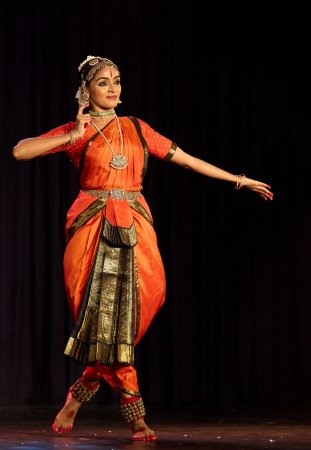 Aswathi Suresh As for the Dance for Dance Festival held at the Bharatiya Vidya Bhavan, Aswathi Suresh, shishya of Shijith Nambiar and Parvathy Menon, as Kalavaahini’s choice for the Junior Scholarship, spoke of unimpeachable judgement on the part of Kalavaahini. The dancer’s presentation of the K.N.Dandayudapani Pillai Navaragamalika Varnam, “Saamiyai azhaithodi va,” brought to the fore, her considerable expressional allure, along with the ability to cover stage space easily. The jatis punctuating the sahitya passages expressing the Nayika’s yearning for Shiva, were neatly rendered. Ringing in the right mood was the fine team of accompanists with nattuvangam by Udaya Sankar Lal, Binu Venugopal’s vocal and P.K. Sivaprasad on the mridangam with Eshwar Ramakrishnan providing instrumental support on the violin. 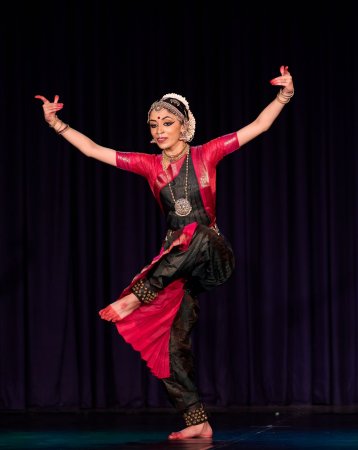 Divya Hoskere The other Junior fellowship holder Divya Hoskere, disciple of Praveen Kumar, presented a work for which Bangalore scholar Shatavadhani Ganesh provided the written lyrics with music composition by Mahesh Swamy and Smriti Bhasker. The presentation “Vanavasini,” was based on the interaction between Sita and Anusuya, at Chitrakoot in the Atri Muni Ashram. Being questioned by Anusuya, on how Sita and Rama met, Sita in a condensed flashback, describes the Swayamvara and how Rama broke the bow to win her hand. Sita’s exposure to the forest at Chitrakoot presents a picture of Nature rejoicing, with the fish in the water, butterflies buzzing round flowers, with curious deer and jumping monkeys, and sky adorned with flocks of flying birds - all in unison with the sage’s words Rama Sammeetri Sitaha of Rama and Sita being made for each other. Divya is maturing into a sensitive dancer. 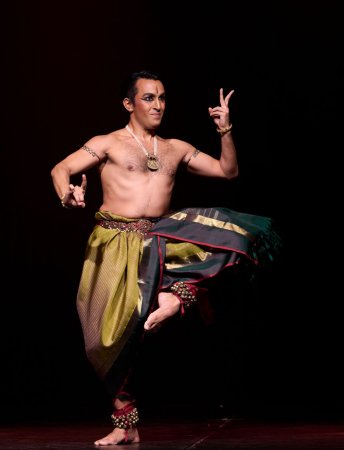 Christopher Gurusamy Christopher Gurusamy’s Bharatanatyam performance Ananda - Dance of Joy, projected a dancer who finds joy in the dance, based on compositions expressing devotion and love. The opening item in Reetigowla of a devotional hymn in Tamil, paying homage to divinity in the female manifestation, sees the devotee thankful for the gift of eyes that can see, with the grace for singing and dancing in joy, in appreciation of the beauty of the Earth, nourished by the rain bearing clouds. The delightfully light-footed leaps and smooth toe/heel kudittumettu movements, have always been a part of Christopher’s Bharatanatyam. His accompanists comprised vocalist Aditya Narayan, mridangist Kartikeyan Ramanathan, violinist Sayee Rakshit, ghanjira player Anirudh Atreya and Sudarsini providing nattuvangam support. The Papanasam Sivan varnam in Natakuranji, ”Sami, naan undan adimai enru ulgamellam ariyume”, expressed the devotee’s loyalty, with his entire self comprising innermost thoughts and each beat of his heart, devoted to the Lord, having travelled all the way to Chitrambalam for a glimpse of the dancing Nataraja. Chanting the very name is nectar and pleading with Nandi guarding, along with Brungi, the other Sivagana, he finally rejoices gaining a glimpse of the Dancing Lord – expressing his ecstasy, Nataraja, Deva, Sachhidananda. After the rhythmic virtuosity of clockwise and anticlockwise jumps and jatis in the varnam, came the stillness of Kshetrayya’s padam “Ninnu jooda galigene” in Punnagavarali, choreographed by Bragha Bessell, wherein the Nayika expresses her joy at being reunited with her beloved. Christopher ended his recital with a Tillana. 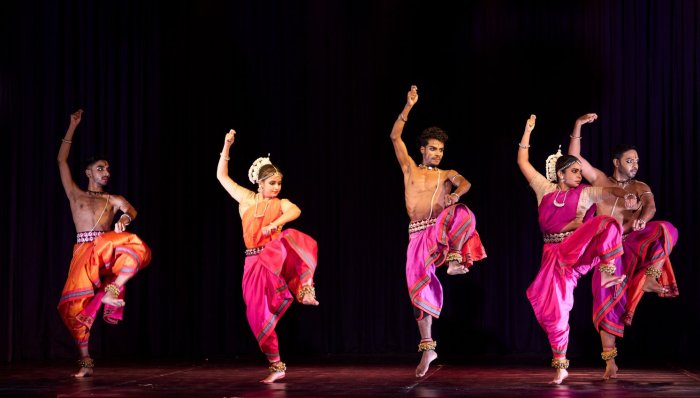 Sharmila Biswas group Abartan/Bibartan presented in a group, by students of Sharmila Biswas, highlighting the entire spectrum of Odissi talas in the nritta based production, was an absolute delight. The way the dancers improvised with ease and performed spoke of their diligent training. 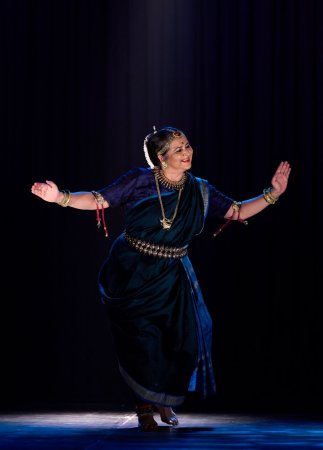 Sharmila Biswas Contrasting with this quicksilver Odissi nritta by the group came Vilasini, harking back to the days of the Mahari, presented in the solo form, with Sharmila herself taking the stage. Having had intimate exchanges with Maharis like Sashimoni, Parasmoni and Mukta Mahari, Sharmila’s performance as the middle-aged once-upon-a-time Mahari is reliving in her mind, scenes from days of yore, when she was involved in seva for the lord in the temple - with songs like “Jooda Bandhino”, and with rhythmic phrases like ‘Ta hamta tattat tha’ echoing and ringing in the ears. Very poignant, and how effectively the dancer captured the mood! 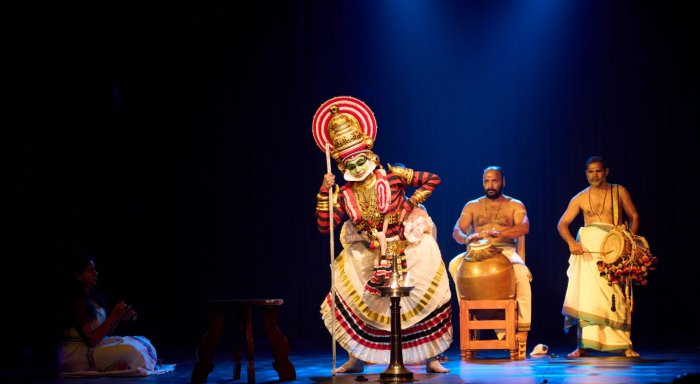 Sooraj Nambiar One of the highlights of the festival was Kutiyattam, the artiste being a senior fellowship recipient of Kalavaahini - Sooraj Nambiar, disciple of late Guru Ammannur Madhava Chakyar of Natana Kairali, Irinjalakuda, and of Parameswara Chakyar and Ammannur Kuttan Chakyar, and also of G. Venu. The actor presented his own production woven round a sub plot in Adi Parva, involving King Yayati of Chandravamshi, who had a complex relationship with wife Devayani, daughter of Shukracharya, who he marries, defying caste issues of a Brahmin/Kshatriya alliance, and her maid Sharmishta, daughter of Asura King Vrishaparva, who becomes his mistress. And Yayati has sons through both wife and mistress. Shukracharya curses him for his infidelity, with premature aging. The sons when, approached by Yayati, pleading for exchanging their youth with his decrepitude, refuse with only Puru, son of Sharmishta, complying. Restored to youth by this generous son, Yayati reverts to his high living habits – to soon realize the emptiness of sensual pleasures. Sooraj Nambiar’s power of enactment projecting the character of Yayati through all the Kutiyattam dramatic devices like Parakanattam (specific introductory segment), moving seamlessly between roles (Pakarnattam) male and female, Nirvahanam (harking back to the past) and Irunattom (specific mode of actor performing in the seated mode), had the audience spellbound – demonstrating how communicative art can be – with the actor seated a large part of the time! The pulse for the enactment was provided by the mizhavu (kettle drum) players Kalamandalam Rajeev and Kalamandalam Vijay, with Kalanilayam Unnikrishnan on the edakka and with Athi Hariharan on the talam. 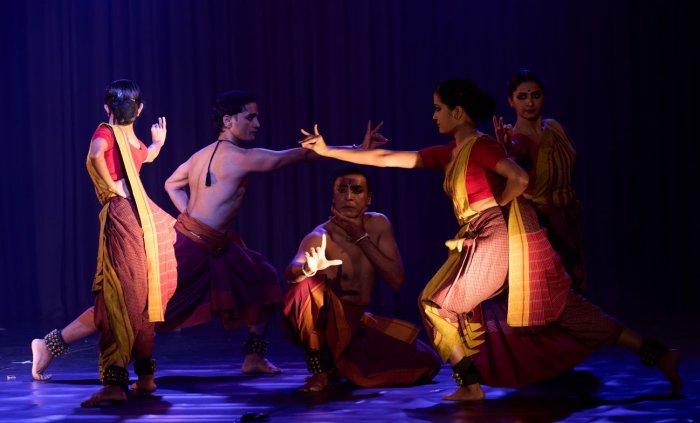 Viyoga In all this bouquet of performances, I was sorry to be out of town when Vaibhav Arekar’s abstract work Viyoga {meaning loss pertaining to all aspects of life) was presented as a group work by his students of Sankya Dance Company. For such a well conducted festival, complaints of inability to control decibel levels (mentioned as unpleasantly loud) in the rear end of the auditorium, should have been attended to by Karthik Fine Arts. From all accounts, the Sankhya Company’s presentation saw many leaving the auditorium with ear drums hurting because of the high sound level. Pity! Those from Kalavaahini conducting the festival, being on and near the stage, never got to know about the drawback till after the event! KOHAM - MOST SENSITIVE GROUP PRODUCTION Photos: Biju photography Presented under the aegis of the Narada Gana Sabha, KOHAM a group work in Bharatanatyam conceived and choreographed by Indira Kadambi of Bangalore, comprised, for this writer, one of the most aesthetic productions, built as it was, round a will-o-the-wisp theme, not easily concretized through movement. It pertained to the relationship of the inner dancer with the divinity she addresses and seeks, through her muse. Addressing Chidambaram Nataraja in the varnam does not involve the dancer’s travelling to the town of Chidambaram. How then does the artiste realize and become one with this divinity through the practice of dance? This search leads to the existential question, Koham, Who am I ? for before you know what you seek, and how, you must know what you are. And Indira Kadambi’s search sent her to the Upanishads and Vedanta, which refer to the Self, which can demystify existence. Three states of existential awareness and experience are mentioned linking the individual to the universe and to the Supreme - Jagrat (waking), Swapna (dream state) and Sushupti (deep sleep). Turiya is the Eternal which is beyond all these. Tat twam asi (Thou art That) says the Upanishad. With a body which ages and is not permanent, and a Self which is eternal, how does an impermanent body realize the true eternal Self? Ideation through Indira Kadambi’s concept and script, with music concept and script by T.V. Ramprasadh, along with Praveen D. Rao’s music arrangement along with Pramoth Kiran, what finally emerged adds up to an absorbing presentation. 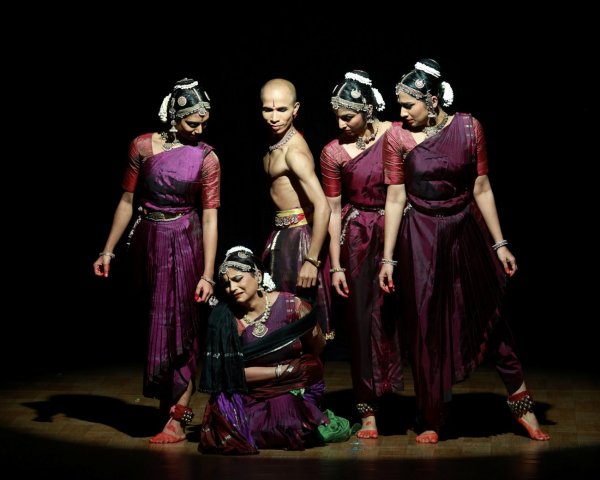 The work starts with the state of awareness of the cosmic order man is part of – capturing a feel of the Angikam Bhuvanam sloka, with the world set in motion, with the five elements of Water, Air, Land, Sky, Ether proceeding from darkness to light. Various percussive sounds capture the feel of the elements with life on earth, where emerges crawling man with a stoop, living amidst other life on this planet - with glimpses of fish, deer, snake, birds and monkeys (the last particularly well visualized), and man with the bent body slowly becoming erect. Education through the Guru/Shishya Parampara begins with the dance training beginning with Tat Dhit Thom Nam. As the dance education gets more physical with time, the inward process is set in motion of trying to understand that force one is addressing all the time. “Adi Shivanai kaanave aasai kondenadi” (My entire desire was to see the real Shiva). Is the Chit Ambalam one mentions within or without? If he and I are truly one, how do I realize that? And if I am separate from him, who am I? How does one become one with what one is seeking? It is that feeling of dualism which results in the sringar situations whether in a padam like “Paiyyada” with the nayika mourning the now lost relationship she once enjoyed with her beloved or portraying jealous gossiping women in “Choodare” pointing to one, supposedly flaunting her successful relationship. Like waves in the sea, these different states of the mind come and go, and the dancer through the entire journey with the art form, with growing experience slowly becomes aware of the Oneness sought within. 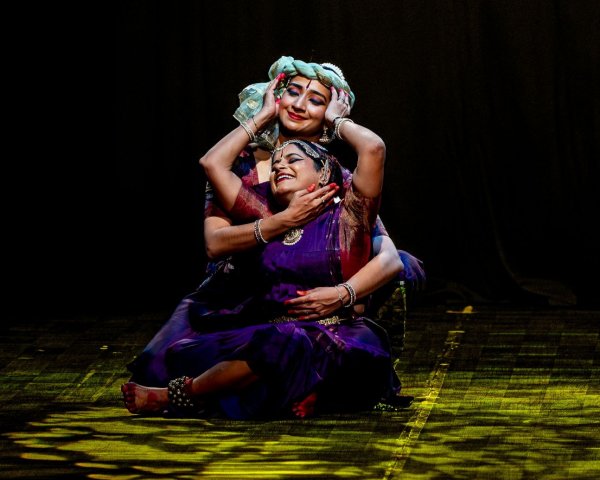 Woven round an entire Margam, the production never lost sight of the theme of presentation. Very aesthetic and original stage formations, with dancers armed with perfect technique and angashuddha, along with the excellent vocal rendition in the pre-recorded music accompaniment, made for a very absorbing Bharatanatyam evening. With Indira Kadambi herself leading were students trained by her - Apeksha Kamath, Ramya Suresh, Sarath Naik and Saibrinda Ramachandran. Kudos for Koham!  Writing on the dance scene for the last forty years, Leela Venkataraman's incisive comments on performances of all dance forms, participation in dance discussions both in India and abroad, and as a regular contributor to Hindu Friday Review, journals like Sruti and Nartanam, makes her voice respected for its balanced critiquing. She is the author of several books like Indian Classical dance: Tradition in Transition, Classical Dance in India and Indian Classical dance: The Renaissance and Beyond. Post your comments Please provide your name along with your comment. All appropriate comments posted with name in the blog will also be featured in the site. |
