
|
    |
|
|
|


Arangetrams: Gaining popularity and making a cultural statement by Padma Chebrolu, Cincinnati, OH e-mail: padma@culturalcentreofindia.com Photographs: Niteen Bapat August 16, 2004 Arangetrams (or Ranga Pravesams) showcase the great tradition of passing on the knowledge of dance from the teacher to the student. This process also happens with other art forms, but the grandeur of dance Arangetrams is exceptional. This shows the appreciation of the people toward dance and its ever-growing popularity in our communities. Coming to the Arangetram level in classical Indian dance is more than preparing for a world-class athletic competition. It demands focus, physical endurance, drive, and determination. Understanding the religion, mythology and culture becomes essential. Arangetram is a major milestone for a dancer toward possibly becoming a world class dancer. Usually serious preparation for an Arangetram starts a year ahead. This is a dream come true to all the parents and families of a dancer. As the saying goes, it takes a village to raise a child - in America, in this context we can say; it takes a whole village to have an Arangetram. Many aunts and uncles come to the rescue of the parents. Mother of the dancer becomes a project manager. All the uncles and aunts divide themselves into sub-teams such as; dinner team, decoration team, reception team, stage team, audio and video team, and help the dancer team. The photo shoot is scheduled six months ahead of time to ensure photos can be included in the invitations and the program brochures. Some parents and the dancer even make a trip to India to get the dance costumes custom made, buy the jewelry, print the invitations and program brochures and purchase other related items. Some Arangetrams are large scale and some are more intimate depending on the wishes of the dancer and his or her parents' wishes. Guests number range anywhere from fifty to four hundred or more. Arangetrams may include dinner after the show, while others may not. Some Arangetrams are open to anyone and some are by invitation only. Including the live orchestra, musicians can be local or from other cities in US or from India. Live orchestra may not be used due to the complexity involved, so some choose to use pre-recorded music. Some parents bring in well-known people in the community as the guest of honor and some prefer to honor the dancer's grandparents. As the Arangetram gets closer, the dancer rehearses the program everyday to build up the physical stamina, the fluency and perfection. Great emphasis is given to the facial expression and 'story telling' technique. A week or two before the show, the dress rehearsal takes place. All the details of the show presentation are finalized. 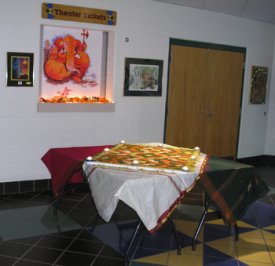
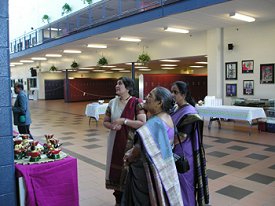 On the day of the Arangetram, the reception area is decorated with the photographs of the dancer, beautiful paintings, fabrics, and handicrafts. As you enter the reception area, you are welcomed with perfume sprinkles, kumkum and a treat of dry nuts and candy. You are given the program brochure that has the layout of the program, bio of the dancer and several photographs of the dancer. Most of the guests, wearing traditional clothing meet and greet each other. As the seating time approaches, guests try to find the best seat possible. The master of ceremonies appears on the beautifully decorated stage. He or she welcomes the guests and introduces the program. The elegant dancer makes his or her grand appearance on the stage and offers his or her prayers to the Gods and performs each dance with devotion. Dedication to the art form becomes evident in the dancer's every movement and expression. Audiences cannot believe the transformation that happens to the young woman or man they have known for years. During the interval, guests enjoy hot samosa, pakora and sweet chai. They cannot stop discussing how wonderful the performance has been. The second half of the program showcases dancers in a different dance attire. The dancer performs with even more enthusiasm and steals the hearts of the audiences with dances such as Varnam, Tillana and so on. At the end, the dancer usually receives a standing ovation for his or her courage, work ethic and mastering the art form. 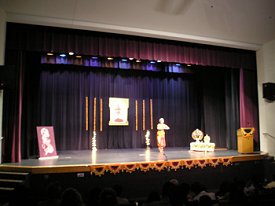
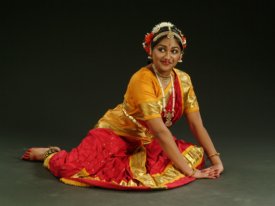 At the end, the guru is respected with gifts (guru dakshana). Brief speeches are given by the guru and the parents thanking the guests and wishing the budding artist a great future ahead. The dancer also makes a speech, which usually includes the dancer's relief that he or she has been able to attain this arduous task and thanks everyone involved in helping. Arangetrams definitely play a significant role in the field of dance education and also in the cultural preservation in our communities. All that matters is that the dancer received the art form with devotion and respect. It is the responsibility of each and every one of us to ensure we pass on the good values and traditions to our younger generation. I would like to thank Deepa and Ashok Khambe for sharing the photographs of their daughter, Swati's Arangetram. 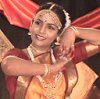 Padma Chebrolu is the artistic director of Cultural Centre of India. She also conducts lec/dems, workshops and performances at many universities, museums, corporations, and performing art schools. Padma writes articles about dance and dance education. She works as a software engineer at a major corporation. Contact information: culturalcentreofindia.com |
