
|
    |
|
|
|

 Unsung characters for adaptation in dance (Part 3)- Dr. Padmaja Sureshe-mail: padmajasuresh@hotmail.com July 16, 2025 Unsung characters for adaptation in dance (Part 1) Unsung characters for adaptation in dance (Part 2) CHARACTERS FROM THE NARAYANEEYAM OF NARAYANA BHATTATIRIPAD 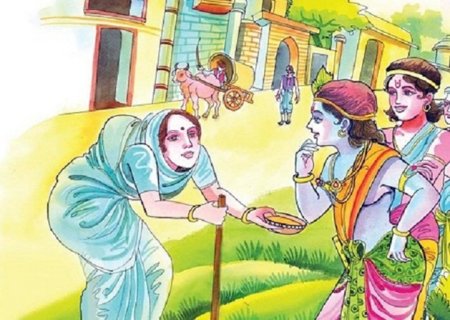 Kubja was a maidservant in Kamsa's palace, responsible for procuring sandalwood paste and fragrant oils for Kamsa. She was a hunchback, sometimes referred to as 'Trivakra' (crooked at three spots). Krishna, captivated by her devotion, accepted her offering, straightened her back and made her of a perfect form. This narrative can be well dramatized and suitably brought to choreography. 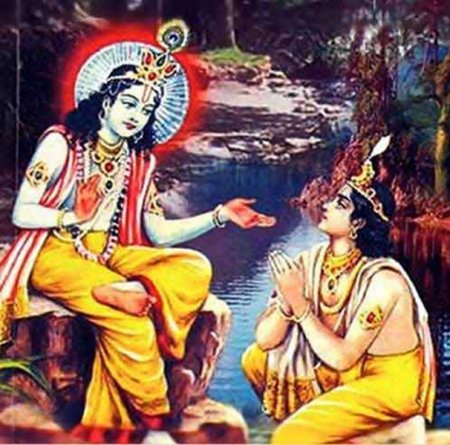 Uddhava was Krishna's cousin and a childhood friend, sent to Vrindavan. He was a scholar with a deep understanding of the scriptures and discussed to know more from Krishna about the nature of reality and Prema Bhakti - the basis for the Uddhava Gita. His life story can be well explored indeed. HISTORICAL 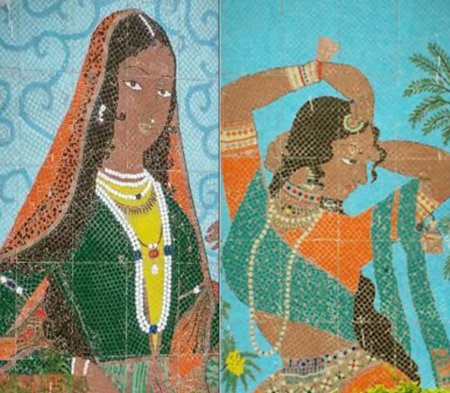 Tāramati and Premamati: Legendary courtesans of Golconda These two sisters were celebrated for their music and dance, captivating the 7th Sultan of the Golconda dynasty, Abdullah Qutb Shah. The dancers are associated with their performances and the romantic stories surrounding Abdullah Qutb Shah's admiration for them. Legend has it that Abdullah Qutb Shah would listen to Tāramati's singing from Golconda fort while she performed at the Sarai, and that the sisters were buried in the royal cemetery. 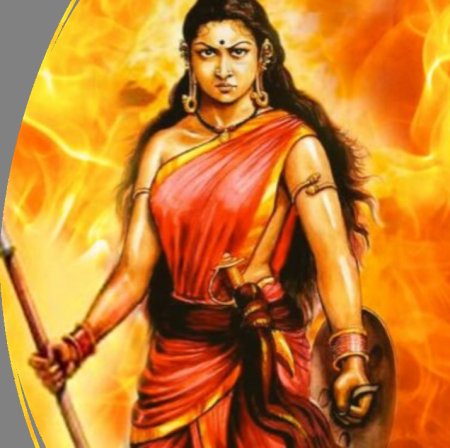 Kuyili served as a commander in Queen Velunāchiyar's army, which was a significant force in the fight against the British. During a battle to reclaim a fort, Kuyili, along with a small group of women, infiltrated the fort disguised as civilians. Their mission was to destroy the British arsenal. Kuyili, wrapping herself in cloth and drenching her body in ghee, set herself ablaze and rushed into the fort's arsenal, effectively destroying it and securing a victory for Queen Velunāchiyar. Kuyili's act of self-sacrifice is often cited as one of the earliest examples of a suicide-bomber attack in world history. Udaiyal, who delayed the British Military movement by refusing to divulge the details of Velunachiyar was cut mercilessly. She had secured the life of Velunāchiyar and her daughter Vellāchi and sealed the freedom of Sivaganga. 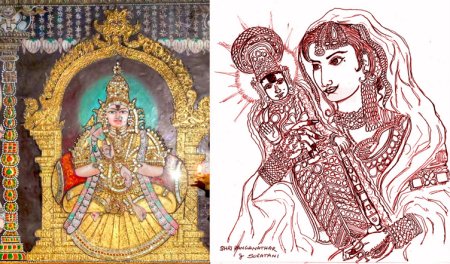 At the Ranganāthaswamy temple in Srirangam, a small Sannidhi of Tulukka Bibi Nāchiyar stands almost unnoticed in the corridor bordering the sanctum sanctorum. Rotis are cooked and offered at times to Ranganātha which many may not be aware of. She was the Muslim princess who became the consort of the Lord. So in a ritual, the Lord even wears coloured lungis. When Malik Kafur invaded (during 1310-1311) Srirangam, all the riches were looted. The statues were melted and added to the treasury of the Sultan. The princess of Delhi was drawn to the beauty of Perumāl and begged her father, the Sultan, not to melt Him and instead give as a toy. She became inseparable from Him and fell in love and wouldn't part with it. It seems that the Sultan surrendered the statue to Guru Rāmānujar. The princess followed it back to Srirangam and got absorbed as Ranganātha's consort. 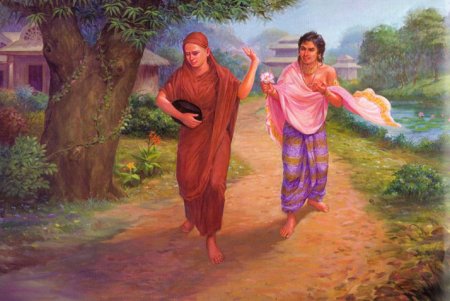 The unconquerable Ajataśatru, son of Bimbisāra, was madly in love for Amrapali, when he invaded Vaishali. The destruction caused by the war led Amrapali to reject him and embrace Buddhism. He is said to have invaded Vaishali because Amrapali was imprisoned there, and he wanted to secure her for himself. Ajataśatru, also deeply moved by the teachings of the Buddha, is said to have become a follower as well. STHALAPURĀNA-S 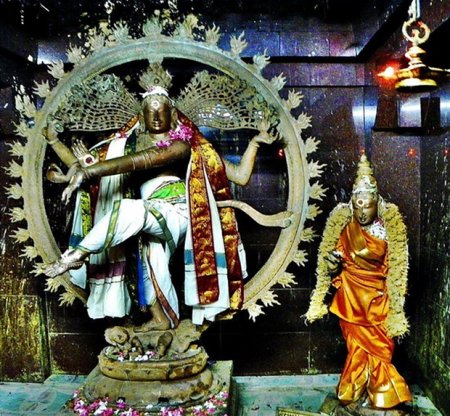 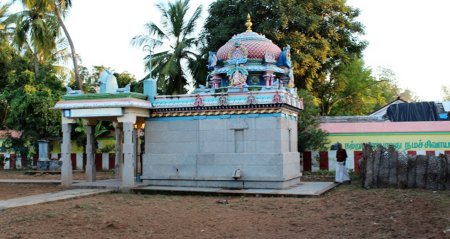 The Konerirājapuram temple has the largest metal cast Natarāja in the world, bigger than the one at Chidambaram. The Chola king Kadarāditya Cholan and his wife Sembian Mahādevi asked the Śilpi to make a Lord Natarāja's statue in Panchaloha, extremely tall and appealing but just weren't happy with three casts of Natarāja. Giving him a last chance or threatening to chop his head, the depressed blacksmith had a pot full of molten metal and was praying to the Lord. An old man and his wife came near him and asked for some water to quench their thirst. 'I only have molten metal and am busy', he replied. Lo and behold! The couple started drinking the boiling contents and there emerged two Vigraha-s, a majestic tall Natarāja and a beautiful Śivakami. The honest and stunned blacksmith related the episode but the furious King raised his sword in anger, which struck the foot of the deity. Blood oozed out and as is destined with bad Karma, the King developed leprosy. The Lord appeared to the grievous King and said- 'I am here in the form of Vaidyanātha Linga. You may perform Abhisheka to get cured'. Lord Natarāja stands there, so realistic with a mole under the left arm, visible nerves and muscles, tiny hairs in the armpit and body, a scar on the right foot where the king's sword hit. {It was a rare experience for the author to have visited this temple and witnessed the complete rituals}. FABLES FOR CHILDREN 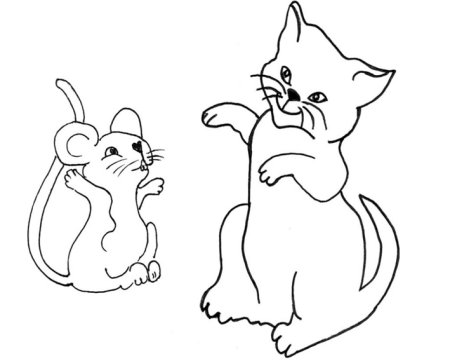 Bhishma to Yudhishtra in Śanti Parva A huge Banyan tree stood in the middle of a forest. Underneath its trunk, in a hole, lived the wise mouse, Palita. A cat, Lomaśa, lived on the tree branches, hunting birds and quite happy. A hunter came and the cat was caught in one of the traps. The mouse began to roam near the trap without fear. A mongoose and an owl appeared and Palita smelled danger. Intelligent as he was, he promised to help the cat by cutting the net strings but in exchange, he should be allowed to lie low under the cat's body. The mongoose and the owl were wonderstruck and realised they had no chance to catch the mouse and went away. Immediately, Palita began to gnaw at the net strings but was slow as he said that the last string will be cut only when the hunter returned. Then both can run for their lives. This plan seemed the only insurance policy to ensure that the cat does not pounce upon him, once free. A friendship based on fear should be sustained with great caution, like the hand of the snake-charmer from the fangs of the snake he believed. There is another tale of the pigeon couple who sacrifice their lives for a hunter as he is a guest at their tree and ascend to heaven. References for all three articles- parts 1,2,3
 An acclaimed dancer researcher and author, Dr. Padmaja Venkatesh Suresh is well-known for her immaculate insight into esoteric sciences, corelated with years of training and experience. Having toured extensively with her lectures, workshops and thematic performances, she leads Aatmalaya Academy, Bangalore, that propagates the cause of Sanatana Dharma and Vedic values through the arts. A PhD in dance and philosophy, she has several awards to her credit. Response * Appreciate Dr. Padmaja Suresh for bringing new characters for sanchaari delineations in Naatyam. In my Malayalam lyrics Nrityopaharam (in place of a Padavarnam in raagam Mohanam), I have incorporated characters like Kubja, Kuvalayapeedam elephant, Poonthanam Namboodiri, etc. This repertoire seems to be popular among the youth festival participants. - Natyacharya V.P. Dhananjayan (Aug 1, 2025) Post your comments Pl provide your name and email id along with your comment. All appropriate comments posted with name & email id in the blog will also be featured in the site. |
