
|
    |
|
|
|

 Dancing through distress: How classical dance becomes a language of healing- Bipasa Sene-mail: senbipasa5@gmail.com October 25, 2025 There is a point in every dancer's journey, when the stage is no longer just a place to perform - it becomes a place of letting go, of silent healing. Indian classical dance has been, for a long time, more than just an art form - it has been a holy communication between body, mind, and feeling. In times of emotional distress, this communication becomes a deeply moving, non-verbal language of strength. The body as an emotional landscape Dancing is basically to live the body thoroughly - to allow it to say what you cannot put in words. In Indian classical arts like Bharatanatyam, the body is not considered different from the mind but rather its most fluent partner. Every movement, beat, and look conveys the depth of feeling that is both experienced and expressed. Regulating emotions through movement Psychology of dance unveils that movement is a way of emotional regulation. As per James Gross's Emotion Regulation Theory (1998), emotional experience is changed by expression and reinterpretation. A dancer, when she performs karuṇa rasa (compassion) or veera rasa (courage), becomes one with the emotion to such an extent that sorrow is transformed into beauty. Every mudra and abhinaya is a means of communication of the dancer's internal energy. Thus, emotional stamina is being developed gradually. The silent therapy of symbolism Classical dance is a highly symbolic and a somewhat subtle means of communication - the shaking hand, the inclined head, the gaze that reveals sadness. Since it is based on the Natyasastra, these very small parts of the whole idea show the feeling to the people which is beyond the spoken language. According to the neuroscientific research on mirror neurons, an empathetic performance leads the emotional understanding to both the dancer and the audience. In this way, dance is the common device of recovery - where the feeling is the means for linking the performer with the viewer. A safe space beyond therapy Even the emotional space that dance builds outside therapy is safe. In this refuge - be it a silent studio or one's own home - feelings come out without any kind of judgment. The experience psychologist Mihaly Csikszentmihalyi (1990) called flow, very much resembles this state of complete concentration when one is unaware of time and is free from anxiety. The ordered tempo of classical dance helps to stabilize the emotion and hence changes the process of emotional upheaval to one of emotional harmony and insight. Dance as resilience in motion The dance is not a remedy, but a partner along the pain. Every move is a confirmation that strength and frailty can be two inseparable sides of the same coin. In an agitated world, Indian classical dance is a spiritually healing tool from the culture. It imparts the lesson that cure is not getting rid of sorrow but dancing with it - rhythmically, consciously, and gracefully. 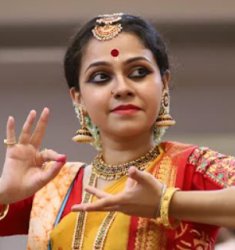 Bipasa Sen is a Bharatanatyam dancer from Tripura and a postgraduate in Performing Arts from Rabindra Bharati University, Kolkata. Her work explores how Indian classical dance nurtures emotional expression and mental well-being. Post your comments Pl provide your name and email id along with your comment. All appropriate comments posted with name & email id in the blog will also be featured in the site. |
