|
    |
|
|
|

 Can YouTube be your Guru?- Anannya Mahantae-mail: anannyamahantadance@gmail.com November 8, 2025 "The internet can show you the dance - but can it teach you devotion?" For me, dance has never been just an art form - it has been a way of being. Having devoted over more than two decades to the sacred discipline of Sattriya Dance, one of India's most revered classical traditions, my journey began when I was barely three. Under the guidance of my Guru, I learned that dance is not mere performance - it is prayer. Every movement becomes a hymn, every gesture a meditation and every rhythm a quiet act of surrender. The 'Guru-Shishya Parampara', that timeless lineage between teacher and disciple, forms the lifeblood of Indian classical arts. Yet today, as studios turn into screens and reverence yields to reach, I often find myself wondering: can YouTube truly be your Guru? Technology has transformed how art travels. Platforms like YouTube, Instagram, Tiktok have become vast repositories of performances and tutorials. A young dancer in a small town can now witness rare compositions, study ancient choreographies and learn from maestros across the world. This democratization of art feels liberating - it opens doors once sealed by geography and privilege. It allows curiosity to cross continents and it invites countless new seekers into the fold. Yet behind this celebration of access lies a quiet concern - the loss of depth. A video can show the steps but it cannot convey the silence between them. It can teach you how to move, but not why you move. And that why - that sacred intention - lies at the heart of every Indian classical tradition. In classical dance, whether Bharatanatyam, Kathak, Kathakali, Odissi, Manipuri, Mohiniyattam, Kuchipudi or Sattriya, the Guru is not simply a teacher - the Guru is the art itself. The 'Guru-Shishya Parampara' is not just a system of instruction; it is a spiritual relationship, a process of awakening. Through years of tapasya (discipline), shraddha (humility) and bhakti (devotion), the disciple absorbs not only movement but consciousness. The Guru sharpens the dancer's posture and perception alike, shapes rhythm into reverence and transforms the physical act of dancing into a spiritual offering. Dance, then, stops being a form of expression and becomes a form of existence. When this sacred exchange is replaced by a video link, learning risks becoming mechanical. The internet may display a mudra, but it cannot awaken bhava (emotion). It may demonstrate a tala, but it cannot transmit rasa (essence). YouTube can show movement, yes - but only a Guru can awaken grace. The digital age rewards speed, visibility and applause, yet Indian classical art was never meant to be instant; it was meant to be infinite. True mastery is not counted in likes or views but measured in years - in silence, sweat, correction, surrender and awakening. A dancer may perfect a sequence from YouTube, but without the Guru's guidance, the soul of the art - that quiet pulse of divinity - begins to fade. Every gesture in classical dance tells a story. A raised hand, a tilted head, a fleeting glance - each carries centuries of mythology, philosophy and poetry. Without the Guru's explanations, these gestures lose their voice. When dancers imitate from videos without context, they may capture the form but miss the feeling. The art becomes choreography without consciousness. The Guru reminds the disciple that every rhythm carries a reason, every gesture a lineage, every movement a memory. YouTube offers access - but the Guru offers authenticity. And in this era of online visibility, awareness is as essential as artistry. Social media can illuminate or it can distort - it depends on how we use it. A single video, shared without thought, can travel across the world in seconds, spreading both beauty and misunderstanding. When an art form is misrepresented, even unintentionally, it risks creating confusion and disrespect. Today's dancer must therefore step into the digital stage with mindfulness. The music we choose, the choreography we replicate and the verses we adapt all carry ownership, origin and sanctity. A careless use of someone else's composition or a misinterpreted movement borrowed from a clip, can blur lines between inspiration and infringement. It is also a myth that YouTube offers a shortcut to mastery. True art cannot be downloaded or fast-tracked. We now live in an age where online classes - through Zoom, Google Meet, Teams and other platforms - allow a student to learn directly from a Guru, no matter the distance. So, if one seeks convenience, guidance is still available. The digital world has made learning accessible, not effortless. Before showcasing a piece or uploading a performance, a dancer must pause and reflect: Is my portrayal true to its source? Have I credited the music? Have I understood the meaning behind the gesture I perform? Awareness, in this context, is not a restraint - it is an act of reverence. There is an ethical rhythm within every classical art, a rhythm that demands sensitivity and responsibility. In the rush to trend or "go viral," this rhythm often falters. Many sacred compositions and choreographies are edited, remixed, or shortened for reels, sometimes without permission or acknowledgment. In a tradition built on respect, this is more than carelessness - it is a fracture in ethos. A Guru teaches not only when to move, but when to remain still. Art was never meant for validation; it was meant for evolution. The Guru reminds us that dance is not about performing more but about becoming more. And yet, technology itself is not the adversary. It has preserved and promoted countless treasures that might otherwise have vanished into obscurity. Archival footage, online lecture-demonstrations and digital festivals have allowed audiences across continents to experience the grace of forms once hidden within temple walls, sattras or small village halls. When used consciously, technology becomes a bridge - but it must remain a bridge, not a replacement. Let YouTube be your reference, not your refuge. Let it inspire you to seek but allow your Guru to guide you to truth. Watch, explore, learn - but return to your Guru for correction, silence and the subtle transmission that passes only from soul to soul. Indian classical arts have survived centuries of change because they were taught truthfully, not hastily. Every form - through rhythm, narrative or gesture - leads the artist toward moksha, liberation through devotion and discipline. The dancer is both performer and pilgrim; the stage is both space and sanctuary. When approached superficially, the art may remain beautiful to the eye, but it loses its fragrance - the bhava that breathes life into every step. Today's dancer stands at a tender intersection - between preservation and performance, between purity and popularity. The pressure to post, to trend, to be visible can be overwhelming. Yet, visibility itself is not the villain; the purpose behind it is. When we share to educate, to preserve, to inspire, technology becomes an ally. But when we dance only to be seen, the art loses its sanctity. The art is eternal; the algorithm is temporary. Perhaps the balance lies here: let YouTube serve as your guide, your mirror, your library - but let your Guru be your light. Let technology expand your horizon but let tradition anchor your soul. One can learn choreography online, but only through the Guru can one awaken consciousness. YouTube may show you what the dance looks like, but only a Guru can show you what it feels like. A true Guru does more than correct your steps - they refine your spirit. They do not just teach you to perform - they teach you to become. So, can YouTube be your Guru? Perhaps it can guide, inspire and inform. But your true Guru remains the eternal bridge between knowledge and wisdom, form and soul, performance and prayer. 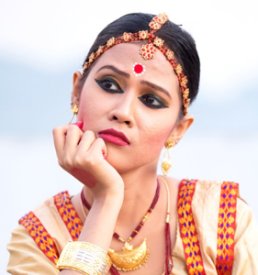 Anannya Mahanta is a Sattriya dancer, cultural ambassador, and advocate of therapeutic movement currently based in London, UK. A gold medalist in Astrophysics and an aspiring writer and speaker, she explores the intersections of classical dance, breath, neuroscience, and somatic well-being. Her work bridges tradition and innovation, advancing accessibility, pedagogy, and global cultural dialogue. Anannya is currently serving as an artistic member of OneDance UK. Post your comments Pl provide your name along with your comment. All appropriate comments posted with name in the blog will also be featured in the site. |
