|
    |
|
|
|

 What my Guru gave me, I struggle to give my students- Sushma Kotireddye-mail: sushmakoti30@gmail.com December 27, 2025 For me, Bharatanatyam has never been just a sequence of steps. It has always been a living conversation between rhythm, movement, and devotion. As a child growing up in India, I was immersed in this world from the very beginning. My earliest memories are not only of dance classes, but of the sound of the nattuvangam, the voice of the vocalist rising and falling with emotion, the steady heartbeat of the mridangam behind me. Music was never something I danced to - it was something I danced with. Those years shaped me not just as a dancer, but as a person. The live orchestra was my teacher as much as my Guru. I learned how a phrase could stretch when emotion deepened, how silence could hold more power than movement, how rhythm could guide the breath itself. Every rehearsal was a dialogue. I was corrected not only in posture, but in perception. Today, as a teacher living in Kenya, I watch a new generation of dancers grow up in a very different environment. The students are talented, disciplined, and deeply sincere. Yet most of their learning happens with recorded tracks. Trained live musicians are rare here, and performances almost always depend on pre-recorded music. This practical reality has changed the very nature of how dance is experienced. When I dance with my students to recordings, the beats are precise and the melody is clear - but the conversation is gone. The music no longer waits for a breath, no longer responds to emotion, no longer stretches a moment of abhinaya. The dancer becomes bound to the track, moving in time with a machine rather than in partnership with living sound. What saddens me most is what this generation is missing. They are missing the chance to absorb the subtle nuances that only live accompaniment can teach - the instinct to listen, the courage to pause, the sensitivity to adjust. They are missing the centuries-old oral tradition that flows naturally when musicians and dancers share the same space. Recordings teach them steps, but not the art of listening. They perfect technique, but rarely experience the magic of spontaneous exchange. I also see the emotional cost. When I was young in India, every performance felt alive. The vibrations of the mridangam echoed through the body, the warmth of the singer's voice filled the hall, and the dancer and orchestra breathed together. Here, the students often perform beautifully, but the audience witnesses the form more than the feeling. They see the dance, but they do not always feel its heartbeat. As a teacher, I try to recreate that lost world through stories, explanations, I remind my students that technology is not their enemy - recordings are invaluable tools that allow us to survive and grow abroad. But they must never forget that these tracks are only a bridge, not the destination. The balance, I believe, lies in awareness, yet in Kenya this awareness often collides with reality. I encourage my students to seek live music whenever possible, but the truth is that trained Carnatic musicians are scarce here and bringing artistes from India is financially overwhelming for most families and institutions. Collaboration, which is so natural in India, becomes a rare privilege abroad. As a result, Bharatanatyam is too often reduced to choreography rather than experienced as the living dialogue of devotion and discipline that it truly is. Dance is not only meant to be seen-it is meant to be felt-but in this environment, that feeling becomes difficult to sustain. I may now teach in Kenya, far from the land where I first learned to listen to music that breathes, but I carry that memory within me. It is my responsibility to pass it on - to ensure that even in a foreign land, the soul of this sacred art continues to live, breathe, and transform lives. 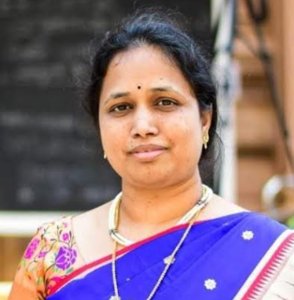 An M.A. graduate in Bharatanatyam, Sushma Kotireddy, Director of Ravindra Natya Nikethan, Nairobi, trains over 100 students in Bharatanatyam and also volunteers at Children's Garden and Home, teaching Indian classical and folk dance to more than 40 orphaned children. Serves on the Executive Committee of the Kenya Music Festival. Response * Wonderfully written. I can relate to every word and emotion that is penned down here. Wish this generation living abroad could also experience the heavy discussion between the members of the orchestra.. a small tweak and change and the guru would pick up the nattuvangam and walk us through a whole new set of Nritya or Nritta. How Abhinaya is accentuated by the mridangam and nattuvangam. Lovely article .. made me go down memory lane. - Gitanjali Parida (May 13, 2026) * True - that is why when some dancers perform, we feel a connection and when others do, no matter how perfect they are in presentation, something seems amiss. In a world overwhelmed by artificial intelligence, this natural tendency of the mind and heart to long for a connection is rather belittled. - Anandita Sengupta (Jan 12, 2026) * This was such a beautifully written and heartfelt piece. The way you described Bharatanatyam as a living, breathing dialogue truly moved me. Your journey from the vibrant musical world of India to teaching in Kenya was expressed with so much depth. Hiring trained musicians and singers from India whenever possible and collaborating with the Indian classical artistes already living locally, can definitely help recreate that lost musical sensitivity you spoke about. Your dedication to keeping the soul of this art alive, even far from home, is truly inspiring. Absolutely loved reading this. - Shivani (Dec 28, 2025). Post your comments Pl provide your name along with your comment. All appropriate comments posted with name in the blog will also be featured in the site. |
