
|
    |
|
|
|

 How emotions evolve in a changing world- Shreya Kumar Gopal Raoe-mail: shreya.skgr@gmail.com March 8, 2026 Emotion is something that comes naturally to humans, a form of expression to voice our thoughts, ideas, and desires. But when it becomes something that you have to control, it begins to feel uncomfortable. In Bharatanatyam, abhinaya forces us to experience and visualize emotions from perspectives we may have never considered before, and it's an odd feeling. In a generation that reacts first and then reflects, it shows how emotionally undertrained we are. Sure, we caption heartbreak, we constantly upload our highs and lows, and we curate vulnerability. But is that form of expression really the same as understanding emotion? Abhinaya is not just acting, but rather the nuances behind it. A single glance has the opportunity to carry infinite meanings, each interpreted by both the performer and the audience in different ways. Emotion is structured, not impulsive, and that changes the way that it becomes consumed by people witnessing it. When I first began learning expressive pieces, my mind never truly sat with the ideas being portrayed, often skipping ahead to my favorite part of the nritta ("pure dance" focused on technical skill and rhythmic footwork). But repetition shattered my silly illusion, forcing me to really look at the theme behind the dance. To convincingly portray separation in my varnam, I had to sit with the weight and sadness of it. To show devotion, I had to accept humility in the face of all that is greater than me. Learning how to express abhinaya showed me the depth of my true emotions and how intense a single feeling can be. And sometimes, there might be ideals and beliefs you're forced to express without really knowing how they feel from experience. But the oddly special thing about that is it teaches you how to accept and grow with emotions you would have never encountered before. In some ways, it prepares you for the world and depth of feelings that people allow themselves to be surrounded by. Perhaps that is why the weight of Bharatanatyam feels so jarring to a world drowned by digital immediacy. We claim we know true emotion and how to identify it, but in classical dance, your body reveals your insincerities, often signifying a difference between reaction and response as a subtle transformation. Although it has taken me so many years to identify emotional advancement, it does not mean I have accomplished it. In my 8+ years of practicing Bharatanatyam, I have barely begun touching the surface of rasas and abhinaya. But it's a journey for the books, a memorable one that continues to shape my character and feelings even in my world outside of dance. Tradition survives not only because we preserve its movements, but because we rediscover its relevance. In a time when we feel everything loudly and quickly, Bharatanatyam reminds us that feeling well is an art. In learning to portray emotion with intention, I am beginning to understand that the most powerful feelings are not the loudest ones, but rather the ones we know how to hold. 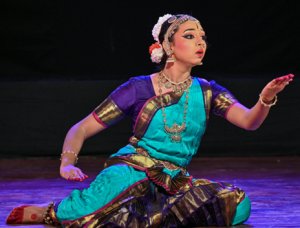 Bharatanatyam dancer and student writer Shreya Kumar Gopal Rao is a disciple of Sreedhara Akhihebbalu (San Antonio), Aler Krishnan (San Diego), and Padmini Upadhya (Bangalore). She is also a Carnatic flute player. In addition to performing, she writes through her independent platform, Naadarasika. Post your comments Pl provide your name along with your comment. All appropriate comments posted with name in the blog will also be featured in the site. |
