|
    |
|
|
|

ARTICLEGaudiya Nritya: Analyzation on the subjects of debate- Adrita Misrae-mail: misra.sandipan82@gmail.com August 17, 2026 Introduction Gaudiya Nritya, at present is among the most debated dance forms of India which are yet to be considered strictly 'classical'. Despite covering the technical criteria of a classical dance form, Gaudiya Nritya faces strong criticism and opposition due to several reasons which we attempt to address and analyze here. Gaudiya Nritya was denied the recognition based on various reasons out of which, the most crucial parameter were the following: i) Overlapping with other dance forms This is the most debated and crucial issue in the revival history of Gaudiya Nritya. Scholarly claims suggest a heavy 'borrowing' of Gaudiya Nritya from other dance forms, most notably Odissi. For answering this question regarding the authenticity of the dance form, the historical, archeological and literary evidence of Gaudiya Nritya as well as Odissi needs to be studied. As is known by most, Natyashastra by Bharatamuni denotes and describes four regional styles or Pravrittis named as: Pallavi, Avanti, Dakshinatyam and Odramagadhi. Under Odramagadhi, comes the following regions: a) Kalinga b) Anga c) Vanga d) Vatsa e) Videha f) Tamralipta g) Bhargava h) Nepala i) Odra-Magadha j) Antargiri and Bahirgiri k) Malada l) Tamralipta m) Pravanga n) Mallavarta o) Mahendra p) Margava q) Pulinda r) Pragjyotisha s) Pranga t) Bramhottara And as it is known, both Odissi and Gaudiya Nritya have derived from the Odramagadhi pravritti; the abhinaya, the costume styles as well as various dance depictions share striking similarities. But whether sharing the same Pravritti is the sole reason for sharing such numerous similarities between the two, needs further verification [i]. The oldest archaeological backings for Gaudiya Nritya can be found in Chandraketugarh while for the case for Odissi, it is the Udaygiri and Khandagiri hills which are more or less of the same time. Both of these share various dance postures in common but with different mudras and sthanakas. Many of them even feature the same mudra but with different execution and sthanaka. For instance, the Venu hasta in Batu Nrutya of Odissi is performed on chowka stance. The right hand in the form of Simhamukha mudra is placed near the lips but it is placed above the left hand while the same step in Gaudiya Nritya is performed on Suchi pada and unlike in Odissi, the left hand is placed above the right ones. This striking difference is visible even to untrained eyes. (Explained comparative figures of the given descriptions have been added at the end.) Now, the most debated part of the subject is to be reached. There are various postures due to which Gaudiya Nritya has been criticized. One of them is the Alasa Kanya postures. Gaudiya Nritya uses several of them and that is why many a times it was called a strict 'copy' of Odissi. But the further analyzation tracks even deeper. 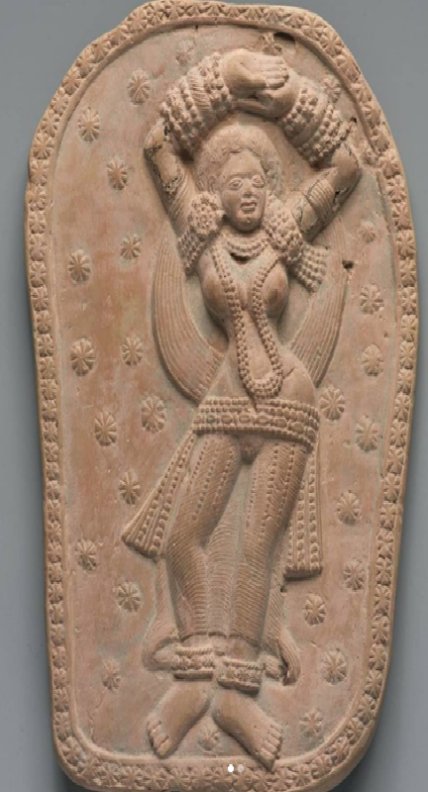 Fig 1: 'Dancing Figure' from Chandraketugarh This picture represents 2nd century BCE, 'The Dancing Figure' from Chandraketugarh in West Bengal. This figure shares striking similarities with the later 8th century CE Alasa Kanya Bhangi temple carvings in Odisha. The sixteen Alasa Kanya Bhangis according to Silpa Prakasa is frequently used in Odissi. But much earlier 2nd to 1st century BCE terracotta panels of Chandraketugarh depicted much similar or same figures which are also used in Gaudiya Nritya. The Dalamalika, Torana, Matramurti, Shukasarika and Chamara Alasa Kanya Bhangis had their undeniable earlier Chandraketugarh equivalents. These figures solely do not justify the use of the figures in Gaudiya Nritya but the later texts like Sangeeta Damodara and Srihastamuktavali explained the postures which held strong resemblance with those of Chandraketugarh. Such similarities may trigger a thought of Gaudiya Nritya being a copied dance form but the 17th century text Abhinaya Chandrika lists seven distinct dance forms in the Indian subcontinent including 'Gouda Nritya', the dance form of Bengal. The list of those seven dances: i) Odra ii) Gouda iii) Souraseni iv) Karnata v) Madhyadesha vi) Kerala vii) Panchanada This provides a historical blueprint to prove the authenticity of Gaudiya Nritya. The other twin dance of Gaudiya Nritya is Manipuri. Critics often claim to notice strong similarities between the movements of Manipuri and Gaudiya Nritya. The Manipuri Raas composed by King Bhagyachandra plays a pivotal role in the Manipuri dance form. It was composed in the 17th century with the Kirtan tradition of Bengal being at its peak. Manipuri Raas shows strong borrowing from Kirtan. The Govinda Sangeet Lila Vilasa attributed to the court of king Bhagyachandra documents that the compilation of Manipuri Raas was a result of a divine demand by lord Krishna to Bhagyachandra in his dream. Manipuri Raas is often written in Brajabuli, Sanskrit and old Bengali. It heavily relies on Vaishnavite literature or the Padavalis. As it is known for Kirtan to be already a notable part of Gaudiya Sangeet, surely it would shape the movements and grammar of Gaudiya Nritya. Technically, the music system of Gaudiya Nritya influenced an entire other dance form and its earliest archeological depictions influenced later 'Alasa Kanya Bhangis' and many other. So, it is worth noting that Gaudiya Nritya, along with its archaeological, literary, grammatical and chronological backings strengthens its claim as an authentic, distinct and unique dance form. ii) Discontinued lineage The biggest issue faced by Gaudiya Nritya is its discontinued lineage. As there were no existing performers of Gaudiya Nritya by the 17th century, Sangeet Natak Akademi noted an issue that there was no performer to depict the mudras, sthanakas or bhangis explained in the Sangeeta Damodara or Srihastamuktavali. Whether the concern is true, lies further. Gaudiya Nritya takes reference from the 15th century text Sangeeta Damodara and Srihastamuktavali. Dr. Mahua Mukherjee, the pioneer of Gaudiya Nritya, cross referenced the texts and archeological sources and finally came across total of thirty three stances or sthanakas out of which, six are Purusha sthanakas and Stri sthanakas (representation of feminine elegance) like Ayata are also mentioned. The six Purusha sthanakas (stances which represent masculine energy or strength) are: i) Vaisnava ii) Samapada (Purusha variant) iii) Vaisakha (Foundational stance of Gaudiya Nritya) iv) Mandala v) Alidha vi) Pratyalidha The foundational stance of Gaudiya Nritya, the Vaisakha sthanaka, though looks similar to chowka, is different as unlike in the chowka stance, the heels do not face each other and the feet are not forced into strict straight line (placed in the Tryasra). But before Dr. Mahua Mukherjee revived Gaudiya Nritya, whether there was any dance form which explained these sthanakas, charis and bhramaris remains a subject of debate. If not, was Gaudiya Nritya built entirely based on the temple carvings and terracotta artworks? Factually, Gaudiya Nritya's parent dance forms are as follows: i) Chhau ii) Nachni iii) Kushan iv) Kirtan What is the significance of these folk dance forms? Their significance lies on showcasing and explaining the gestures, body placements, stances and the main feeling (bhava) of Gaudiya Nritya. a) Kirtan (For Angika and Vachika Abhinaya) It explains the charis, bhramaris and some of the sthanakas used in Gaudiya Nritya. The Agratala Sanchara, and Nupurbiddhachari, a much noticed sweeping foot movement in Gaudiya Nritya has been heavily showcased in Kirtan. The graceful chakras and andolita sways of Gaudiya Nritya is also signature movements of Kirtan. The music system of Kirtan heavily influences Gaudiya Sangeet (in the form of Vachika Abhinaya). b) Nachni (For Sattvika Abhinaya) Nachni is often considered the spiritual mother of Gaudiya Nritya. It does not have a strict, codified grammar unlike Chhau but it expresses the rasa and bhava which is the lifeline of Gaudiya Nritya. The Sattvika Abhinaya is portrayed via the 'Madhura Rasa' in Nachni. c) Kushan (For Vachika and Sattvika Abhinaya) This folk-theatrical dance form of North Bengal and Assam held onto the Vachika Abhinaya in the form of Kushan poetry and the Sattvika Abhinaya in the form of the 'Bhakti Rasa' and 'Karuna Rasa' after the abolition of Devdasi tradition in Bengal. The wrist bends, the body postures and the abhinayas of the male Kushan performers or the Sokras acted as a living tradition of a long lost dance form. d) Chhau (For Angika Abhinaya) Purulia Chhau is bound with strict codified grammar and is often considered a heroic dance form. Despite being folk dance, Chhau is deeply rooted into its grammar. It is a tradition which displays the Alidha and Pratyalidha poses. These attacking and defending poses of Chhau act as a tradition of the Tandavas performed in Gaudiya Nritya. iii) Costumes The costume of Gaudiya Nritya faces strong criticism and is often called a 'copy' of the costume of Bharatanatyam. But Gaudiya Nritya's costume has a lot of difference from that of Bharatanatyam. Costumes of Gaudiya Nritya, known as Kanchiposhak is made of Baluchori and Swarnachori silk. The elaborate multiple pleats of the saree often makes it look similar to the costume of Bharatanatyam but unlike in Bharatanatyam which possesses a center fan, Gaudiya Nritya's Kanchiposhak consists of the side fan which opens in one direction. The bindi used in Bharatanatyam is usually in the form of a tilak but the bindi used in Gaudiya Nritya has the shape and form of the rising sun. "Kopale Sindur phota, Probhate Bhanur Chhota, Chowkite Chondon O Bindhusobha". This line explains the theory behind the sun-like bindi of Gaudiya Nritya. iv) Folk Elements Gaudiya Nritya's living lineage was carried by mostly folk dances which led to scholars assume that Gaudiya Nritya heavily incorporated from folk dances itself. But almost all the Indian classical dances had taken reference from the regional folk/martial dances. E.g.: Odissi, during its revival borrowed steps, postures and style from both the Mahari Dance and the folk dance, Gotipua. Jayantika, the group of scholars borrowed some steps from Mahari Nritya as well as Gotipua and modified them to revive Odissi. The same process was followed to revive Kathakali which incorporated from folk and martial dances like: a) Krishnattam b) Koodiyattam c) Ramanattam d) Chakyar Koothu e) Theyyam f) Moodiyettu g) Padayani h) Kalaripayattu Gaudiya Nritya is no exception and it too, like other classical dance forms of India takes reference from the regional folk dances of Bengal for revival and reconstruction. Authenticity Despite having such similarities with other dance forms, Gaudiya Nritya possesses a strong authenticity. A) Pranam Gaudiya Nritya, unlike other dance form features a pranam where the performer's knees, toes, hands and heart surrenders to the Earth. The earthen pot or the Shora is bowed to and shown respect before performing on it. B) Props Gaudiya Nritya features unique additional props deeply rooted in the temple arts and traditions like the Chamar (flying whisk), Pushpadali (flower basket) and Shora (earthen clay pot). C) Narteshvara pose Unlike the Chola Nataraja who pins the demon Apasmara, Gaudiya Nritya features the Lalita Ananda Tandava where lord Shiva dances on the bull, Nandi. Unlike Chola Nataraja who features only four hands, Gaudiya Nritya's Narteshvara pose comprises of up to ten arms. 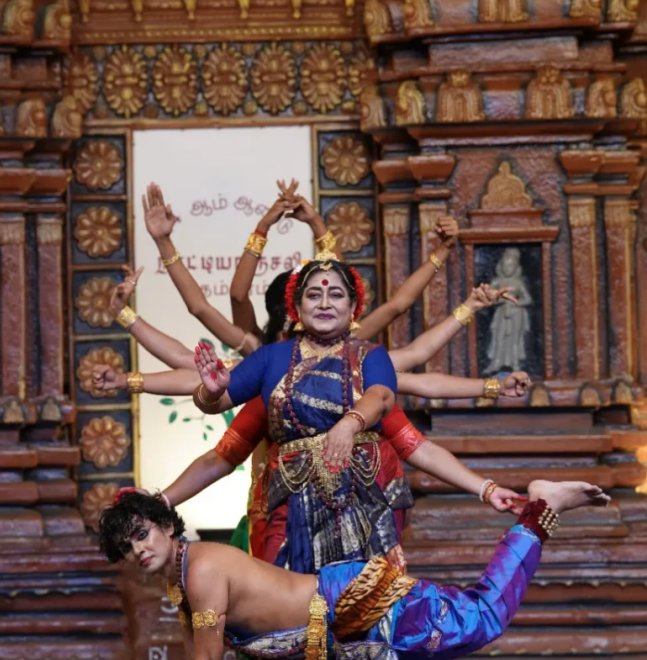 Fig 2: Dr. Mahua Mukherjee and ensemble performing the Narteshvara pose 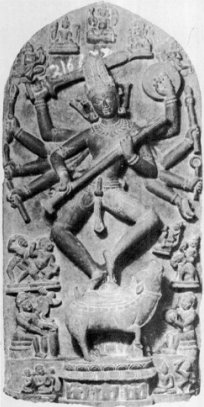 Fig 3: Picture of an exotic and rare architectural panel of West Bengal featuring 10 armed Narteshvara on the back of Nandi, the bull. 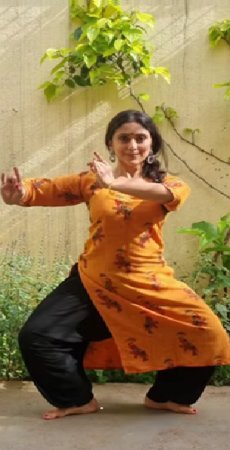 Fig. 4: Odissi Venu hasta 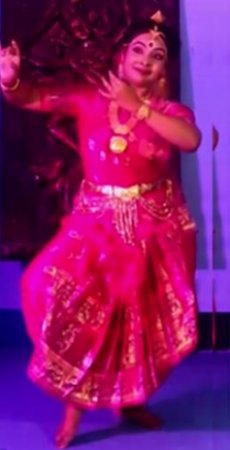 Fig. 5: Gaudiya Nritya Venu hasta REFERENCES i. Bharata Muni. The Nāṭyaśāstra. Trans. Manomohan Ghosh. Calcutta: Royal Asiatic Society of Bengal, 1951, Ch. XIV, Shlokas 36-43. (For the Odramagadhi region list). • Dr. Mahua Mukherjee. Gaudiya Nritya: The Classical Dance Form of Ancient Bengal. Kolkata: Academic Press, 2000, pp. 18-34. (For Chandraketugarh archaeological data). • Dhirendranath Patnaik. Odissi Dance. Cuttack: Orissa Sangeet Natak Akademi, 1971, p. 54. (For the technical contrast of the Venu Hasta pose). • Maheswara Mahapatra. Abhinaya Chandrika. Ed. S. R. Sharma. Puri: Raghunath Churamani Prakashan, 1967, Ch. 1, Verses 12-17. (For the 7 dances listing 'Gouda Nritya'). • E. Nilakanta Singh. Fragments of Manipuri Culture. New Delhi: Omsons Publications, 1993, pp. 67-75. (For the link between Manipuri Raas and Bengal's Kirtan). • Subhankara. Sangita-Damodarah. Ed. G. Sastri and C. Chakravarti. Calcutta: Sanskrit College, 1960, Stavaka III, Verses 41-56. (For the 33 sthanakas and Vaisakha stance). • Phillip B. Zarrilli. The Kathakali Complex. New Delhi: Abhinav Publications, 2003, pp. 31-45. (For classical dances reconstructing from regional folk/martial lineages). • Pika Ghosh. Temple to Home: Textiles and Jewels in the Service of Krishna. Princeton University Press, 2005, pp. 102-114. (For the Kanchiposhak and Baluchori costume elements). 1. Nalini Kanta Bhattasali. Iconography of Buddhist and Brahmanical Sculptures in the Dacca Museum. Dacca: 1929, pp. 110-116 2. Fig 1. Santa Barbara Museum of Art 3. Fig 2. Gaudiya Nritya: A Lyrical Dance of Bengal - Thinker's Log 4. Fig 3. Nataraja Images of Bengal | Exotic India Art 5. Fig 4. Batu Nritya | Odissi Nritya | Anushree Padmanabha | @anushreepadmanabhaodissi 6. Fig 5. The Ninth Evening: 25th August 2021 #Gaudiya Presentation | Shatabdi Nrityayan  Adrita Misra is an independent researcher studying in 7th standard, Vision International School, Howrah, W Bengal. Post your comments Pl provide your name along with your comment. All appropriate comments posted with name in the blog will also be featured in the site. |
