
|
    |
|
|
|


A DANCE TEACHER'S DIARY by Padma Chebrolu, Cultural Centre of India, Ohio e-mail: padma@culturalcentreofindia.com Jun 2001 Teaching dance has always has been my passion. It is very hard for me to imagine my life without dancing. I started learning dance when I was three years old. For some reason, I could not walk until I was two. 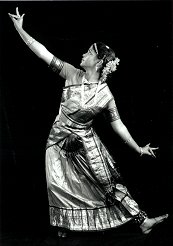 My scared parents thought it would be a good idea to send me to dance school in the neighborhood. This was the best thing that could have happened to me. I found my passion and the art that touched my spirit. Dance gave me athleticism, strength, discipline, stamina, and a spiritual place for me to go and forgot all that there is to worry about. I did arangetram (dance graduation ceremony) when I was eleven. My parents were regular middle class people trying to raise three kids. It was tough enough for them to pay the dance teacher. They could not afford an arangetram of any size. I ended up going to the small temple close to our home and performed in front of the god. A few devotees in the temple sat down and watched me perform. At the end of the show, some of them came to give me blessings. Most of all, I remember this older gentleman; he gave me five rupees and told me to continue dancing and that way I should serve Lord Shiva. I'm still not sure whether what he said was what I wanted to hear or if I followed what he told me. My father used to move every three years in his job. Every time, I had to make new friends and of course, find a new dance teacher. In the process, I learned all the major dance styles from South India. This became an important process later in my life when I started choreographing. In the early 90's I moved to the U.S. and started going to graduate school. Most Indians, who moved to other countries, care about their culture. As I started performing in U.S, people started asking me for lessons. This is when I realized teaching dance in the U.S is very different from teaching in India. In India, most teachers often get a very homogeneous group of students, compared to the students in US. It was a lot of fun and extremely challenging. Some of the students were Caucasian and some were African-Americans. They not only learned the dance but also Indian culture, religion, history, and customs. Those who had already studied ballet or modern dance could master the technique without much difficulty. But they struggled with abhinaya (facial expressions). In a way, these students went through a transformation of the soul to truly bring the emotion of the song to the audiences. Then there are other students, who are already touched by the spirituality of our culture. They have studied our Indian culture, possibly traveled to India and experimented with wearing a sari or cooking an Indian meal. Some of them practice yoga and some meditate. Dance, as a way to worship god and a path to spirituality brings about a truly meaningful experience to these students. They do not worry about perfecting the art form or performing it. They learn the dance just for self-fulfillment and immerse themselves in joy. Some students were of Indian background but they grew up in the U.S. They could not relate to the concept of guru-sishya (student) relationship. It was hard for them to understand the songs and bhakti bhava (devotion) in the poetry. Mastering the posture, aramandi or ardhamandala (knee bend position) takes longer. They struggle with focusing on this art form when it is not mainstream culture. These students understand that this is a great way to learn about their roots, religion, art and history. As time goes by, they unconsciously attach themselves to the art. They start absorbing and internalizing the art form. These students have tremendous encouragement from their parents and family. Some of the parents, when they see their children performing, they come and hug me with tears of joy in their eyes. As a teacher, I face many day-to-day issues and situations. I have to remember to look at the big picture. I think of the joy this art form brought to my life. It can have the same creative influence in others. This art form has a higher purpose as these dance styles have time-tested charm, intellectuality and elegance to them. In a small way, I'm contributing to that higher purpose. |
