|
    |
|
|
|


NUANCES OF MRIDANGAM FOR DANCE by K S R Anirudha Oct 2001 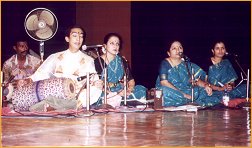 Mridangam, the king of drums, has been associated with classical music and dance from time immemorial, which is evident from the following verses: - "SABDHO DHVANISCHA VARNASCHA MRIDANGAADI BHAVODHVANI, SARVA SABDHO NIBHOVRUDDHI : CHROTHRO THPANLASTHU KRUHAYATHE…." As per the above verses, "Sruthi" and "Layam" are said to be the Father and Mother of 'Sangeetham'. It is in the division of "Layam" that the skin instruments like 'Mridangam' and 'Shuddamaddalam' emerged. From 'Sabdam' emerged 'Dhvani' and 'Varnam" (words) which were produced by the 'Mridangam' and the allied instruments. While my subject for scrutiny today is "nuances of mridangam for dance", let me trace the trails, traverses and significance of the instrument in the past, before going into the subject. INTRODUCTION "Thaalaa", the soul of music and dance is the foundation for rhythm and consequently the rhythm instruments. Hence it is pertinent to see its birth. There are many interpretations on how the word "Thaalaa" was born, the following are a few among them: - 'Thal' is the part of the word 'Thala Prathishtaayaam' in Sanskrit, which means "to establish". As a song's rhythm is 'established' and governed by a time cycle, the word 'Thaalaa' is supposed to have got its name. It is said that Lord Siva, was in his 'Aananda Thaandava', an ornament from his feet flew up and when the Lord tried to catch it, it touched his shoulder, which produced the sound "Thaa". When it fell back on the ground it produced the sound "Lam" and hence "Thaalam" got its name in Tamil. The time gap between the two sounds is said to be "Layam". It is also said that joining and removing the one hand with the other is also termed as "Thaalam". Our Tamil sources say, that when our ancestors danced in ecstasy, by beating their foot ('Thaal' in Tamil) on the ground, sound was produced. Thus, as the beating of the "Thaal' on the ground produced sound and it got the name "Thaalam". It is relevant at this juncture to know the reason why mridangam got its name and its composition. "Mrith" means mud and "angam" means body. As the body of the instrument was made of mud it got its present name. The instrument has seen a transformation and today's mridangam is made out of a single wood piece of Jackwood or Teakwood. The right side of the instrument is covered with three layers of skin - the inner most with calf's skin and the others with goat' skin. A black paste is stuck in the middle of the skin with a hemispherical finish, which is composed of Magnesium, Tamarind syrup and boiled rice. This is called as "Soru", "Karanai" or "Marundhu" etc. The left side of the instrument has two layers of skin, one of the buffalo and the other of goat. The two sides are fastened together with "Vaaru", which is buffalo's skin to keep the pitch of the instrument. Mridangam is hailed as the 'King of drums' today as it is the product of years of experiments of our ancestors with the various rhythm instruments to get this most suited and refined instrument for classical Carnatic music and Bharatanatyam. It is but true that the art form of Bharatanatyam has been associated with the land of the Tamils for time immemorial. More than eighty skin instruments were used for ancient dance concerts depending on the theme and requirement. We are able to see that all of them have been eliminated by this single instrument except a very few like Ghatam, Ganjira, etc. which only are 'Upapakkavadhyams' in a recital which is obviously because of the class of this instrument. Though mridangam has not been referred in the past by the term as it is known today, there have been references in the stages of metamorphosis of this instrument. Paintings in the Ajantha caves show the use of this instrument in the past. In the inscriptions at Lord Nataraja temple at Chidambaram, the sculpture with the name 'lalaada thilakam' an actor is seen accompanied by two musicians playing the mridangam. The legend holds that, Lord Siva danced to destroy 'Tripura' and only for the Lord the instrument of mridangam was created by Brahma and it was first played by Lord Ganapathy. 'Mridangam' was originally referred to as "Thannumai" in ancient times and perhaps was called by different names at different periods until it has reached the present form as we see it today. While dealing with the accompaniments for dance, especially the instruments, the famous Tamil poet llangovadigal says: - "YAZHUM KUZHALUNCH CHEERUMIDARUM THAZHKURAT THANNUMAI YADALODIVATRIN ESAINDA PADALODISAIYUDAN…" According to the above, the music must be apt for the dance and the instruments best suited for dance are the melody instruments like veena and flute along with 'softly played' "Thannumai". Thus, "Thannumai", here refers to the mridangam as it were then. Even in today's programmes one may observe that for padams, javelis and keertanais, when the dancer does the abhinaya, the nattuvangam and mridangam are played softly. Sundaramurthy Nayanar comments : THANNUMAI THAALAM VEENAI THAGUNICH CHANGINAI CHALLARI KOKKARAI KUDAMUZHAVI NODISAI KUDI…AADUVEER" The above verses depict the dance of Lord Siva. 'Thannumai' is supposed to have been one of the most suited instruments for dance. It was tied around the waist or around the neck with the help of a 'vaaru' (buffalo skin). This fact is evident from the sculpture at Thanjavur "Peruvudaiyar" temple, Kumbakonam Dharasuram temple, Thiruvarur Thyagesar temple and Chidambaram Natarajar temple. Hence, one could see that mridangam in its primitive form itself was used widely for dance despite the fact that there were several other skin instruments at that time. There can be no south Indian temple without the sculptural carving of 'Thannumai', the present day mridangam. As aforesaid, there have been several rhythm instruments to support the dancer in the past and one can assert that today's mridangam is an unison of instruments and it carries the uniqueness of each instrument at its best, all of them put together. NEED FOR MRIDANGAM IN BHARATANATYAM: Though mridangam may be used for all classical dance forms, it has been associated with Bharatanatyam from time immemorial and perhaps also with Kuchipudi today. This is because it is most suited to classical Carnatic music that is sung for Bharatanatyam. One may wonder that the mridangist has no big role to play in a Bharatanatyam recital as there is a 'nattuvanar' doing the 'nattuvangam' (playing the cymbals) which is not so in the case of a Carnatic-vocal music concert. Mridangam is an indispensable accompaniment for Bharatanatyam. Though the 'nattuvanar' plays the cymbals and also verbally expresses the 'sollu'-s the mridangist synchronises the dancer's movements to the jathi and correspondingly to the song as a thread in a garland. The work of the nattuvanar and the mridangist may seem somewhat similar but I would say that the mridangist's job is more complex. There is a wrong notion that mridangam playing for dance does not require expertise as everything is preset and practiced. This idea should be condemned as the dance mridangist need's to be equally qualified and equipped like a Carnatic classical vocal mridangist, if not more. The dance mridangist is expected to exhibit his knowledge and expertise within the limited framework of the time along with the job of embellishing the item. NUANCES: I. NAADHAM vs VIVAHAARAM: The primary duty cast upon the mridangist is to assist the dancer in establishing the context, theme, mood and aid in the audience joining the experience of ecstasy. Hence the playing should be in such a manner complimentary to the expressions, emotions and the movements of the dancer. If he wishes to show his individuality, there are places like 'Aradhi', 'Shuddha nritham', etc., where he can bring out his depth in knowledge. However, it should always be borne in mind that you are a mridangist accompanying a dancer. More than attempting to show your individuality by employing complex 'jathis' (expressions of rhythm) it will be advisable to play with 'Naadham' (finesse) what the dancer dances. This will surely gain more appreciation in the audience. Mathematics will surely be superseded by 'Margam" gimmicks, with just deploying the nuance of the instrument here and there. II. TRADITIONAL vs IMPROVISATION: There is no coded tradition in playing mridangam for dance. Dance has seen a renaissance, so have the dance accompaniments. In fact, those were the days in the past when the entire orchestra had to run behind the dancer and play, as it was tradition then. Today, we find that a separate platform is laid by the side of the stage, where the orchestra sits and accompanies the dancer at ease. We do not aim at killing tradition by improvisation, but only to add flavour to the item. The mridangist is at liberty to embellish the dance with his improvised playing. Imagination makes an artiste superior to any mundane person, so it can be said that there is no prohibition to using our imagination to suit the modern trends and tastes in helping the dancer to achieve the best possible 'Rasa'. III. FROM PUSHPAANJALI TO MANGALAM: In a Bharatanatyam Margam, starting with the 'Pushpaanjali which comprises of Salutations to God, Guru, the gathering and all present at the recital for the success of the programme, we go on to the 'Alaarippu.' The 'Alaarippu' is pure dance without expression, so the mridangam playing can be sharp and firm, Next comes the 'Jatheeswaram' in which there is also melody but here again there are no expressions of emotions or any meaning conveyed by the dancer. The mridangist must give importance to the 'Raagam' and the movements of the dancer in this number. Next is the 'Sabdam' where there are lyrics in the song and the dancer performs 'abhinaya' (expressions). Here the playing should be softened during the lyrics vis-à-vis 'abhinaya' portion. As usually a 'sabdam' is in 'Misrachapu Thaalam', the various 'nadai-s' may be incorporated here. The 'Varnam' is the most important and comprehensive number in a 'Margam', here there is 'abhinaya', jathi', 'swaram', and above all lyrics concentrated on a definite theme or concept. To establish the 'Rasa' at its best, the mridangist should play skillfully. There are places where he should abstain from playing, as 'not playing' betters playing certain times. 'Varnam' is followed by a 'padam' where the instrument should convey the mood of the item. Hence, generally the mridangist is supposed to know the meaning of lyrics and emotion exhibited in every song. 'Javali' follows the 'padam' where the lighter expression should be borne in mind and the difference should reflect in the playing. 'Tillana' comes as a finale to the 'margam' where the mridangam should join the crescendo of movements, expressions and emotions. The 'Mangalam' is a formal end to the recital. CONCLUSION: Before concluding, I would only say that in theory we may say so many things but what comes on stage at the time of performance may not even near our ideologies. One may certainly say these would help the performer to form a code or framework of playing and systematically help better oneself. The human brain is a creation, which is beyond the best, hence the outcome cannot be predicted. I have shared what little I have learnt and present this paper from the "strain of preparing it to the peace of presenting this" before you. 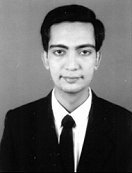 K S R Anirudha, son of Sudharani Raghupathy showed a keen interest in playing rhythmic instruments since the tender age of 3. Seeing this, freedom fighter Smt. Kamaladevi Chattopadhyaya gifted him with several skin instruments. His first lessons were from S S R Krishnan and M Balachander. He underwent intense practice and training in the basics of the instrument under M S Murali and upgraded his technique by training under Umayalpuram K Sivaraman. A left - hand mridangist, he also plays Udukkai, Ganjira and many skin instruments for dance ballets. He plays for all the solo and group performances of Shree Bharatalaya and has accompanied other prominent artistes like Sonal Mansingh, Chitra Visweswaran, Jayant Kastuar, Padma Subrahmanyam, Anita and Pritha Ratnam . He was awarded the Yuva Kala Bharathi in 1998. |
