
|
    |
|
|
|


SHARING DANCE ! by Tripura Kashyap, Bangalore e-mail: tripdance@hotmail.com |
| Sep
2002 Working with special educators, therapists, teachers, social workers and mental health professionals using creative dance therapy has been an enriching experience. In training programs that last two days to a week, the focus has been on methods and techniques of movement therapy that teachers can use with special needs children. Through dance and dialogue, participants have been guided through experiential movement activities to become aware of their bodies and develop a deeper understanding of themselves. While engaging in body preparatory exercises, movement activities and games they have been stimulated to think, memorize, feel and express ideas through their bodies. These creative workouts have further strengthened them to innovate and construct a variety of movement activities for children. The training program consists of four broad segments. Theory includes historical evolution, techniques, principles, goals and current status of dance therapy. The practical segment consists of body preparation exercises, movement activities, games and extra daily techniques from dance theatre. This is followed by a session on movement assessment in which participants learn to evaluate and analyze movement patterns and behavior. In conclusion, participants work with groups of children using movement activities from the course. Prior training or knowledge of dance is not required to participate in these programs. 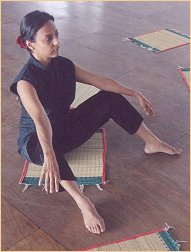 Most dance therapy practitioners believe it is essential to explore creative movements rather than mastering dance techniques. This therapy is non-judgmental, child oriented, adaptive and meant for non-dancers! It nourishes the body, mind and spirit while participants explore the alphabets of dance. They learn to develop a personal movement vocabulary in groups, with partners or individually. Dance therapists use their skills to elicit natural movement patterns inherent in everyone. Specific elements from folk, classical, contemporary and social dances are extracted and modified to encourage people experience the joys of dancing. Movement activities like warm ups, mirroring, dancing with props, moving through space, trust exercises, improvisation, body rhythms and hand-gestures are therapeutic as well as fun. They increase range of motion, body coordination, attention span and imitation skills while helping children to develop spatial awareness, memory and sequencing skills with group coordination. Dancing together also helps children gain self-esteem and confidence while sharing thoughts, ideas and stories through their bodies. Most important of all, children learn to be creative and imaginative while being sensitive to each other's movement cues and language. 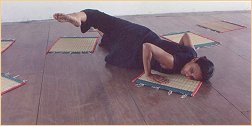 For many years, educators had made children dance without experiencing it in their own bodies. Therefore in these training programs, they were apprehensive about dancing themselves! They responded to dance in myriad ways in different cities and educational settings, according to individual perceptions and understanding of their bodies. Some were mobile and comfortable with their bodies, some understood ideas intellectually but found it difficult to translate them into movement, some were willing to push themselves to experiment, some responded mechanically to instructions, some were shy of movement and others opened up to movement experiences gradually. Yet enthusiasm and curiosity about movement exploration and its uses were qualities shared by groups everywhere. Children with special needs have been invited to participate in these workshops. It has invariably been a heart-warming experience filled with fun and excitement. In most cities, participants would do an excellent job of making lesson plans, dividing children into groups and communicating movement activities with clarity and precision while working with them. We witnessed how uninhibited and free children were despite their disability. It was refreshing to see them understand movement concepts at a physical level and interpret dance in diverse ways. I think we learnt a lot from observing how children respond to dance, translating it into play and being completely involved in it. Sometimes what teachers took two days to do, children would do in two hours! While reflecting upon these workshops, we discussed how special educators could become facilitators rather than teacher figures. How they could evolve techniques to extract movement material and themes from children rather than superimposing their ideas. This would need a lot of patience and trust in children's creative potential. They would also have to develop a two-fold skill of conducting sessions and analyzing group response and individual needs simultaneously. Dance being most fundamental of the Arts, is a direct expression of oneself through the body. Understanding the body and our relationship with it can open interesting doorways to our psyche. Moving to music helps us become aware of ourselves, inhibitions we carry, our movement preferences, fear of non-verbal expression, degree of confidence in our physical attitude and monotony of moving in conditioned ways. All these affect our personalities, behavior and relationship with the environment. In dance therapy, movement interaction is utilized to attain therapeutic goals. This therapy helps in enhancing emotional-physical unity of individuals, effecting changes in feelings, cognition and physical functioning. It can be used with varied age groups of children in and outside classroom situations. It can be modified to suit a wide range of diagnostic categories; the mentally challenged, physically disabled, slow learners, emotionally disturbed, the visually and hearing impaired, children with cerebral palsy and autism, etc. Dance and other arts should become part of education and treatment programs rather than being a short-term activity to train children for annual day functions. Reinforcing movement and educational concepts through the body becomes more exciting than rote-learning ideas through verbiage. These physical experiences would help children and their teachers to understand universal principles of movement, thereby pushing them to articulate their bodies. The aim is not for children to become technically skilled dancers. These experiences lead them on a journey of self-discovery and help them understand their relationship to others. In creative movement sessions, neither the students nor teachers need to be trained dancers. Movement is a medium in which we live, all we need is open minds and free bodies to go for a movement adventure on the landscape of dance!  Tripura Kashyap is a Dance Therapist and Choreographer based in Bangalore. Apart from classical dance and Martial arts, she trained in Dance/Movement Therapy at Hancock Center of Movement arts & therapies in U.S.A and holds an M.A degree in Psychology. She received the Ashoka International fellowship for her innovative work in dance therapy. As choreographer-in-residence at American Dance Festival, N. Carolina, she trained in Jazz Ballet, Modern dance, choreography and dance theatre. She founded Apoorva Dance Theatre in Bangalore and has worked collaboratively with filmmakers, visual artists and musicians on cross-art projects. Currently she coordinates the Dance-in-Education program at Attakkalari Center for Movement Arts, Bangalore. She travels widely in India and abroad performing, conducting workshops and lecture demonstrations on contemporary dance and dance therapy. |
